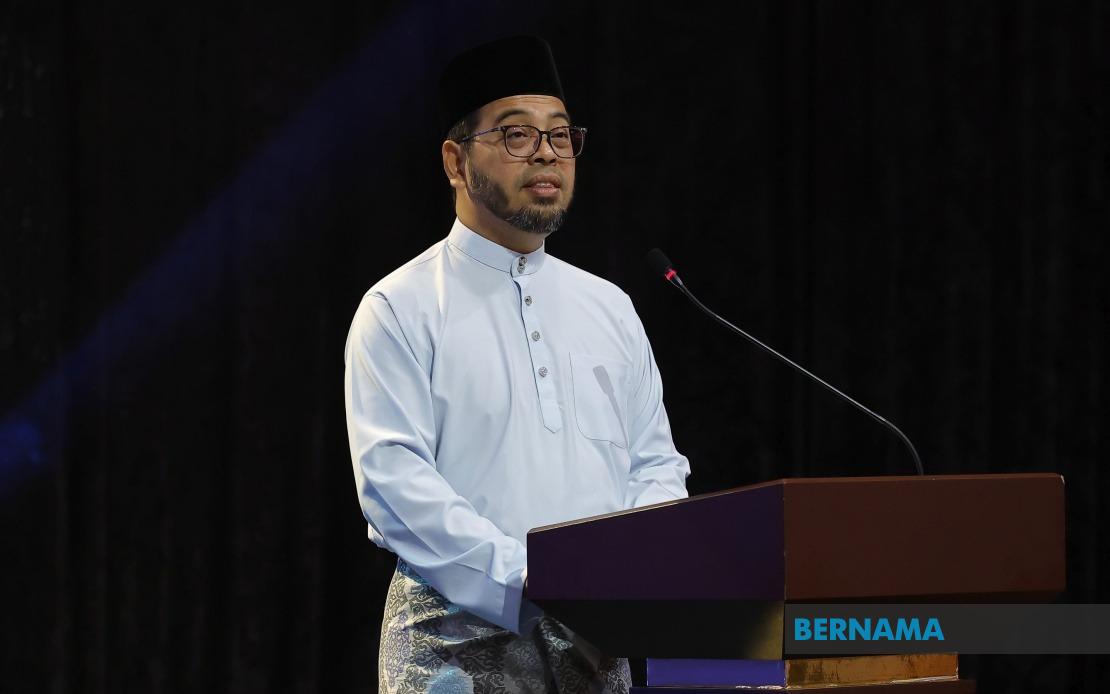
Religious Affairs Minister Dr Zulkifli Hasan has urged Malaysian Muslims to transcend internal conflicts and foster genuine unity within the ummah as a pathway to confronting mounting challenges in an increasingly unstable global environment. Speaking at the national Maal Hijrah 1448H/2026M celebration held at Putra Mosque in Putrajaya on June 17, the minister emphasised that lasting social transformation requires individuals to undergo profound personal evolution rooted in intellectual advancement, spiritual deepening, and moral strengthening. The occasion, themed "MADANI Dihayati, Ummah Diberkati," drew distinguished guests including Sultan Nazrin Shah of Perak and Deputy Prime Minister Datuk Seri Fadillah Yusof, underscoring the significance policymakers attach to strengthening religious and social cohesion.
Dr Zulkifli articulated a fundamental premise underlying Malaysia's contemporary governance: that fractious communities invite suffering and national weakness, whereas unified societies generate prosperity for their constituents. His remarks reflect growing official concern that Malaysia faces systemic vulnerabilities stemming from both external pressures and internal fractures. Global supply chain disruptions and economic uncertainty afflicting countries worldwide pose direct threats to Malaysian livelihoods and institutional stability. In this context, the minister positioned communal harmony not merely as a spiritual or cultural aspiration but as an essential prerequisite for national resilience and economic competitiveness in an unpredictable international landscape.
The minister framed his call for unity within the broader framework of contemporary Islamic understanding, reinterpreting the classical concept of hijrah beyond its historical migration narrative. Rather than viewing hijrah exclusively through a historical lens, Dr Zulkifli presented it as an ongoing transformative journey requiring communities to consciously abandon destructive practices while deliberately cultivating virtues and character traits that cement social bonds among believers. This reframing carries practical implications for Malaysian society, suggesting that religious identity and national citizenship are mutually reinforcing rather than contradictory commitments. By emphasizing that Muslims must continuously evolve morally and intellectually while strengthening communal relationships, the minister articulated a vision of religious practice intimately connected to social responsibility and collective welfare.
Dr Zulkifli explicitly called upon Malaysians to sustain backing for government initiatives designed to enhance the standing and dignity of Muslims whilst preserving the vitality of Islamic values throughout the nation. This appeal carries political and administrative weight, signalling to the electorate and civil society that governmental programmes merit continued public support and participation. The emphasis on collective commitment suggests that official policy envisages tackling contemporary challenges through partnership between state institutions and faith communities, rather than through top-down directives alone. This collaborative paradigm reflects recognition that religious and moral persuasion often proves more effective than bureaucratic mandates in influencing behavioural change and fostering social cohesion.
The ceremony incorporated recognition of exemplary individuals whose contributions to Islamic thought and practice merit national acknowledgment. Sultan Nazrin presented the National Tokoh Maal Hijrah award to IIUM Rector Prof Emeritus Datuk Dr Osman Bakar, honouring his decades of scholarship and educational leadership within Malaysia's premier Islamic university. The presentation of the International Tokoh Maal Hijrah award to Moroccan Islamic scholar Dr Ahmad Al-Raysuni demonstrated Malaysia's aspiration to position itself as a centre for Islamic intellectual exchange and dialogue within the broader Muslim world. These honours serve multiple purposes: they celebrate achievement in Islamic scholarship and religious leadership, they signal Malaysia's commitment to advancing Islamic knowledge production, and they implicitly validate the government's vision of harmonious religious practice compatible with institutional modernisation and intellectual rigour.
Dr Zulkifli's remarks also addressed the relationship between religious identity and national citizenship, emphasizing that regardless of theological differences or cultural backgrounds, all Malaysians bear shared responsibility for safeguarding peace, stability and prosperity. This assertion responds implicitly to recurring tensions within Malaysian society surrounding religious jurisdiction, minority rights, and the relationship between Islam and other faith traditions. By stressing universal civic obligation whilst maintaining particular religious appeals, the minister navigated delicate terrain where inclusive nationalism and Islamic identity can appear contradictory. For Malaysian readers, this formulation carries significance insofar as it suggests that religious particularism need not entail sectarian exclusivism or majoritarian dominance, and that shared national projects can coexist with distinct faith communities.
The timing and scale of the Maal Hijrah celebration reflect the symbolic importance government attaches to Islamic observance and communal renewal. Held at Putra Mosque, a national religious monument, and graced by senior political figures including the Sultan and Deputy Prime Minister, the ceremony conveyed that religious affairs and governance are intimately intertwined within Malaysia's constitutional framework. For observers across Southeast Asia, Malaysia's emphasis on Muslim unity and religious leadership projects an image of a Muslim-majority nation successfully integrating Islamic values with democratic governance and economic development. This positioning carries diplomatic implications, as Malaysia seeks regional leadership within Muslim-majority and Muslim-minority contexts throughout the Association of Southeast Asian Nations and beyond.
The underlying message within Dr Zulkifli's remarks extends beyond ceremonial platitudes to address substantive governance challenges facing the nation. Malaysia confronts mounting social polarisation along religious, ethnic and ideological lines that threatens institutional effectiveness and economic productivity. The minister's call for internal moral development and communal reconciliation suggests recognition that formal policies and institutional restructuring alone cannot resolve these fractures. Instead, genuine social cohesion requires voluntary transformation of individual attitudes and deliberate cultivation of interpersonal relationships across existing divides. This perspective aligns with contemporary research emphasising that sustainable social change emerges through combining institutional reform with cultural and spiritual renewal.
For Southeast Asian policymakers and observers, Malaysia's current emphasis on ummah unity and collective moral development provides insight into how Muslim-majority democracies navigate tensions between religious identity and inclusive governance. The government's articulation that Islamic values need not contradict national unity or economic progress, and that religious practice can strengthen rather than undermine social cohesion, offers an alternative to narratives portraying religion and modernity as inherently antagonistic. Whether such aspirational rhetoric translates into sustained institutional change and genuine community reconciliation will substantially influence not only Malaysia's domestic trajectory but also regional perceptions regarding Islam's compatibility with pluralism and development.

