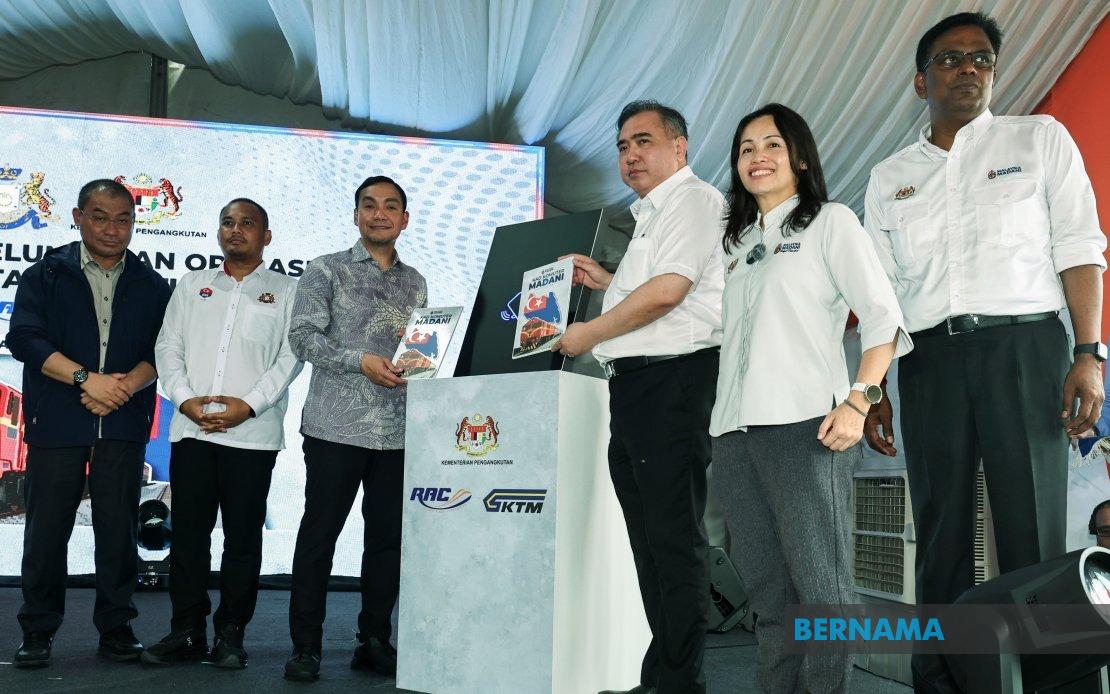
Johor Menteri Besar Datuk Seri Onn Hafiz Ghazi has underlined the strategic importance of the Elevated Autonomous Rapid Transit (E-ART) project in safeguarding the state capital from gridlock when the Johor Bahru-Singapore Rapid Transit System (RTS) Link opens for operations in 2025. Speaking at the launch of the Southern Shuttle train service at KTM Kulai Station, Onn Hafiz characterised E-ART as an indispensable pillar in the city's longer-term mobility architecture, designed to absorb and redistribute vehicular traffic that would otherwise overwhelm Johor Bahru's road infrastructure once cross-border rail connectivity is activated.
The menteri besar's remarks reflect growing recognition among transport planners that the anticipated surge in passenger volumes following the RTS Link's opening will fundamentally reshape traffic dynamics in Malaysia's southern metropolitan hub. With Johor Bahru's population hovering around 1.8 million—a figure comparable to Penang's entire resident base—the city faces mounting pressure to develop integrated transport solutions that can accommodate both internal mobility demands and the heightened cross-border movement that the rapid transit link will inevitably generate.
Currently, authorities are rolling out interim and medium-term interventions to partially mitigate the impending congestion. These include the expansion of Park & Ride facilities throughout the city and implementation of sophisticated traffic management systems at JB Sentral, the designated transport interchange hub. However, Onn Hafiz candidly acknowledged that such measures represent temporary expedients rather than permanent solutions. The short-term measures are tactical responses to address congestion during the interim period while the E-ART, as the more comprehensive traffic dispersal mechanism, remains under development.
The distinction Onn Hafiz drew between stopgap measures and structural solutions reflects a pragmatic understanding of Johor Bahru's transport challenges. While Park & Ride expansion and smart traffic management can provide breathing room in the immediate aftermath of the RTS Link's launch, they operate within the constraints of existing road networks and peak-hour capacity limitations. In contrast, E-ART's elevated autonomous system promises to create an entirely new transportation corridor, operating independently of surface traffic and thereby offering genuine relief to congested arterial roads.
The menteri besar's emphasis on federal government commitment signals the project's political significance within broader national infrastructure planning. Johor Bahru's designation as Malaysia's principal international gateway, coupled with its pivotal role in facilitating cross-border commerce and human movement with Singapore, elevates E-ART beyond a merely municipal concern. The project's successful execution would demonstrate federal capacity to deliver transformative infrastructure that directly improves citizens' quality of life and economic productivity.
Onn Hafiz framed federal intervention in E-ART as the kind of tangible developmental commitment that resonates with ordinary Johoreans. By explicitly linking rapid project implementation to the public's palpable experience of reduced congestion and improved daily mobility, he positioned E-ART not as an abstract infrastructure initiative but as a concrete demonstration of government responsiveness. This rhetorical framing matters particularly in a state where transport congestion has become an increasingly salient political issue affecting voter satisfaction.
The timing of Onn Hafiz's remarks, coinciding with Transport Minister Anthony Loke's presence at the Southern Shuttle launch, suggests coordinated messaging from federal and state leadership on transport priorities. The presence of Deputy Communications Minister Teo Nie Ching, representing Kulai constituency, further amplified the political resonance of the announcement. Such high-level attendance at transport infrastructure events underscores the administration's investment in positioning itself as responsive to southern Johor's development aspirations.
For Malaysian and Southeast Asian observers, the E-ART initiative represents a critical test case in how developing nations manage transport integration in high-volume cross-border corridors. The Johor Bahru-Singapore axis represents one of Asia's most intensive international traffic flows, with hundreds of thousands of daily commuters, commercial vehicles, and transient visitors traversing the border. Successfully implementing E-ART would establish a replicable model for other regional metropolitan areas facing similar congestion challenges alongside international connectivity demands.
The project's advancement also carries implications for Malaysia's broader infrastructure modernization agenda. E-ART's autonomous rapid transit technology represents adoption of cutting-edge transportation solutions, positioning Johor Bahru at the forefront of Southeast Asian smart city initiatives. If executed successfully, the system could enhance the city's competitive positioning as a regional logistics and business hub, potentially attracting multinational enterprises seeking locations with advanced transport infrastructure.
However, the gap between current interim measures and E-ART's full operational deployment remains a critical vulnerability in Johor Bahru's transport strategy. The window between the RTS Link's opening and E-ART's completion could span several years, during which the city must manage potentially severe congestion using existing and modestly expanded infrastructure. This interim period requires meticulous traffic flow optimization and possibly additional short-term capacity enhancements beyond those already planned.
Onn Hafiz's call for expedited E-ART implementation reflects awareness that delays could undermine the entire transport system's effectiveness. The menteri besar essentially signalled that while short-term measures provide necessary stopgaps, their effectiveness depends critically on E-ART's timely completion. This articulation of urgency may be intended to spur federal agencies overseeing the project toward accelerated development timelines and resource allocation.
Looking forward, Johor Bahru's experience with coordinating the RTS Link's opening alongside E-ART's development offers valuable lessons for other Malaysian cities planning major transport infrastructure expansions. The project underscores the necessity of sequencing development holistically rather than implementing individual initiatives in isolation. As Malaysia continues upgrading its urban transport networks, particularly in high-growth corridors with significant cross-border dimensions, the Johor Bahru model of integrated planning merits close study.

