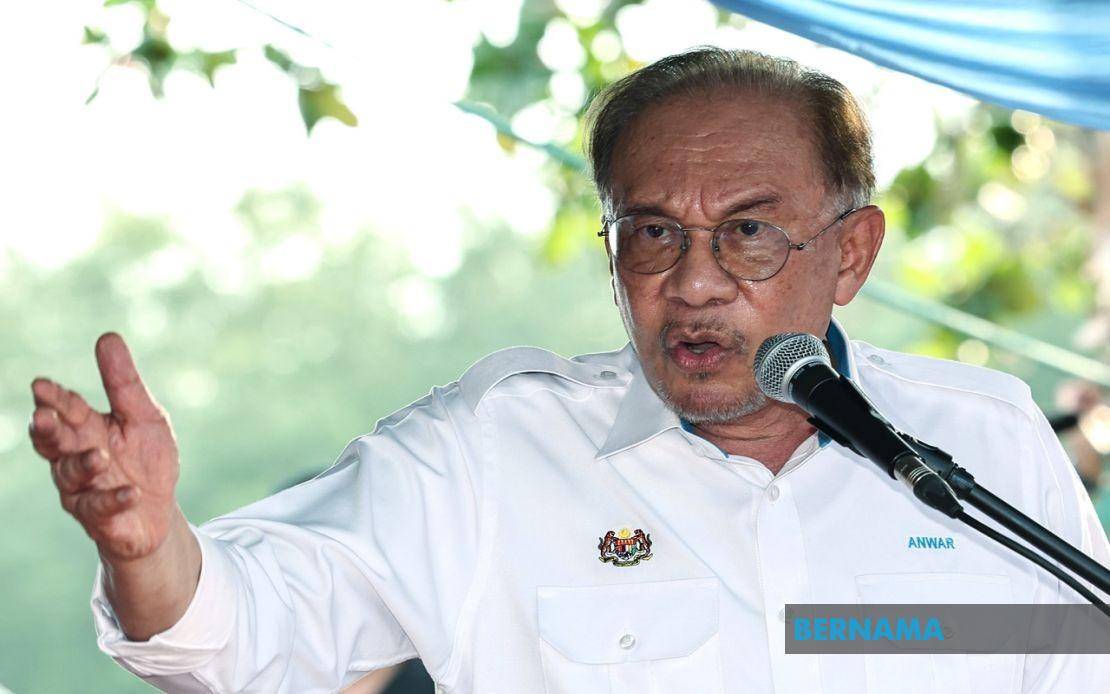
Prime Minister Datuk Seri Anwar Ibrahim has called for a more equitable distribution of Malaysia's economic gains, insisting that development programmes must reach beyond metropolitan centres to tangibly improve the lives of rural communities. Speaking at a gathering in Muar on June 15, the Prime Minister emphasised that comprehensive national progress requires deliberate efforts to ensure farmers, fishermen, rice cultivators and small-scale operators feel the tangible benefits of growth rather than remaining isolated from advancement.
Anwar's remarks reflect a growing concern within the MADANI Government about regional inequality and the persistent economic disparities between urban and rural Malaysia. The Prime Minister stressed that large-scale projects and technological advancement, while essential for long-term competitiveness, cannot overshadow the immediate welfare requirements of communities dependent on traditional sectors. This framing positions rural development not as a separate charitable concern but as integral to the nation's overarching prosperity strategy.
During his engagement with the fishing community and local residents at Pantai Leka Food Court, Anwar highlighted the government's commitment to ensuring that safety nets and targeted assistance programmes effectively reach intended beneficiaries. The emphasis on mechanism and implementation suggests recognition that good intentions alone have historically failed to translate policy announcements into meaningful improvements for vulnerable populations. By invoking relevant agencies and authorities, the Prime Minister acknowledged the multifaceted institutional coordination required for rural programmes to succeed.
The distinction Anwar drew between artificial intelligence, digital transformation and the pressing needs of agricultural and fishing communities reflects broader tensions within developing economies navigating modernisation. While acknowledging that high-tech initiatives remain crucial for future competitiveness and global positioning, he cautioned against allowing technological enthusiasm to eclipse investment in sectors that directly sustain millions of rural livelihoods. This balance is particularly relevant for Malaysia, where agriculture and fisheries remain culturally significant and economically important despite declining workforce participation.
Anwar's call for political leaders to engage directly with grassroots communities represents an implicit critique of governance practises that can become disconnected from lived experience. By instructing Cabinet members and political representatives to venture into the field personally, he underscored that understanding community challenges requires proximity and genuine listening rather than reliance on filtered reports or secondary data. This directive acknowledges that institutional distance often prevents accurate perception of ground-level difficulties.
The Prime Minister's insistence that responsible leadership demands willingness to voice the struggles of marginalised populations carries particular significance in Malaysian politics, where coalition dynamics and competing interest groups often shape policy priorities. Anwar framed advocacy for disadvantaged communities as a moral obligation rather than optional charity, suggesting that inclusive governance is foundational to legitimate leadership. This framing potentially signals a shift toward prioritising rural constituencies that have historically received less ministerial attention.
The timing of these remarks, delivered through direct engagement with affected communities rather than formal parliamentary address, indicates a strategic effort to demonstrate responsive governance. By meeting with farmers and fishermen in their own spaces, the Prime Minister visibly endorsed their concerns and made a symbolic commitment to their welfare. Such approaches have become increasingly important for political credibility in an era when communities can quickly amplify grievances through social media if they perceive governmental indifference.
For Malaysian readers and those monitoring regional development trends, Anwar's emphasis on inclusive growth carries implications beyond rhetoric. The MADANI Government's stated commitment to reaching rural populations may shape sectoral policies affecting agricultural subsidies, infrastructure investment in remote areas, and the allocation of targeted assistance programmes. How effectively these principles translate into budgetary decisions and institutional resource allocation will ultimately determine whether this represents genuine policy reorientation or rhetorical repositioning.
The Prime Minister's comments also reflect awareness that modernisation fatigue and resentment toward inequality can destabilise social cohesion if visible segments of society are consistently left behind. By framing inclusive development as essential rather than supplementary, Anwar positioned rural welfare improvements as central to national stability rather than peripheral concerns. This conceptual shift, if institutionalised, could meaningfully alter how government agencies prioritise competing demands on limited resources and attention.
For Southeast Asian observers, Malaysia's approach to balancing rural and urban development offers instructive lessons. Many regional economies face similar pressures to pursue technological advancement while managing expectations among traditional sectors, and Malaysia's attempt to articulate an inclusive growth model may influence policy discussions across the region. The success or failure of implementing these principles will likely influence how other governments approach similar challenges regarding equitable distribution of development benefits.

