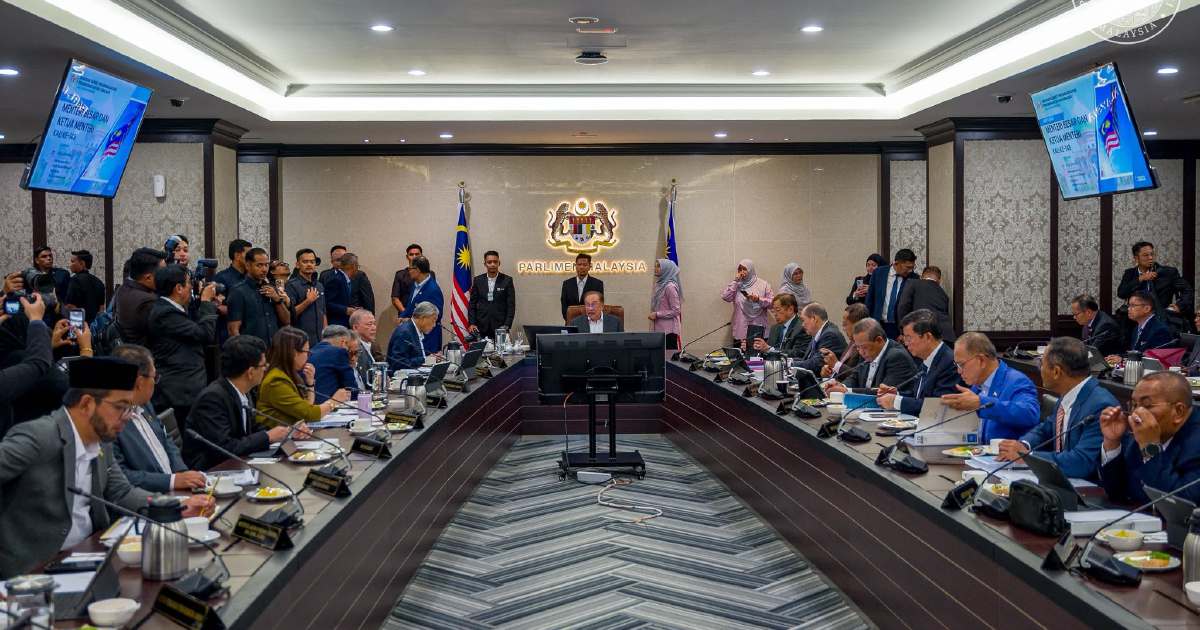
Prime Minister Datuk Seri Anwar Ibrahim presided over the 149th Meeting of Menteris Besar and Chief Ministers at the Parliament building in Kuala Lumpur, with economic revitalisation emerging as the central theme of discussions among the nation's top political leaders. The gathering brought together heads of state governments across the country for wide-ranging deliberations on pressing national matters, with particular emphasis placed on fortifying Malaysia's economic foundations during a period marked by considerable international uncertainty.
The timing of the meeting reflects growing concerns within government circles regarding external headwinds affecting the domestic economy. Global markets have grown increasingly volatile due to escalating conflicts in the Middle East, creating ripple effects across trade routes, investment flows, and commodity prices that impact developing economies like Malaysia. Against this backdrop, coordinating a unified economic strategy across federal and state governments has become essential for maintaining stability and investor confidence.
The nation's state governments play a crucial role in economic development beyond their administrative responsibilities. As custodians of local economic policies, infrastructure projects, and business-friendly regulations, Menteris Besar and Chief Ministers directly influence foreign direct investment, employment creation, and regional growth trajectories. The 149th meeting format allows the Prime Minister to align state-level initiatives with national economic priorities, ensuring coherent policy implementation across Malaysia's diverse regional economies.
Economic revival efforts must address multifaceted challenges confronting the country. Inflation pressures, currency fluctuations stemming from global instability, and potential disruptions to supply chains have created headwinds for both large corporations and small-to-medium enterprises. State governments, through their development boards and local business associations, can facilitate swift policy responses and targeted support mechanisms to vulnerable sectors. This collaborative approach between federal and state authorities amplifies government capacity to implement relief measures and growth incentives.
The Middle East conflicts represent a particular concern for Malaysia's strategic position. As a major shipping corridor, the Strait of Malacca experiences heightened scrutiny during regional tensions, potentially affecting transit fees, insurance costs, and delivery timelines. Additionally, any prolonged instability could deter investors and tourists, sectors where Malaysia holds substantial competitive advantages. Regional leaders must therefore formulate contingency plans while simultaneously communicating stability to international stakeholders.
State-level economic initiatives hold substantial importance for inclusive growth across Malaysia's regions. While Kuala Lumpur and Selangor dominate national economic output, peripheral states require focused development support to bridge wealth disparities and retain talent. Meetings between the Prime Minister and state heads provide platforms for resource allocation discussions, infrastructure funding approvals, and sector-specific development strategies tailored to regional comparative advantages.
The conference framework demonstrates Malaysia's governance structure emphasising consultation and coordination between federal and state authorities. Unlike highly centralised systems, Malaysia's federal arrangement requires consensus-building and information-sharing mechanisms at the highest levels. Regular meetings of this nature, whether addressing economic matters, security concerns, or infrastructure development, reinforce institutional channels for collective decision-making during volatile periods.
Investor sentiment proves critical during uncertain times, making coherent government messaging essential. When state and federal leaders demonstrate alignment on economic priorities and present unified policy directions, confidence translates into sustained business activity and capital inflows. Conversely, fragmented or contradictory messaging creates doubt, potentially accelerating capital outflows. The visibility of such high-level coordination meetings serves important signalling functions beyond the immediate discussions and decisions.
The gathering also provides opportunities for state governments to surface specific concerns and sectoral challenges requiring national-level intervention. Whether addressing labour shortages in manufacturing hubs, supporting agricultural export competitiveness, or facilitating digital transformation in smaller regional economies, the 149th meeting creates structured channels for bottom-up input informing national economic policy. This two-way flow of information strengthens policy design and implementation effectiveness.
Sectors particularly vulnerable to global uncertainty demand special attention during such leadership meetings. Tourism-dependent states may seek federal support for promotional campaigns and visa facilitation measures. Manufacturing-heavy regions require clarity on trade policy trajectories and supply chain resilience strategies. Agricultural exporters need assurance regarding market access and price support mechanisms. The comprehensive nature of these multistakeholder conferences enables holistic rather than siloed economic policymaking.
Looking forward, sustained dialogue between federal and state authorities will prove essential as global conditions evolve. The 149th meeting represents one point in ongoing coordination processes rather than a singular event. Regular engagement mechanisms allow governments to adjust strategies responsively as international situations develop, ensuring Malaysia's economic defences remain robust. The Prime Minister's leadership in convening such sessions underscores his administration's commitment to deliberative governance and institutionalised consultation structures.
The decision to prioritise economic matters during this particular meeting reflects astute political judgement regarding Malaysia's immediate priorities. While geopolitical developments command attention, direct economic impacts on employment, business confidence, and household welfare demand government focus. By positioning economic revival centrally within the state leaders' agenda, the administration signals that comprehensive, coordinated governance responses will address the challenges emerging from global volatility.

