The United States Department of Justice announced charges against eight men suspected of plotting an attack on a mixed martial arts competition hosted at the White House, marking one of the most serious alleged security threats targeting a major government venue in recent years. The conspirators reportedly planned to deploy weaponised drones and armed shooters to target attendees fleeing the June 14 event, which coincided with President Donald Trump's 80th birthday and was formally designated as part of the nation's 250th independence anniversary celebrations.
Federal authorities in Columbus have brought multiple felony charges against the suspects, including conspiracy to supply material assistance to designated terrorist organisations, planning to commit murder within federal government premises, and conspiracy to assassinate a federal government official. These charges carry potentially severe penalties, with prosecutors indicating that conviction could result in life imprisonment for each defendant. The gravity of the allegations underscores the seriousness with which American law enforcement treats threats against senior government officials and major state occasions.
The alleged operational plan revealed a sophisticated attack strategy, according to prosecutors. The suspects intended to launch explosive-laden unmanned aerial vehicles around the venue to create chaos and force attendees to evacuate in panic. Once the crowd dispersed, the conspirators planned to position snipers at vantage points to target what investigators describe as "high-value targets" among those fleeing the scene. This multi-phase approach suggested a level of tactical planning that extended beyond spontaneous violence to a coordinated military-style operation.
The investigation resulted in a rolling series of arrests as law enforcement identified suspects. Seven individuals were taken into custody in the preceding weeks, while the eighth and final suspect, identified as a 21-year-old from West Virginia, was apprehended more recently. Prosecutors identified this youngest defendant as the individual designated to serve as a sniper in the alleged operation, indicating that the conspiracy spanned a network of individuals with different assigned roles in the planned attack.
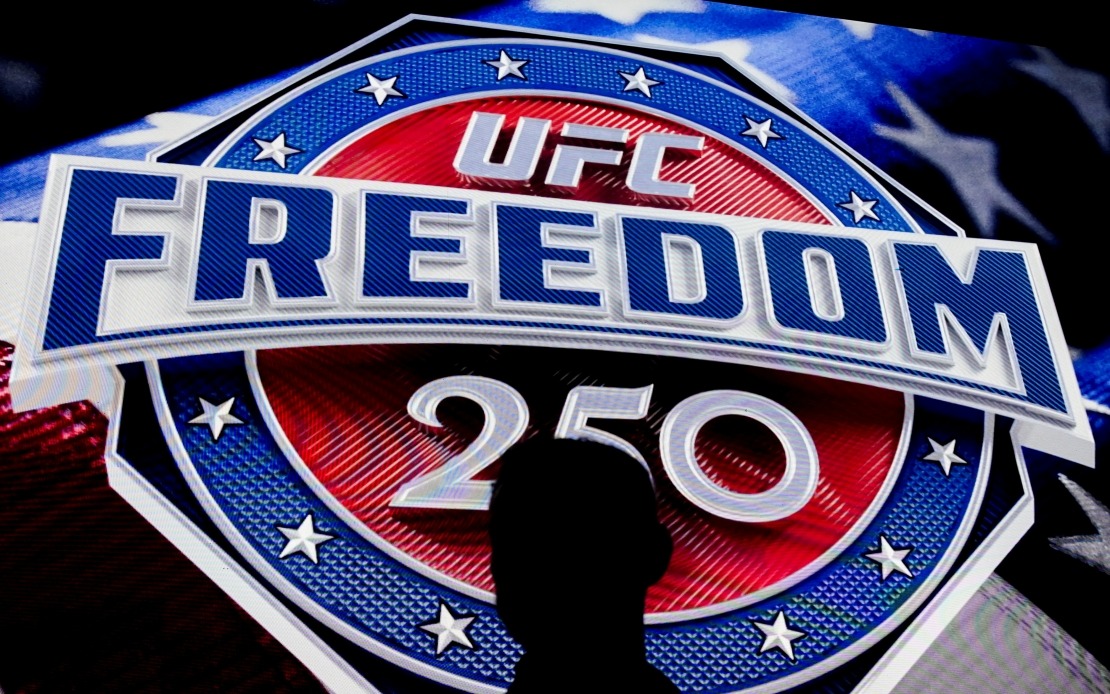
The event itself, officially branded "UFC Freedom 250" by the Ultimate Fighting Championship, took place in a specially constructed arena positioned outside the South Lawn of the White House. The venue hosted not only President Trump but also members of his immediate family and several cabinet-level officials, making it an extraordinarily high-profile gathering. The timing—staged on June 14 in advance of the July 4 Independence Day holiday—allowed organisers to commemorate the 250th anniversary of American independence while capitalising on the gathering of senior government figures.
While the UFC event ostensibly functioned as a celebration of American independence and martial arts culture, the presidential birthday connection lent it heightened symbolic significance. Trump's milestone 80th birthday represented a culturally notable moment, and the decision to host a major sporting spectacle at the White House underscored the administration's confidence in security arrangements. The scale of the alleged plot, however, exposed vulnerabilities in protecting even heavily secured government facilities against determined adversaries with access to modern weaponry and tactical knowledge.
The disclosure of this conspiracy carries important implications for understanding contemporary security threats in the United States. The alleged deployment of drone technology in a terrorist plot reflects evolving tactics that leverage commercially available equipment and emerging technologies. This represents a significant departure from historical attack methodologies and suggests that security agencies must continually adapt their defensive postures to address innovations in weaponry and attack vectors.
For Southeast Asian readers and policymakers, the case illustrates broader patterns of internal security challenges facing even the most powerful nations. The United States possesses unmatched technological capabilities and intelligence resources, yet law enforcement became aware of this plot only through investigative work, not through preventive intelligence gathering. The involvement of multiple conspirators across different states suggests that sophisticated plots can develop across geographic boundaries, a concern equally relevant to Malaysia and the region as domestic and international terrorism remain persistent threats.
The incident also reflects the complex relationship between security and public gatherings in democratic societies. The White House, as the seat of American government, represents a location of paramount security importance. Yet it remains accessible for carefully curated public events, and the administration chose to host a major sporting event there, balancing symbolic openness with protective measures. This tension between democratic accessibility and security imperatives applies equally to Malaysian government facilities and public institutions.
The charges against the eight defendants represent the outcome of substantial investigative resources dedicated to disrupting the alleged plot. Law enforcement agencies across multiple jurisdictions apparently coordinated to identify, track, and apprehend the suspects before any attack could occur. The success of these investigations depended on human intelligence, electronic surveillance, and cooperation among federal, state, and local authorities—a model that reflects best practices increasingly adopted by security agencies worldwide, including in Southeast Asia.
As details continue to emerge through the judicial process, the case will likely provide insights into recruitment and radicalisation patterns, the role of online communication in organising conspiracies, and the relationship between extremist ideology and operational planning. For Malaysian security professionals and analysts, such cases offer valuable comparative data for understanding how terrorist networks operate across democratic jurisdictions and how law enforcement can effectively disrupt plots at different stages of development.
The alleged conspiracy also demonstrates that threats to national leadership persist despite elaborate security apparatus and intelligence gathering. The prosecution of these eight individuals represents both a success for law enforcement in thwarting an apparent attack and a reminder that security challenges require constant vigilance. As the case proceeds through the American justice system, it will shape discussion about both counterterrorism strategy and the evolving nature of threats in the contemporary security environment.

