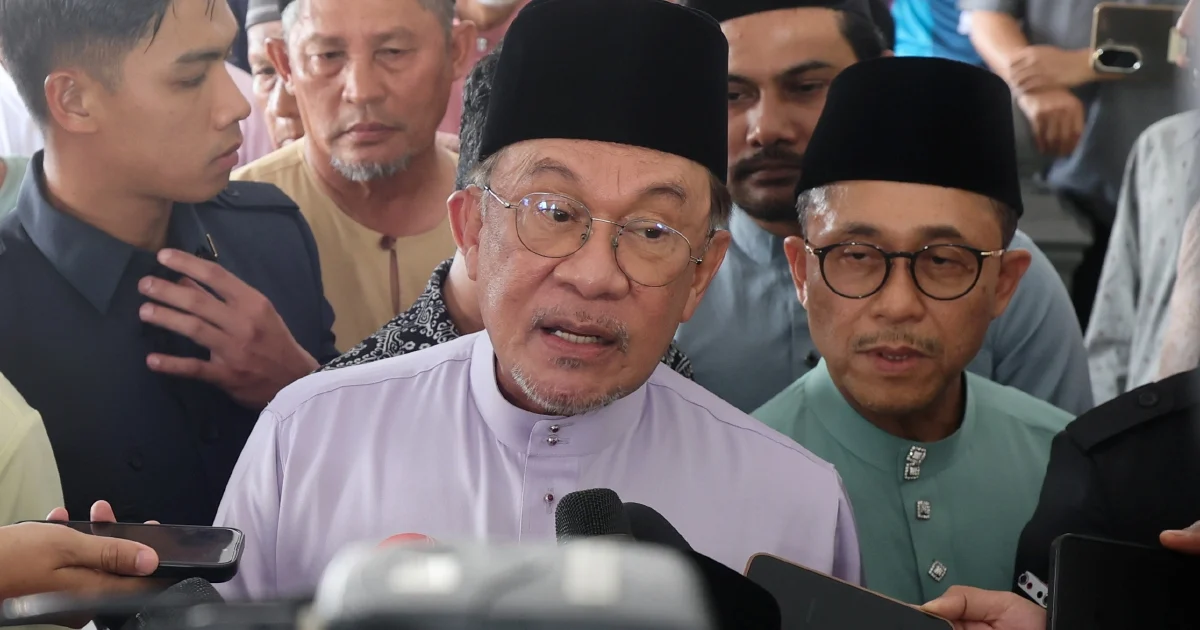
Prime Minister Datuk Seri Anwar Ibrahim has moved to allay concerns among Malaysia's non-Muslim communities by assuring them that proposals to elevate the status and capacity of the Syariah court framework will not encroach upon their religious liberties or constitutional protections. Speaking in Putrajaya, the Prime Minister sought to frame institutional strengthening of Islamic courts as a measure compatible with the country's multicultural and multireligious fabric, emphasising that legal reforms affecting Islamic jurisprudence would remain confined to Muslim personal law matters.
The reassurance arrives amid broader discussions within Malaysian political and judicial circles about how to better resource and position Islamic courts within the country's dual legal system. Malaysia's constitutional architecture provides for parallel civil and Syariah jurisdictions, with the former applying universally and the latter operating specifically within Muslim personal law domains such as marriage, inheritance, and family disputes. Anwar's statement reflects sensitivity to the need for transparent communication when institutional changes affect any component of this delicate constitutional balance.
Historically, questions about the scope and authority of Syariah courts have periodically generated public debate, particularly among non-Muslim citizens who seek assurance that their own religious autonomy and civil rights remain unaffected by Islamic institutional developments. The Prime Minister's intervention suggests recognition that even administrative or structural upgrades to Syariah courts warrant clear clarification regarding their jurisdictional boundaries and their relationship to the civil legal sphere that applies to all Malaysians regardless of faith.
The constitutional foundation underpinning Malaysia's approach to religious law reflects the Federal Constitution's Article 121, which delineates the jurisdictional separation between civil courts and Syariah courts. This framework establishes that Syariah courts exercise jurisdiction exclusively over Muslim personal law matters, while civil courts retain responsibility for criminal law, commercial matters, and civil disputes affecting all citizens. Any elevation of Syariah court status would theoretically operate within these existing parameters, though institutional strengthening might include enhanced resources, better court infrastructure, or expanded capacity to handle increasing caseloads in Muslim family law.
The timing of Anwar's clarification may also reflect broader governance concerns about institutional efficiency and public service delivery. Malaysian Syariah courts have faced criticism in recent years regarding case backlogs and lengthy processing times for matters such as divorce proceedings and inheritance disputes affecting Muslim families. Proposals to strengthen these institutions could encompass modernisation initiatives, technology adoption, or increased personnel—measures aimed at improving service quality without necessarily altering substantive legal principles or jurisdictional scope.
For Malaysia's diverse non-Muslim population, which comprises approximately 40 percent of the country, clarity about the intentions behind legal system changes carries significant weight. Christians, Buddhists, Hindus, and other faith communities maintain their own mechanisms for addressing religious and personal matters, alongside reliance on the civil legal framework for broader concerns. Any suggestion that institutional changes might blur jurisdictional lines or encroach upon civil law domains would justifiably trigger defensive responses from religious minorities concerned about protecting their communal autonomy.
The Prime Minister's statement can also be interpreted within the context of Malaysia's ongoing constitutional dialogue about federalism and state powers. Syariah court administration in Malaysia involves both federal and state governments, with states maintaining considerable authority over Islamic affairs within their territories. Discussions about elevating Syariah court status might therefore involve negotiations between state administrations and the federal government about resource allocation, jurisdictional harmonisation, and institutional coordination—complexities that require careful public messaging.
Regionally, Malaysia's approach to managing parallel legal systems within a constitutionally secular framework has attracted international attention, particularly from countries grappling with similar multicultural legal architecture. The careful balance Malaysia maintains between respecting Islamic institutions and protecting minority rights represents a distinctive governance model in Southeast Asia. Anwar's reassurance underscores Malaysia's commitment to maintaining this equilibrium despite proposals for institutional change.
The statement also reflects broader trends within contemporary Islamic jurisprudence regarding how modern states can strengthen Islamic legal institutions while respecting pluralism. Malaysian legal scholars and Islamic judges have increasingly engaged with questions about how Syariah courts can operate with greater efficiency and expertise without compromising the constitutional position of civil law or the rights of non-Muslim citizens. This intellectual movement supports the idea that institutional elevation and constitutional fidelity need not be contradictory objectives.
For policymakers moving forward, the key challenge will involve translating Anwar's reassurance into concrete legislative or administrative frameworks that clarify how specific proposals affect existing jurisdictional boundaries. This might necessitate formal statements from the relevant ministry or detailed consultation processes with civil society representatives, religious organisations, and legal experts across Malaysia's diverse communities. Without such specificity, the concern about institutional scope might persist among non-Muslims despite prime ministerial assurances.
The broader significance of this exchange lies in what it reveals about the contemporary anxieties surrounding religious and legal pluralism in Malaysia. Despite decades of successful coexistence among different faith communities operating under distinct legal regimes, proposals touching on any component of the religious legal system continue to trigger concerns about protecting minority interests. This suggests that ongoing dialogue, transparency, and clear constitutional interpretation remain essential to maintaining public confidence in Malaysia's multicommunal legal architecture.

