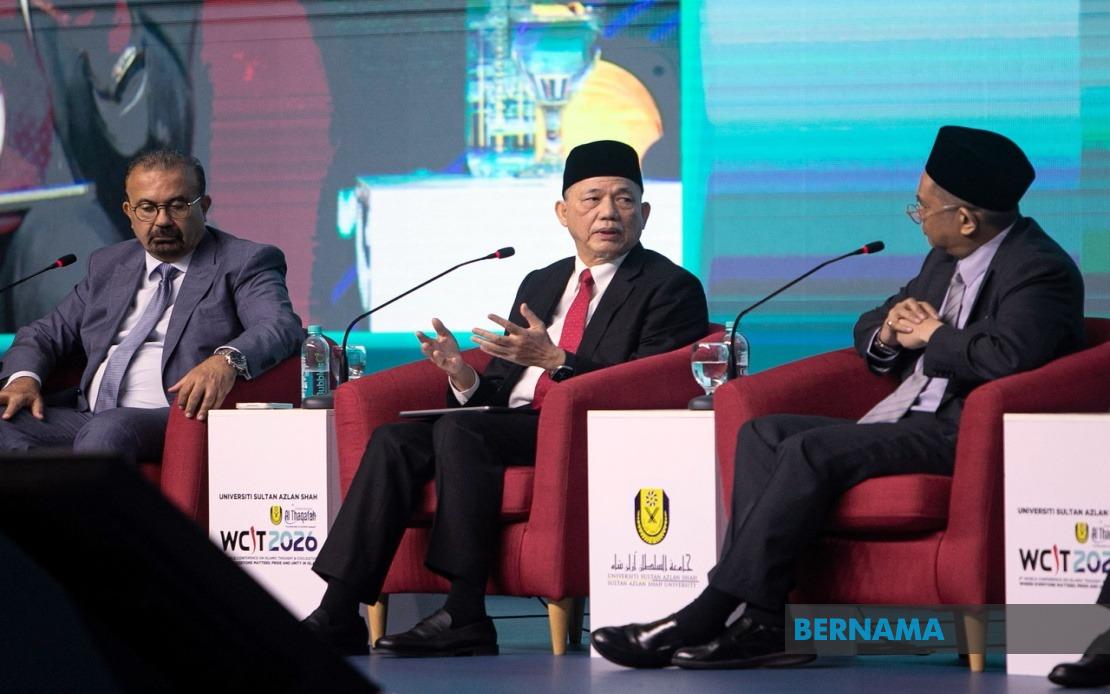
The boundary between energy security and maritime security has dissolved in the modern geopolitical landscape, according to Deputy Prime Minister Datuk Seri Fadillah Yusof, who outlined how recent confrontations between major powers now threaten the stability of global systems that ordinary people depend upon daily. Speaking at the 8th World Conference on Islamic Thought and Civilisation in Ipoh, Fadillah, who serves as Energy Transition and Water Transformation Minister, underscored that developments occurring thousands of kilometres away can now directly influence electricity costs, fuel availability, trade volumes, and the pocket-book reality of citizens across the region. His remarks came during a distinguished session convened with the Sultan of Perak, Sultan Nazrin Shah, reflecting the gravity with which Malaysia's leadership views the convergence of these security challenges.
The interconnection between energy markets and maritime stability has become impossible to ignore following renewed tensions in the Strait of Hormuz, one of the world's most critical petroleum chokepoints. When hostilities between the United States and Iran intensify, the repercussions ripple far beyond those two nations, affecting nations like Malaysia that have built their economies on predictable access to global energy supplies and reliable shipping routes. Fadillah explained that the impact extends into multiple layers of economic activity: rising insurance premiums for vessels transiting sensitive waters increase shipping costs, which then inflate the price of goods, including energy commodities themselves. This cascading effect transforms what appears to be a distant geopolitical disagreement into a concrete pressure on inflation and cost of living for Malaysian consumers and businesses.
Malaysia's geographical position compounds both the risks and the stakes involved in these interconnected security challenges. Straddling the Strait of Melaka, one of the world's busiest shipping lanes through which over a quarter of global maritime trade passes, Malaysia occupies a position of peculiar vulnerability and importance. What happens in distant regions like the Persian Gulf reverberates through the Strait of Melaka, affecting not only Malaysian commerce but also the broader international community that depends on the unobstructed flow of goods, energy, and services through these waters. Fadillah's emphasis on Malaysia's geographic position serves as a reminder that the country cannot isolate itself from global energy security crises, no matter how distant their origins appear. Instead, Malaysia must adopt a sophisticated approach that acknowledges these vulnerabilities while working to mitigate them through strategic positioning and diplomatic engagement.
The complexity of modern supply chains means that energy security now encompasses far more than simply ensuring oil and gas reach refineries and power plants. International shipping, logistics networks, insurance mechanisms, and financial systems all intertwine with energy availability in ways that were less pronounced in previous eras. A disruption in one component—whether a conflict in the Middle East, sanctions on petroleum exports, or piracy concerns in key maritime corridors—sends shockwaves through the entire ecosystem. For Malaysia, which relies heavily on imports of crude oil and liquefied natural gas, maintaining stable access to these commodities while managing the security risks associated with shipping them across contested waters represents an ongoing strategic challenge that demands constant attention and adaptation.
In response to these multifaceted challenges, Fadillah articulated Malaysia's approach as one rooted in calm deliberation, responsible stewardship, and diplomatic engagement rather than confrontational posturing. This reflects a long-standing Malaysian foreign policy principle of maintaining cordial relations with all major powers and international actors, a stance that has enabled the country to prosper within an open, rules-based trading system for over a century. By eschewing inflammatory rhetoric and instead pursuing dialogue, Malaysia positions itself as a stabilising force in regional affairs and a credible partner for nations across the geopolitical spectrum. This measured approach also allows Malaysia to advocate for the principles of freedom of navigation and respect for international law, which benefit a maritime trading nation that depends on stable global commerce.
Malaysia's commitment to principles of universal friendship and non-alignment carries particular weight when applied to energy security challenges that pit major powers against one another. By refusing to take extreme positions and instead emphasising the importance of diplomatic channels, Malaysia can maintain access to international energy markets and shipping partnerships regardless of which way geopolitical winds blow. This diplomatic flexibility has historically served Malaysia well, allowing it to balance relationships with both Western and non-Western powers. However, this balancing act becomes increasingly difficult when energy security itself becomes weaponised or when maritime routes become zones of tension between competing powers seeking to assert influence and control over global resources and trade flows.
The economic implications of instability in energy and maritime domains extend beyond immediate price fluctuations to affect Malaysia's long-term development prospects and competitiveness. Industries dependent on reliable, affordable energy—from manufacturing to data centres to petrochemicals—require predictable operating costs to make investment decisions and maintain competitiveness against rival regions. When energy prices spike due to geopolitical tensions or maritime security concerns drive up insurance and transportation costs, Malaysia's attractiveness as an investment destination can diminish. This makes energy and maritime security fundamentally important to Malaysia's broader economic strategy and development agenda, not merely technical issues for specialists to manage in isolation.
The interconnection between energy security and maritime security also creates opportunities for Malaysia to leverage its strategic position and expertise. As a major maritime nation with experience managing shipping through challenging waters, Malaysia possesses knowledge and capabilities that can contribute to regional stability and international cooperation on maritime security. Similarly, Malaysia's transition toward renewable energy and hydrogen development represents an attempt to reduce dependency on volatile global energy markets and the security risks they entail. By diversifying its energy sources and investing in cleaner alternatives, Malaysia can gradually reduce its vulnerability to supply disruptions and price shocks originating from distant geopolitical conflicts. This transition, however, requires sustained commitment and investment, as renewable energy infrastructure takes years to build and fully integrate into existing grids.

