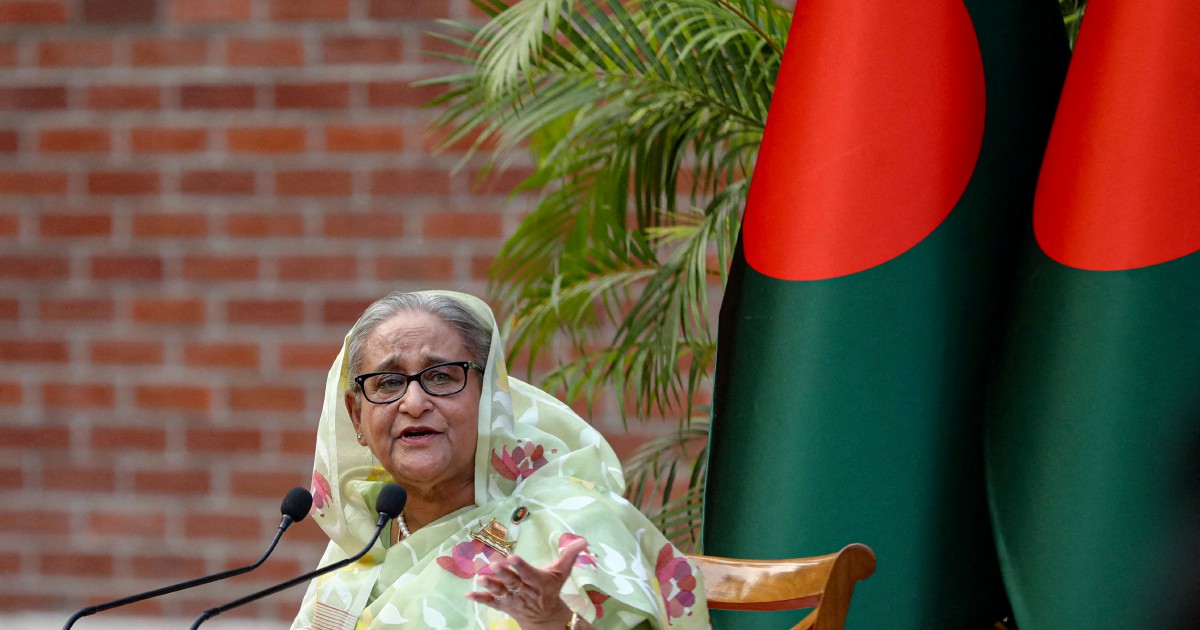
Bangladesh's ousted Prime Minister Sheikh Hasina has declared her determination to return to the country and defend herself in court, even as she faces a death sentence that she contends is a politically calculated move by her successors. Speaking from exile, Hasina rejected the conviction tied to a contentious 2024 crackdown on student-led demonstrations, asserting that the legal proceedings represent a weaponisation of the judicial system rather than legitimate accountability. Her statement signals a potentially volatile return to domestic politics in a nation already roiled by leadership turmoil and deep institutional fractures.
The circumstances that brought Hasina to this position illuminate the turbulent trajectory of Bangladeshi governance. What began as youth-driven protests escalated into a nationwide movement that ultimately precipitated her resignation in August 2024, forcing her to flee to neighbouring India. The demonstration started with legitimate grievances—notably demands for education reform and objections to government employment quota systems—but soon evolved into a broader challenge to her administration's authority. The government's response was severe, with security forces deploying live ammunition against demonstrators, resulting in loss of life and widespread injuries that hardened public sentiment against her tenure.
Hasina's conviction stems directly from this episode. The caretaker administration that succeeded her government initiated legal action, attributing responsibility for the violence to her leadership and security policies. From Hasina's perspective, this represents victor's justice rather than impartial jurisprudence. She maintains that she was attempting to maintain public order and that the scale of the response, while tragic, reflected the gravity of the civil disturbance. Her rejection of the verdict as politically inspired resonates with broader concerns about Bangladesh's judicial independence and the cyclical nature of recrimination that characterises post-transition politics in the country.
For Malaysian and Southeast Asian observers, the situation reflects familiar patterns across the region: the use of legal mechanisms to prosecute fallen leaders and the uncertain boundary between accountability and revenge politics. Bangladesh's trajectory mirrors episodes in Thailand, Myanmar, and elsewhere where regime change produces waves of prosecutions against predecessors. These cases typically raise questions about whether judicial processes serve the rule of law or become instruments of political settlement. The death sentence imposed on Hasina amplifies these concerns, as capital punishment for administrative decisions—however contested—sets a severe precedent that could reshape how future leaders approach sensitive political moments.
Hashina's determination to return, despite the execution risk, suggests she calculates that her political prospects depend on reasserting her presence in Bangladeshi politics. Remaining in exile indefinitely would amount to a de facto acceptance of both the conviction and the regime that imposed it. By pledging to face trial, she positions herself as willing to defend her record and challenge the legitimacy of the proceedings themselves. This gambit carries considerable personal risk but offers potential political redemption if she can frame the trial as a partisan exercise rather than justice.
The implications for Bangladesh's stability are substantial. A return by Hasina would almost certainly provoke intense political controversy and resurrect the fault lines that her departure was meant to heal. Her Awami League party, which dominated Bangladesh politics for years, retains organisational capacity and electoral support among certain constituencies. If she were to be acquitted or released through political negotiation, her reinstatement as a political actor could further destabilise an already fragile transition process. Conversely, her incarceration or execution would eliminate any realistic pathway to reconciliation between the Awami League and the interim government, potentially embedding grievances that could fuel future conflict.
The international dimension complicates the situation further. Bangladesh's principal ally and current refuge, India, maintains complex relationships with the interim government while historically supporting the Awami League. India's position on Hasina's status and potential return will significantly influence both domestic Bangladeshi politics and regional dynamics. Any Indian decision to either facilitate her return or continue providing safe harbour carries consequences for South Asian geopolitics and could affect Bangladesh's relationships with other neighbouring countries.
Within Bangladesh itself, public opinion on Hasina remains sharply divided. Supporters credit her administration with economic development and infrastructure projects, while critics emphasise her government's authoritarian tendencies and the catastrophic response to the 2024 protests. This polarisation makes consensus resolution difficult and raises questions about whether any government can credibly adjudicate her case. International observers and rights groups have already scrutinised the legal proceedings, questioning their procedural fairness and suggesting that trials of ousted leaders should meet heightened transparency standards.
Hasina's stance also reflects calculations about her personal security and legacy. Remaining abroad indefinitely exposes her to indefinite exile and irrelevance; facing trial at least opens avenues for eventual political rehabilitation or, at minimum, the opportunity to articulate her defence in a public forum. Her characterisation of the conviction as politically motivated is a foundational claim that, if substantiated through her testimony and cross-examination, could rehabilitate her reputation among supporters and potentially influence international assessments of Bangladesh's judicial impartiality.
Looking forward, Hasina's return would mark a critical juncture in Bangladesh's post-transition evolution. It would test whether the country's institutions can conduct fair proceedings amid intense political pressure and whether both the interim government and the Awami League can accept outcomes they may find unfavourable. For the broader region, the Bangladesh situation serves as a cautionary study in the enduring challenges of managing leadership transitions and the risks that short-term political victory through legal means can create long-term instability and international disrepute.

