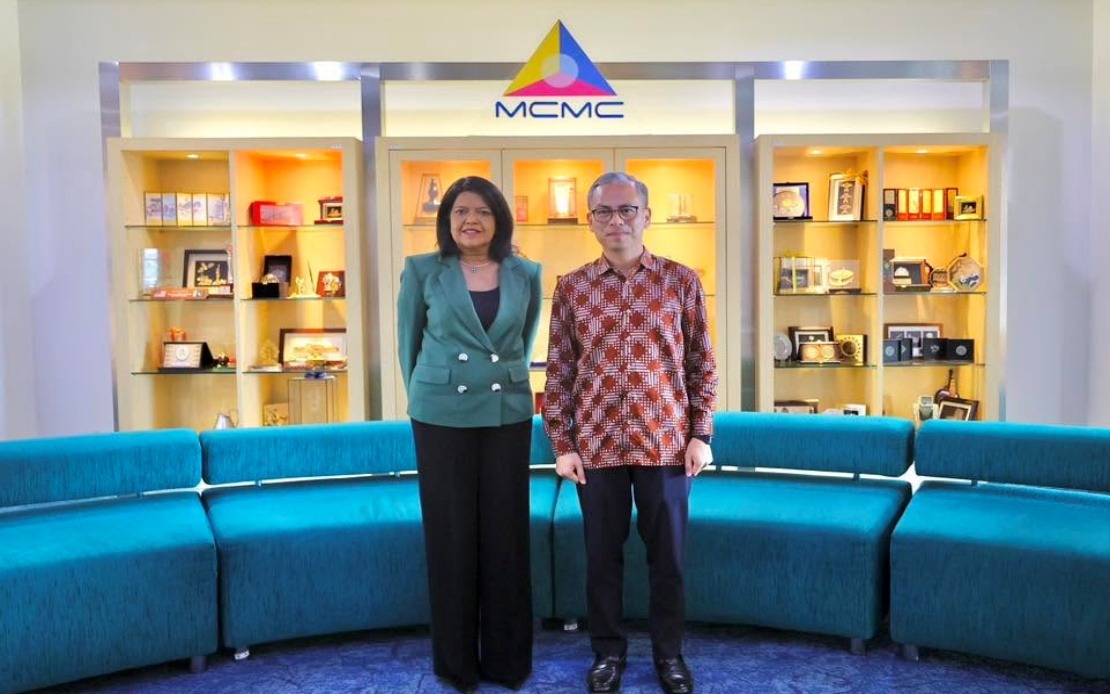
Datuk Fahmi Fadzil, Malaysia's Communications Minister, has publicly endorsed the elevation of Tan Sri Nallini Pathmanathan to the helm of the Malaysian Media Council, offering his congratulations through a social media statement on June 15. The announcement marks a significant moment for the country's media governance framework, particularly as the MMC operates under the newly established Malaysian Media Council Act 2025, which formally institutionalises the industry's self-regulatory mechanisms.
Nallini brings to the role an extensive judicial background as a former Federal Court judge, lending considerable institutional credibility to an organisation tasked with maintaining standards across Malaysia's diverse media landscape. Her appointment carries particular weight given the evolving conversation around media freedom and responsibility in Southeast Asia, where balancing editorial independence with ethical accountability remains contentious. The minister's public acknowledgement reflects broader government recognition of the need for robust, independent bodies capable of earning public trust while preserving journalistic integrity.
The Malaysian Media Council itself represents a relatively recent formal framework for the industry's self-regulation. Rather than depending solely on legislative enforcement or government intervention, the MMC embodies a collaborative approach where media outlets collectively establish and maintain professional standards. This model has gained traction globally as stakeholders increasingly view self-regulation as preferable to state-imposed restrictions, provided the mechanisms possess genuine independence and public accountability. For Malaysia specifically, such an approach may help address longstanding international scrutiny regarding press freedom while simultaneously protecting legitimate journalistic work from political pressure.
Fahmi's statement articulated several expectations for Nallini's tenure, notably emphasising the MMC's role in championing responsible media freedom. This phrasing reflects an ongoing tension in Malaysian media discourse—the desire to protect editorial autonomy while ensuring journalists operate within ethical boundaries that maintain public trust. Responsible freedom, as a concept, demands that journalists balance their investigative function with accuracy, fairness, and respect for privacy and dignity. The minister pointedly cited the strengthening of journalistic ethics as a priority, suggesting that the government views the MMC as instrumental in elevating professional standards across newsrooms and digital platforms alike.
The board's unanimous endorsement of Nallini's appointment, as confirmed at a May 26 meeting, signals consensus among media industry representatives that her candidacy commands broad support. This unanimity is noteworthy because the MMC comprises diverse stakeholders with sometimes competing interests—broadcasters, print publishers, digital media companies, and industry associations. That such a coalition reached consensus suggests either exceptional confidence in Nallini's impartiality or recognition that her judicial background offers a neutral foundation acceptable to competing factions within the media ecosystem.
Nallini's judicial experience carries implications beyond symbolic reassurance. Federal Court judges typically develop sophisticated understanding of constitutional principles, statutory interpretation, and the delicate balance between competing rights—skills directly applicable to resolving media complaints and disputes. Her familiarity with the Malaysian legal system and precedents governing expression, privacy, and defamation positions her to guide the MMC through complex cases where journalistic claims intersect with individual rights or national interests. This expertise may also facilitate productive dialogue between the media council and government bodies that regulate broadcasting or telecommunications.
The formal establishment of the MMC under the 2025 Act represents institutional maturation in Malaysia's media governance. Self-regulatory bodies function most effectively when they possess statutory recognition providing legitimate authority, clear operational parameters, and sufficient independence from both political interference and industry capture. By anchoring the MMC in legislation, the government has created a framework that media organisations can reference when defending editorial decisions, while simultaneously establishing accountability mechanisms that protect public interest. This legislative foundation distinguishes Malaysia's approach from purely voluntary industry associations lacking formal authority.
For Malaysian readers, Nallini's appointment carries practical significance regarding media accountability and complaints resolution. The MMC operates as the primary mechanism through which the public can lodge grievances about media conduct without resorting to courts. Clear, respected leadership determines whether complaints are addressed fairly and expeditiously. A chairman with judicial temperament and legal expertise may enhance the council's capacity to handle contentious cases involving allegations of bias, invasion of privacy, or deliberate falsehoods—issues increasingly prevalent in an environment where digital platforms blur traditional boundaries between professional journalism and user-generated content.
The broader context encompasses Southeast Asia's varied approaches to media regulation. Regional neighbours employ different models—some relying heavily on government oversight, others permitting relatively unfettered private media, and several experimenting with self-regulatory frameworks similar to Malaysia's. The success of the MMC under Nallini's leadership may influence how other nations conceptualise media governance, particularly if the council demonstrates that independent self-regulation can simultaneously protect journalistic freedom and maintain public confidence in media reliability. This potential regional influence underscores the significance of getting the model right.
Nallini's leadership will face immediate challenges as digital disruption continues fragmenting the media ecosystem. Traditional broadcast and print outlets now compete with social media platforms, news aggregators, and independent content creators operating beyond conventional professional structures. The MMC's regulatory remit and practical enforcement capacity across this fragmented landscape remain to be fully tested. How Nallini navigates these jurisdictional ambiguities—determining which platforms and producers fall within the council's scope—will substantially shape the body's relevance and effectiveness in the coming years.
The minister's emphasis on sustaining the industry financially alongside strengthening ethical standards reflects pragmatic recognition that media houses require viable business models to maintain professional journalism. Under-resourced newsrooms compromise their capacity to invest in investigative reporting, fact-checking, and editorial oversight. By positioning the MMC as an instrument for industry sustainability, Fahmi suggested that responsible self-regulation ultimately serves commercial interests—creating competitive advantages for outlets maintaining high standards while differentiating professional journalism from information of questionable origin. This reframing may help media organisations appreciate that ethical conduct and business viability are complementary rather than opposed objectives.

