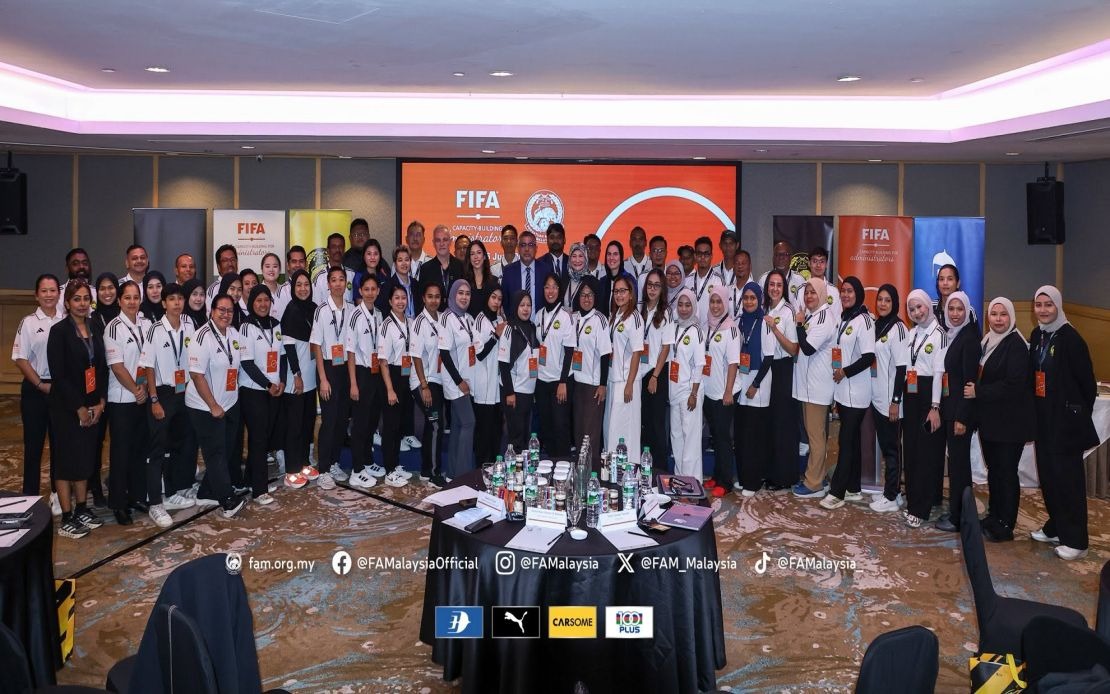
The Football Association of Malaysia is deepening its commitment to developing women's football by shifting focus beyond tactical and technical matters on the field towards building a robust administrative foundation. The launch of FIFA's Capacity-Building For Administrators 2026 programme represents a strategic acknowledgment that sustainable growth in women's sports requires investment in the people who manage teams, handle player welfare, and guide organizational strategy. This four-day initiative, which commenced on June 23, brings two FIFA Women's Football Development Experts—Safia Abdeldayem and Pema Choden Tshering—to Malaysia to deliver specialized training to administrators, managers, and support staff.
The programme addresses a critical gap in many football associations: the professionalization of administrative roles. While Malaysian women's football has shown progress on the field through increased participation and improved competitive standards, the infrastructure supporting these achievements often lags behind elite standards. By partnering with FIFA, FAM signals its intention to align Malaysian practices with international benchmarks, ensuring that organizational structures match the ambitions of the national teams and clubs. This alignment becomes particularly important as the sport matures and demands increase for professional management of competitions, player contracts, and organizational finances.
Participants will engage with four key modules designed to address contemporary challenges in women's football management. The Women's Leadership component equips administrators with skills to navigate complex organizational dynamics and cultivate inclusive environments where women thrive in decision-making roles. The Women's Competition module provides insights into designing and managing tournament structures that are both commercially viable and supportive of player development. Understanding Players' and Clubs' Rights ensures that administrators can navigate the increasingly complex regulatory environment protecting athletes' interests while maintaining institutional sustainability. Strategic Planning instruction enables participants to develop long-term visions for their organizations that balance immediate results with sustainable growth trajectories.
The presence of senior FAM officials, including secretary-general Datuk Noor Azman Rahman and Women's Football Technical Director Soleen Al-Zoubi, underscores the association's institutional commitment to this initiative. The attendance of Datuk Suraya Yaacob, who holds positions on both FIFA's Women's National Team Competitions Committee and the AFC Women's Football Committee, elevates the programme's significance within regional football governance. These leadership endorsements signal to administrators throughout Malaysian women's football that professional development in administrative roles carries the same importance as coaching credentials or player development pathways.
Malaysia's timing in pursuing this programme aligns with broader regional trends. Across Southeast Asia, women's football has experienced accelerating growth, driven by increased media coverage, corporate sponsorship, and youth participation. However, this growth has outpaced the development of administrative capacity in many countries, creating bottlenecks where poorly managed competitions, unclear player pathways, and inefficient organizational structures hinder progress. By investing now in administrator training, FAM positions Malaysia to capitalize on the growing momentum in women's football across the region, potentially establishing itself as a centre of excellence for women's sports administration in Southeast Asia.
The programme also reflects evolving global understanding of gender equity in sports. International football bodies increasingly recognize that advancing women's football requires deliberate, sustained investment across all operational areas, not merely token gestures toward female participation. FIFA's commitment to this capacity-building initiative demonstrates the organization's recognition that women's football development depends heavily on having skilled, committed administrators who understand both the sport's unique challenges and opportunities. For Malaysian women's football, access to this expertise through FAM represents a rare opportunity to accelerate institutional maturation.
FAM's emphasis on creating a "stronger, more professional and sustainable ecosystem" reflects sophisticated thinking about women's football development. The association recognizes that accumulating skilled administrators and women leaders throughout Malaysian football creates multiplicative benefits. When team managers understand modern competition structures and player rights frameworks, they make better decisions that protect athletes and enhance professionalism. When club administrators grasp strategic planning principles, they create stable environments where young players develop. When women occupy leadership positions across football organizations, they normalize female expertise and decision-making authority, which in turn encourages greater female participation at all levels.
The programme's focus on off-field development complements FAM's concurrent efforts to strengthen women's football on the pitch. Technical coaching improvements and player development schemes yield visible results through improved team performance and tournament results. However, these achievements become fragile without institutional foundations capable of sustaining them. Professional administrators ensure that player development pathways function reliably across economic cycles, that competition structures remain fair and transparent, and that organizational knowledge persists despite individual staff changes. By building these foundations now, FAM invests in women's football's long-term resilience.
For Malaysian women's football stakeholders—players, coaches, club officials, and fans—this initiative should enhance the sport's professionalism and accessibility. Better-managed competitions create fairer pathways for emerging talent. Well-structured club administrations provide clearer information about opportunities and requirements. Transparent organizational practices build supporter confidence that the sport operates with integrity and financial responsibility. These improvements accumulate to create environments where talented young women and girls can pursue football with genuine professional prospects, rather than treating the sport as a hobby dependent on volunteer enthusiasm.
The broader context matters too. Southeast Asia's football landscape remains dominated by men's competitions, despite women's football's demonstrated capacity to attract audiences, sponsors, and talented athletes. Malaysia's investment in administrative capacity for women's football represents a deliberate choice to build parallel structures that eventually achieve genuine parity. This requires not just better marketing or occasional promotional campaigns, but fundamental institutional changes that embed women's football within mainstream football governance with equal attention to resources, professionalism standards, and strategic planning.
FAM's choice to emphasize women's football administration through this FIFA programme also carries implications for Malaysian sports governance more broadly. As other national sports associations observe FAM's commitment and the tangible benefits that flow from well-trained administrators, pressure may mount for similar investments in other emerging sports or in women's programmes across various federations. This could catalyze a virtuous cycle where professional sports administration becomes normalized across Malaysian sports, lifting standards and creating employment opportunities for administrative professionals throughout the sector.
The success of this capacity-building initiative will depend on how thoroughly FAM implements and sustains the knowledge transferred during the four-day programme. Successful international development programmes typically require follow-up support, mentoring relationships, and opportunities for administrators to apply new learning within their organizations. FAM's next steps in supporting participants' application of this training will prove crucial in determining whether the programme represents a genuine institutional breakthrough or merely a single training event. Expectations are that FAM will establish networks enabling programme graduates to continue collaborating, sharing experiences, and supporting each other's professional development in administrative roles.

