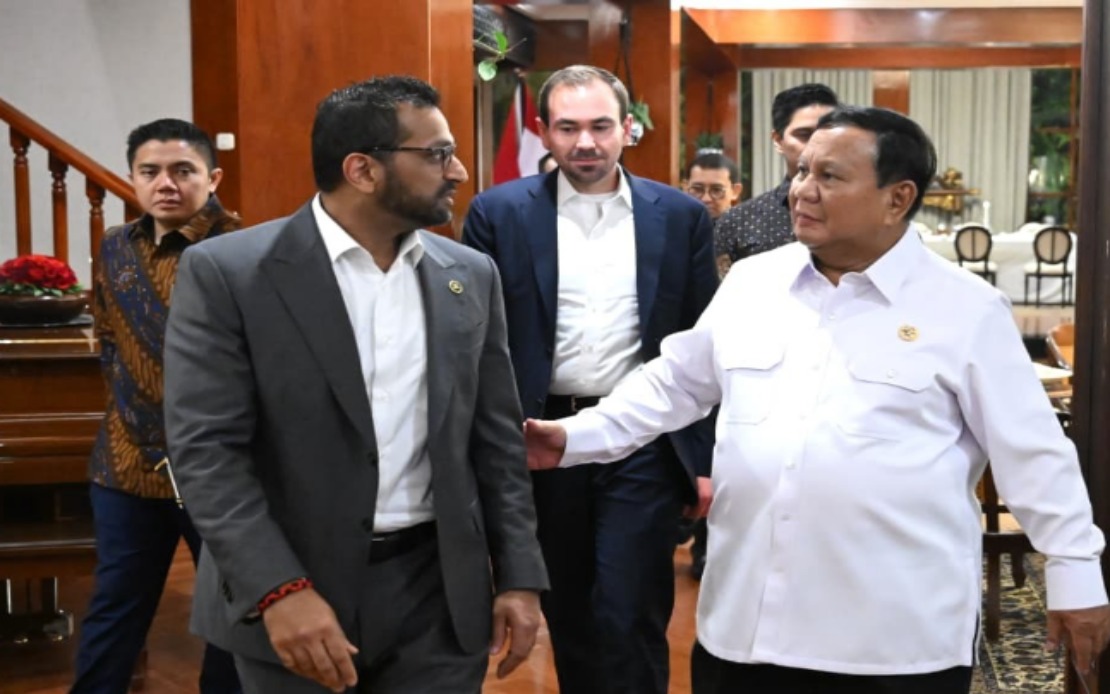
Indonesia has achieved another significant victory in its campaign to recover culturally significant artefacts looted and smuggled abroad, as the United States Federal Bureau of Investigation formally returned a collection of illegally trafficked Indonesian objects during a high-level diplomatic engagement in Jakarta. The handover, conducted by FBI Director Kash Patel during a courtesy call with President Prabowo Subianto at Kertanegara on Wednesday, underscores the growing partnership between Indonesia and American law enforcement in combating cultural patrimony theft and strengthening repatriation mechanisms across the Pacific.
Indonesian Culture Minister Fadli Zon has seized upon the moment to advocate for an even more ambitious repatriation framework, signalling through official statements that Jakarta intends to leverage its relationship with Washington to systematically recover stolen heritage pieces still housed in American institutions and private collections. The minister's emphasis on institutional coordination—specifically mentioning support from the State Secretariat and Ministry of Foreign Affairs—reflects a whole-of-government approach to cultural recovery that extends beyond conventional museum diplomacy into formal diplomatic channels.
The artefacts returned this week originate from Indonesia's eastern regions, particularly Papua, where they hold profound cultural significance for the Dani and Asmat peoples as well as communities surrounding Lake Sentani. These objects represent not merely museum pieces but living connections to indigenous histories and spiritual traditions that have endured despite centuries of colonial extraction and modern-era smuggling networks. Their recovery therefore carries symbolic weight beyond archaeological or historical interest, affirming indigenous rights to cultural self-determination in an era when such repatriation efforts increasingly align with broader decolonisation movements across Asia and the Global South.
The pathway to recovery involved detailed provenance research—a methodical process of tracing object ownership histories—that established conclusive evidence of illegal smuggling into American territory. This forensic approach to cultural objects mirrors strategies deployed by major Western museums in recent years, though notably the FBI's cooperation suggests growing American willingness to support source nations' recovery claims rather than defending Western institutional possession. The investigation and recovery process demonstrates sophisticated investigative capacity within the FBI's art crime division, a unit that has expanded significantly in recent years as cultural trafficking has emerged as a substantial organised crime category.
Fadli's public statements reveal awareness that this particular recovery operation, while important, represents merely a fraction of Indonesia's total cultural loss across international markets. His reference to previous FBI assistance in recovering bronze statues and objects from multiple archaeological sites indicates an established pattern of cooperation that has accumulated over several years. However, the minister's emphasis on future expansion of this partnership suggests dissatisfaction with the current pace of recovery, implying that thousands of additional Indonesian artefacts likely remain in American museums, galleries, and private hands awaiting identification and repatriation.
The decision to display recovered artefacts at Indonesia's National Museum reflects strategic thinking about cultural sovereignty and public engagement. By centralising these objects in a prominent national institution rather than dispersing them to regional museums, Jakarta emphasises their importance to the national cultural narrative while creating a visible demonstration of successful diplomatic recovery efforts. This curatorial choice also facilitates public education about both Indonesia's rich heritage and the persistent problem of cultural trafficking, potentially mobilising domestic support for further recovery campaigns.
For Southeast Asian nations, Indonesia's success in this arena carries instructive implications. Many regional countries possess comparable colonial-era losses—objects extracted during periods of European imperial dominance—yet lack either the diplomatic infrastructure or investigative resources to pursue systematic repatriation. Indonesia's evolution toward a coordinated governmental strategy, combining FBI cooperation with formal diplomatic engagement, establishes a model that wealthier ASEAN members might emulate. Thailand, Vietnam, and the Philippines face similar challenges regarding culturally significant objects housed in Western institutions, suggesting potential for expanded regional cooperation on repatriation matters.
The FBI's willingness to support Indonesian repatriation claims also reflects shifting American policy perspectives on cultural property. Historically, American museums and collectors resisted repatriation arguments, invoking universal museum principles and claims that Western institutions preserved objects better than source nations could. Contemporary FBI cooperation, by contrast, treats cultural trafficking as a law enforcement matter rather than a collecting ethics debate, fundamentally reframing the relationship between American institutions and source nations' patrimony claims. This doctrinal shift, while incomplete across American cultural institutions, creates opportunities for source nations to leverage criminal law frameworks rather than relying solely on moral suasion.
Looking forward, the strength of Indonesia-US repatriation cooperation will depend substantially on resource allocation and institutional commitment from both governments. The FBI's art crime division operates with limited personnel relative to the scale of global cultural trafficking, potentially constraining the speed at which additional Indonesian objects can be identified and processed for recovery. Similarly, Indonesia's capacity to receive and properly conserve large numbers of repatriated objects—many of which may require specialised restoration—will influence the practical feasibility of expanded repatriation flows.
Minister Fadli's explicit invocation of institutional support from multiple Indonesian government agencies signals recognition that successful cultural repatriation transcends heritage ministry portfolios, requiring coordinated diplomatic, legal, and conservation resources. This institutional broadening, combined with demonstrated American cooperation, positions Indonesia as potentially the most sophisticated Southeast Asian practitioner of systematic cultural recovery. Whether this cooperation can be sustained and expanded beyond high-profile diplomatic moments will ultimately determine whether current recovery successes represent the beginning of systematic heritage restoration or isolated victories within an ongoing pattern of cultural loss.

