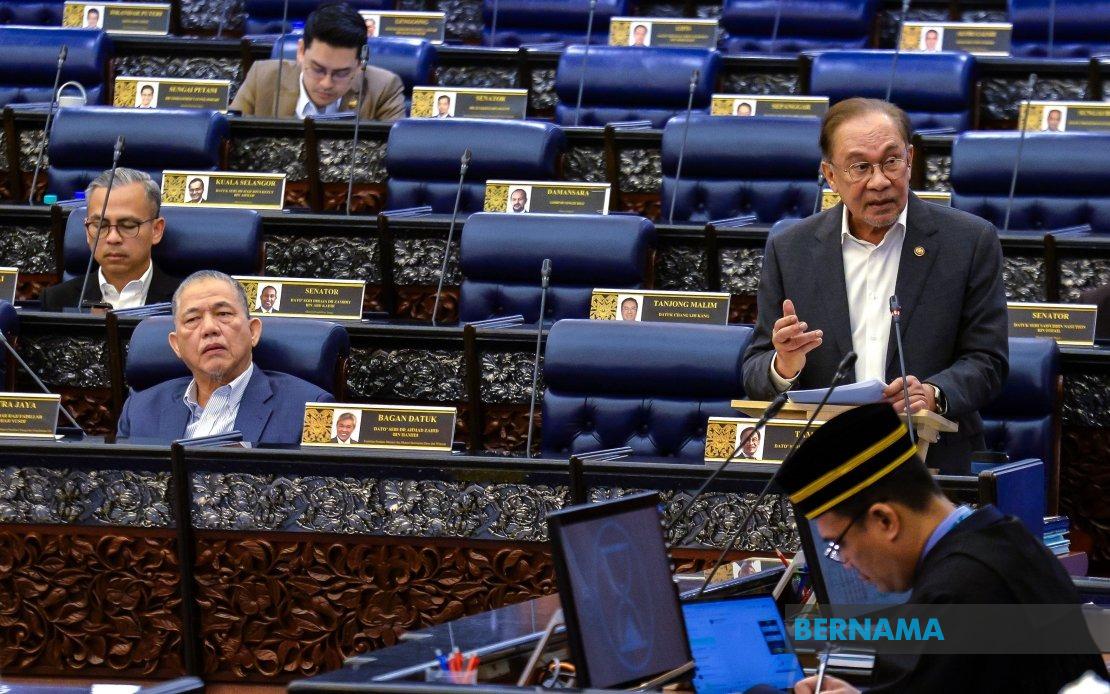
Prime Minister Datuk Seri Anwar Ibrahim has moved to clarify the federal government's approach to distributing funds among Malaysia's states, emphasizing that the allocation process prioritizes identified development needs and the welfare of citizens rather than mirroring each state's tax contributions to national coffers. Speaking during parliamentary question time, Anwar highlighted a significant disparity in the allocation-to-revenue relationship, noting that virtually all states receive substantially more federal funding than the taxes they generate, with the notable exceptions of Selangor and Penang, which maintain higher revenue collection positions.
This statement addresses growing concerns from certain quarters that the federal allocation mechanism creates unfairness or deliberately marginalizes particular states. Anwar's clarification attempts to reframe the narrative around federal-state financial relations by emphasizing that the MADANI Government's approach is fundamentally needs-based rather than revenue-based. The distinction carries significant implications for Malaysia's federal structure, as it suggests the central government views resource distribution as a tool for equalization and development across regions with varying capacities for revenue generation.
The Prime Minister outlined the specific development priorities that guide allocation decisions across the federation. These include essential infrastructure for flood mitigation and disaster prevention, particularly important given Malaysia's vulnerability to seasonal flooding and increasingly erratic weather patterns. Critical transportation projects such as the Pan Borneo highway upgrade and new road construction form another major allocation category, reflecting the government's recognition that connectivity challenges persist in less developed regions. Anwar also highlighted water drainage systems, reflecting infrastructure deficits in several states, alongside targeted poverty eradication programmes and substantial investments in education and school facilities.
Anwar drew a direct comparison with the previous administration, asserting that the MADANI Government has provided historically higher allocations to states including Kedah, Terengganu and Kelantan. This comparative claim carries political significance, as these states represent different political configurations and regional demographics. Kedah and Kelantan have traditionally been opposition-controlled territories, which could suggest that allocation decisions remain insulated from partisan political calculations, though such assertions naturally invite scrutiny and independent verification. The emphasis on Terengganu and Kelantan, both states with significant rural populations and lower revenue-generating capacity, underscores the stated commitment to needs-based distribution.
The parliamentary exchange emerged from a question posed by Datuk Seri Doris Sophia Brodi of GPS representing Sri Aman, who raised concerns about whether current federal allocations fairly compensate states for their tax contributions and whether the MADANI Government has substantively reformed the allocation methodology. This line of questioning reflects ongoing federalism tensions that periodically surface in Malaysian politics, where state governments—regardless of their political affiliation—occasionally voice dissatisfaction with federal resource distribution relative to their revenue contributions.
The allocation methodology represents a fundamental policy choice with economic and political dimensions. A needs-based system theoretically promotes regional equity by directing resources toward areas with greater development deficits, infrastructure gaps, and higher poverty incidence. This approach aligns with development economics principles suggesting that unequal investment can perpetuate regional disparities. However, revenue-based allocation frameworks argument posits that states generating greater tax revenue have legitimate claims to higher federal returns, potentially incentivizing economic development and entrepreneurship in all regions.
Malaysia's federal allocation system operates within a constitutional framework established during independence, though specific mechanisms and criteria have evolved. The tension between equity and revenue-recognition persists across federal systems worldwide, from Canada to Australia to the United States, each balancing different principles of fairness and efficiency. Anwar's articulation suggests the MADANI Government consciously positions itself on the equity side of this spectrum, emphasizing redistribution toward less advantaged regions.
For states like Selangor and Penang, which maintain higher revenue collection, the implication is that they receive federal allocations lower than their tax contributions—a trade-off these economically dynamic states have historically accepted as part of the federal compact, though occasional political friction emerges around this issue. Conversely, states receiving allocations exceeding their tax contributions benefit from the central government's resource redistribution mechanism, which supports infrastructure development and public services that might otherwise languish due to revenue constraints.
The practical implementation of needs-based allocation requires ongoing assessment of development priorities, infrastructure gaps, and poverty indicators. This necessitates bureaucratic machinery for evaluating state-level requirements, potentially creating opportunities for both rigorous analysis and political discretion. Anwar's parliamentary remarks suggest confidence that current methodologies reflect genuine development assessment rather than partisan calculations, though independent analysis of allocation patterns across different state political configurations would strengthen such claims.
For Southeast Asian observers and Malaysian stakeholders, this allocation philosophy reflects broader questions about federal resource distribution in developing economies. Several ASEAN nations grapple with similar federal-regional tensions, making Malaysia's approach instructive. The emphasis on needs-based allocation, if genuinely implemented, demonstrates commitment to reducing regional disparities and supporting equitable development across the federation. However, translating policy intentions into transparent, consistent implementation remains an ongoing challenge requiring sustained scrutiny from both legislatures and civil society institutions monitoring federal-state financial relations.

