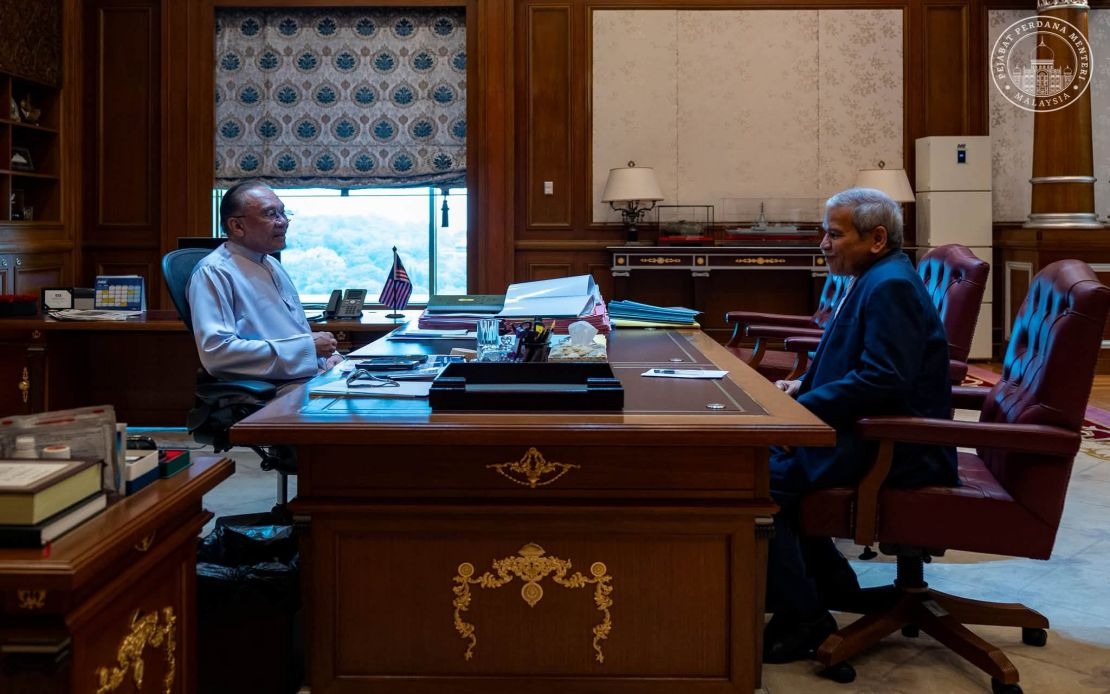
Prime Minister Datuk Seri Anwar Ibrahim has reiterated the government's commitment to bolstering the Federal Land Development Authority as a vital institution dedicated to enhancing the quality of life for settlers and their dependents. During a recent meeting in Putrajaya with newly appointed FELDA chairman Tan Sri Ahmad Badri Mohd Zahir, the Premier underscored the strategic importance of maintaining institutional momentum while addressing contemporary challenges facing the organisation and the communities it serves.
Anwar, who simultaneously holds the portfolio of Finance Minister, articulated a dual imperative for FELDA's development. Beyond the traditional focus on settler welfare, he emphasised that strengthening the scheme's economic viability and competitive positioning remains essential for long-term sustainability. This balancing act represents a fundamental shift in how the government approaches FELDA's role in the contemporary Malaysian economy, acknowledging that social objectives and commercial performance are interdependent rather than mutually exclusive.
The appointment of Ahmad Badri on July 15 marks a leadership transition at FELDA following the conclusion of Datuk Seri Ahmad Shabery Cheek's tenure on June 30. This change occurs at a critical juncture for the agency, which oversees one of Malaysia's largest settlement schemes spanning decades of agricultural and rural development. The new chairman inherits an institution navigating profound transformations in land use, commodity markets, and demographic shifts among settler populations across the country.
A particular concern raised by the Prime Minister centres on generational transitions within FELDA communities. Younger settlers face substantially different economic realities and opportunities compared to their predecessors who established these schemes decades ago. Issues ranging from farm profitability and land subdivision to educational prospects and career pathways for the next generation require targeted policy interventions. Anwar's emphasis on addressing young settlers' concerns signals recognition that FELDA's relevance depends on demonstrating tangible benefits to those inheriting these agricultural enterprises.
The broader context of FELDA's institutional challenges extends beyond individual schemes. The authority operates within an evolving agricultural sector characterised by volatile commodity prices, climate variability, and changing consumer preferences. Palm oil, traditionally a cornerstone of FELDA's economic model, faces increasing global scrutiny regarding sustainability and environmental impact. Simultaneously, alternative agricultural products and value-added processing present both opportunities and risks for existing settler communities.
Anwar's remarks reflect the MADANI Government's stated philosophy of balancing economic modernisation with social welfare considerations. By explicitly committing to full governmental support for FELDA, the administration signals that the scheme remains a priority within broader rural development and poverty alleviation frameworks. This positioning matters significantly for policy continuity and resource allocation, as FELDA's effectiveness depends on sustained political backing and adequate financing across election cycles.
The appointment of Ahmad Badri carries expectations that his leadership will revitalise institutional confidence among settlers who have experienced periods of uncertainty regarding FELDA's strategic direction. His mandate involves restoring settler trust while positioning the authority for relevance in future decades. This requires navigating complex terrain involving land management, commodity trade negotiations, cooperative development, and social service delivery within financial constraints.
From a regional perspective, FELDA's trajectory holds implications for how neighbouring Southeast Asian nations approach agricultural settlement schemes and rural development. Malaysia's experience—both successes and challenges—offers lessons for other countries grappling with similar demographic and economic transitions in rural areas. The manner in which FELDA adapts to contemporary pressures may influence regional thinking about sustainable agricultural development and settler empowerment.
The emphasis on economic competitiveness within FELDA reflects global trends in agricultural policy, where schemes increasingly must demonstrate commercial viability alongside social objectives. This requires innovation in farm management practices, crop diversification, digital adoption, and market linkages. Younger settlers particularly expect access to modern farming technologies and business development support that can improve returns and reduce drudgery associated with traditional cultivation methods.
Looking forward, FELDA's success under Ahmad Badri's leadership will likely be measured against multiple performance indicators encompassing settler income levels, intergenerational participation in schemes, environmental sustainability metrics, and institutional financial health. The Prime Minister's public backing provides political capital for difficult decisions that may be necessary to strengthen the organisation, though implementation will require careful stakeholder engagement across diverse settler communities with varying circumstances and interests.

