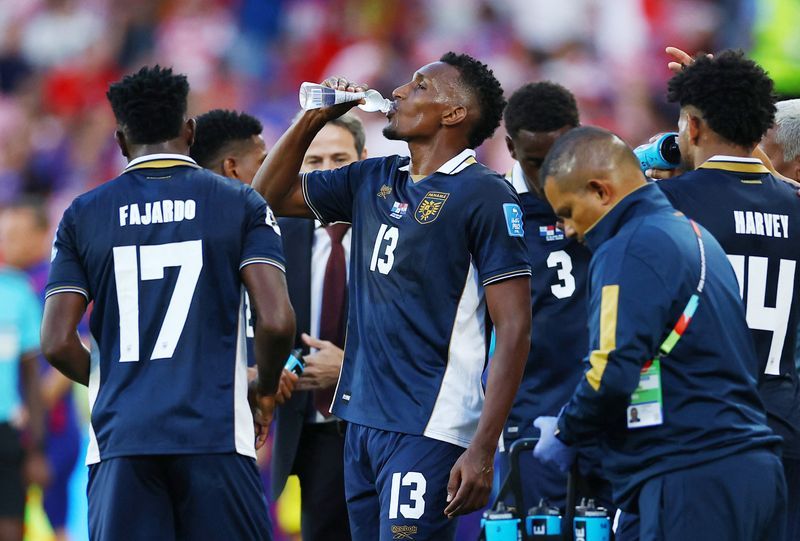
FIFA president Gianni Infantino has moved to quash mounting criticism of the mandatory hydration breaks implemented at the World Cup, firmly denying that commercial considerations drive the controversial rule. Speaking on Wednesday, Infantino stressed that the decision reflects the sport's commitment to player welfare rather than generating additional revenue streams, a response to widespread speculation that the stoppages primarily benefit broadcasters seeking advertising opportunities.
The three-minute breaks, mandated at the 22nd and 67th minutes of every match, emerged as a contentious feature following the tournament's opening fixtures. The pauses were ostensibly introduced to assist players in coping with the challenging climatic conditions across North America, where temperatures during matches can reach levels that pose genuine health risks. Yet the breaks have simultaneously created additional commercial windows for broadcasters, sparking debate about whether FIFA prioritized business interests over the game's traditional flow and integrity.
Infantino directly addressed the financial controversy, stating that FIFA receives no incremental revenue from the breaks since all broadcast agreements were negotiated and finalized before the hydration rule was established. This clarification aims to deflate suggestions that the governing body engineered the stoppages to unlock lucrative advertising slots. The FIFA chief emphasized that framing the measure as a revenue-generating initiative misrepresents the organization's motivations, positioning it instead as a unilateral commitment to player protection.
However, the rule carries secondary consequences that have troubled coaches and analysts. The structured breaks provide coaching staff with organized opportunities to deliver tactical instructions, fundamentally altering how teams can adapt during matches. This strategic dimension has proven controversial among football's elite, with several prominent managers voicing concerns that the imposed rhythm disrupts the natural ebb and flow of competitive play and inadvertently grants teams additional tactical flexibility unavailable in conventional matches.
England manager Thomas Tuchel articulated perhaps the strongest objection, arguing that the breaks "interrupts and changes the identity of the football match" by fragmenting the continuous contest that has defined the sport for generations. Similarly, Uruguay manager Marcelo Bielsa contended that dividing matches into shorter, segmented blocks eliminates a fundamental characteristic of football—the sustained intensity and mental endurance required to navigate uninterrupted play. These critiques suggest the breaks represent more than a practical adjustment; they constitute a structural change to how the game is contested.
Not all coaching figures have rejected the rule outright. Spain manager Luis de la Fuente and Netherlands captain Virgil van Dijk acknowledged the legitimate intent behind mandating hydration stoppages in genuinely extreme conditions, yet they questioned whether the breaks should apply universally across all venues and circumstances. Their position highlights a nuanced objection: the rule may address a genuine health concern in certain matches while being unnecessarily imposed in cooler settings or at indoor facilities where temperature concerns are minimal. This selective application debate suggests that a more granular approach might satisfy both player welfare advocates and those concerned about preserving traditional match dynamics.
Infantino's defense extended beyond denying commercial motivation, instead constructing a comprehensive rationale grounded in player recovery and competitive equity. He emphasized that tournaments like the World Cup demand enormous physical toll from athletes, particularly when teams potentially compete in eight matches across a 39-day competition window. From this perspective, providing structured moments for physiological recovery represents responsible tournament management rather than commercial opportunism. The FIFA president positioned rest opportunities as essential to maintaining player health across the demanding schedule.
The competitive fairness argument forms the centerpiece of Infantino's case. He pointed out that without standardized breaks, teams would face inconsistent conditions depending on match venue and climate, creating situations where coaches in hotter environments might implement tactical adjustments unavailable to colleagues operating under cooler circumstances. From FIFA's standpoint, ensuring all 32 teams compete under identical conditions—including the same access to recovery windows—represents a fundamental principle of sporting integrity, regardless of external temperature variations.
Infantino argued that evidence indicates the breaks have not diminished match intensity or player performance levels. By suggesting that athletes maintain high-performance standards throughout matches despite the stoppages, he implies that concerns about disrupted momentum may overstate the actual competitive impact. This empirical claim forms a crucial counterargument to coaches who suggest the breaks fundamentally compromise the sport's essence, though it remains contested by those who observe subjective qualitative changes in how matches unfold.
The hydration break controversy reflects broader tensions in modern football between tradition and adaptation, commercial imperatives and player welfare, and centralized decision-making authority and stakeholder input. For Malaysian football observers and Southeast Asian readers, the debate carries particular relevance given the region's tropical climate and regular exposure to extreme heat during competitions. The World Cup's approach to managing environmental challenges could influence how football's Asian competitions address similar physiological demands on players, potentially establishing precedents for regional tournaments operating in comparable climatic conditions.
The implementation of these breaks also raises questions about how FIFA balances multiple objectives when they conflict. Infantino's insistence that the motivation is purely sporting attempts to close down commercial criticism, yet the coincidental creation of advertising opportunities suggests the rule will inevitably serve multiple functions simultaneously. Whether stakeholders ultimately accept this justification may depend less on FIFA's stated intentions and more on whether players, coaches, and fans perceive tangible benefits to match quality and player welfare that justify the structural modification to a sport defined largely by its continuous, uninterrupted flow.

