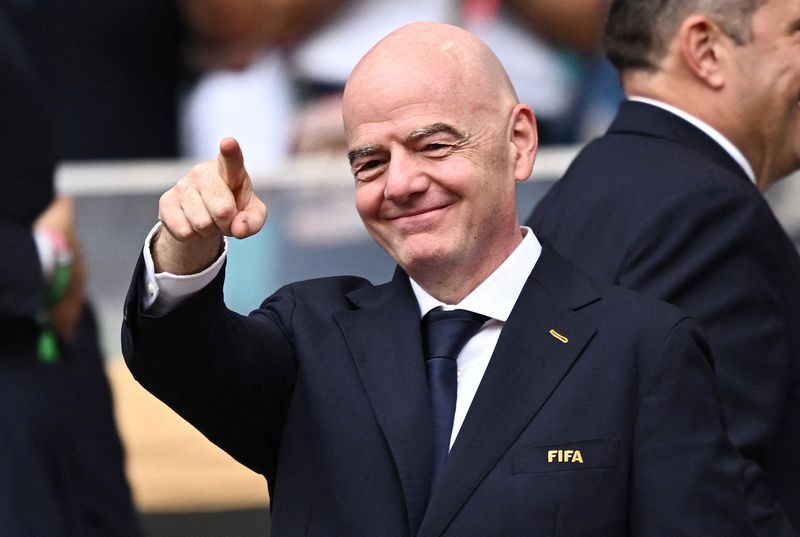
FIFA President Gianni Infantino faces a significant credibility crisis after the Football Association of Wales announced it is withdrawing its endorsement for his candidacy in the 2027-2031 term, marking the first formal defection by a national federation in response to the collapse of his bold commercialisation strategy for world football's flagship tournament.
The crisis stems from FIFA's ambitious attempt to raise up to $4.2 billion from private investors by selling approximately a 20% stake in a newly created entity that would oversee the World Cup and other major competitions. The proposal, which would have fundamentally altered the financial structure of international football, encountered fierce and coordinated opposition from key stakeholders and member confederations, ultimately forcing FIFA to abandon the initiative on Friday.
The Welsh Football Association's decision represents more than routine political positioning. In a formal statement, the FAW cited systematic failures across multiple governance dimensions, declaring that Infantino had forfeited its confidence through deficient processes, poor leadership judgment, inadequate stakeholder communication, and what it characterised as a fundamental failure to prioritise football's interests. The language employed—suggesting a broader pattern of governance breakdown rather than a single misstep—indicates deep institutional concern rather than tactical objection to one proposal.
Infantino's difficulties intensified rapidly over the weekend when UEFA and CONCACAF, the football confederations governing Europe and North America respectively, issued statements expressing lost confidence in his leadership. UEFA's position proved particularly significant, as the European body had spearheaded the organised resistance to the commercialisation plan and publicly welcomed its abandonment. Though UEFA refrained from confirming media reports of potential legal action against FIFA, it did serve notice of a document preservation order, a procedural step that typically precedes formal investigation or litigation and indicates serious institutional intent to pursue the matter further.
The timing of these interventions compounds Infantino's predicament. When he announced his intention to seek a fourth term as FIFA president in April, his re-election appeared virtually assured. Since replacing Sepp Blatter in 2016, Infantino has twice won re-election without facing opposition, establishing himself as apparently unassailable within FIFA's internal politics. However, analysts observing the current upheaval note that the backlash against the failed proposal has exposed substantial undercurrents of dissatisfaction among FIFA's member base that had previously remained dormant or unvocalised.
The collapse of the commercialisation initiative carries particular significance for Southeast Asian football federations and leagues, which depend substantially on international competition schedules and broadcasting arrangements determined by FIFA's commercial frameworks. Any instability in FIFA's leadership or uncertainty regarding future governance structures potentially affects the financial arrangements underpinning regional football development programmes and competition scheduling throughout Asia.
For Malaysian football specifically, governance instability at FIFA level resonates with domestic concerns about institutional credibility and stakeholder confidence. Malaysia's own football administration has faced periodic scrutiny regarding decision-making transparency and stakeholder engagement—issues that the FAW explicitly identified in its withdrawal statement. The Welsh federation's emphasis on governance failures and communication deficits reflects concerns about institutional accountability that resonate across international sport administration globally.
The convergence of withdrawals from national federations and confederations suggests that Infantino's path toward the March Congress in Morocco—where FIFA members will formally consider his candidacy—has become considerably more complicated than anticipated. Whereas his re-election had been regarded as procedurally inevitable, the mobilisation of opposition indicates potential for meaningful contest, something FIFA has not experienced during Infantino's tenure. This represents a fundamental shift in the political dynamics surrounding his presidency.
Football's global governance structure depends upon consensus and confidence among members representing 211 national federations worldwide. When major confederations and prominent individual federations begin withdrawing support, it signals that the ground-level support Infantino cultivated during his first two terms may have eroded significantly. The issue extends beyond commercial arrangements; it encompasses questions about institutional leadership, decision-making processes, and the extent to which FIFA's senior management properly consults and respects member federation interests before pursuing major strategic initiatives.
The failed commercialisation plan itself reflected Infantino's vision for modernising FIFA's financial model and creating new revenue streams independent of traditional broadcasting and sponsorship arrangements. However, the proposal's ultimate fate suggests limits to top-down governance approaches within sport's international bodies. Stakeholders—including confederations, member federations, and potentially player unions and league representatives—possess sufficient collective power to resist initiatives they perceive as threatening their interests or undermining institutional legitimacy, regardless of senior leadership endorsement.
The implications extend beyond Infantino's immediate political prospects. The episode illuminates persistent tensions within international football governance between FIFA's commercial imperatives and member federation autonomy. How football's global governing body resolves these tensions during the coming months will influence not merely Infantino's re-election outcome, but the broader trajectory of FIFA's relationship with member organisations and the strategic direction of international football development across all regions, including Southeast Asia.

