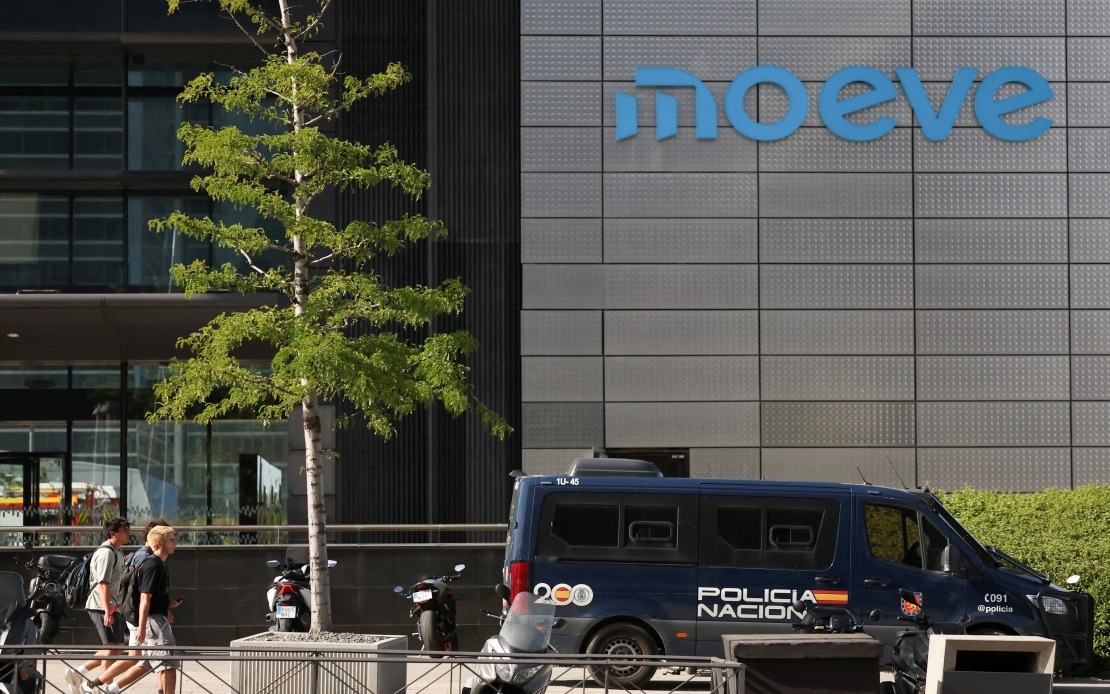
Madrid's Torre Moeve, one of Spain's most recognisable landmarks and the nation's second-tallest building, caught fire on Tuesday afternoon, triggering a dramatic emergency response that left visible plumes of smoke drifting across the city's skyline. The incident began with an explosion inside the structure at approximately 5.00 pm local time, according to reports from Spain's National Police cited by RTVE, the country's national broadcaster. The sudden nature of the explosion raised immediate concerns about the building's structural integrity and potential hazards, prompting swift action from authorities to secure the premises and protect occupants.
Responding to the emergency with practised efficiency, Madrid's municipal fire department moved quickly to evacuate Torre Moeve as a precautionary measure. The scale of the evacuation reflected the building's status as a major commercial and office hub in the Spanish capital, with hundreds of workers potentially present during afternoon business hours. Despite the dramatic circumstances—the visible smoke visible from numerous points across Madrid creating widespread public alarm—emergency responders managed the situation without recorded fatalities or serious injuries, a testament to the coordination between building management, firefighting crews, and law enforcement.
Investigations into the fire's origin identified the 25th floor as the point where the blaze initiated. This level houses technical infrastructure rooms that support the building's major mechanical and electrical systems, explaining why an explosion could occur in this zone. Technical rooms typically contain high-voltage electrical equipment, compressed gas lines, and ventilation systems—components that under certain malfunction conditions can generate sparks, heat, or sudden pressure releases. The location on the 25th floor in a 200-plus storey structure meant that smoke could rapidly spread through ventilation systems, accounting for the visible plumes that alarmed residents and workers across Madrid.
The response from Madrid's fire service proved decisive and professional. Firefighters worked through the afternoon and evening to contain and ultimately extinguish the flames, then proceeded systematically through the building's interior to verify that no secondary fires remained and to assess structural damage from both the explosion and the subsequent firefighting efforts. Their declaration that the fire had been fully extinguished allowed authorities to begin detailed investigations into the cause while preventing further escalation of what could have been a catastrophic incident in one of Europe's tallest buildings.
Casualty figures remained remarkably low given the scale of the incident. Three individuals required medical attention on scene: two workers experienced mild smoke inhalation, a common but typically non-life-threatening consequence of exposure to smoke in fires, and a bystander suffered an anxiety attack, an understandable psychological reaction to witnessing an emergency at such a prominent location. All three individuals were treated at the scene and discharged, with none requiring hospital admission or ongoing medical intervention. This outcome reflects both the rapid evacuation procedures and the relatively contained nature of the fire once it was detected.
For Malaysian readers and Southeast Asian observers, this incident highlights important considerations about high-rise building safety protocols in major metropolitan areas. Torre Moeve, as Spain's second-tallest structure, represents the type of ultra-modern commercial tower increasingly common in Asia's rapidly developing cities. The speed and effectiveness of Madrid's emergency response offers instructive parallels for evaluating fire safety systems in similar buildings throughout the region. Most importantly, the incident underscores why regular maintenance and inspection of technical systems—particularly electrical and gas infrastructure—remains essential regardless of how modern or well-maintained a building may appear.
The broader context of urban infrastructure resilience in European cities provides useful benchmarking for Asia's growing skylines. Madrid's response capabilities, including immediate evacuation protocols, coordinated emergency services, and comprehensive post-incident investigation procedures, reflect decades of experience managing complex urban environments. As Malaysian cities like Kuala Lumpur continue expanding their skyline with increasingly tall commercial and residential developments, international incidents like the Torre Moeve fire serve as reminders that even advanced buildings require constant vigilance and maintenance.
Spain's national broadcaster RTVE's rapid reporting and the transparency of the Spanish government delegation in releasing information about the incident also demonstrated the value of clear emergency communication. In Malaysia's context, where major incidents at prominent landmarks can trigger significant public concern, the Madrid authorities' approach of quickly confirming safety outcomes and providing factual details about the fire's location and status helped prevent panic and allowed residents to make informed decisions about returning to normal activities.
The investigation into the explosion's root cause remains ongoing, with Spanish authorities examining whether the incident resulted from mechanical failure, electrical malfunction, or another technical factor. Such detailed post-incident analysis is crucial for preventing similar occurrences and for developing updated safety protocols based on real-world experience. Torre Moeve's operators and Spanish building safety regulators will likely implement additional monitoring systems or maintenance schedules based on findings from this investigation, a pattern that typically follows major industrial incidents across Europe.
As news of the Torre Moeve fire spreads internationally, it reinforces the critical importance of robust fire safety systems, well-trained emergency responders, and building management teams that prioritise occupant protection. For property developers and facility managers across Southeast Asia, the incident provides a sobering reminder that modern building systems, despite their sophistication, require human oversight, preventive maintenance, and comprehensive emergency planning. The success of Madrid's response in containing the fire and protecting lives offers a positive example for urban safety management worldwide.

