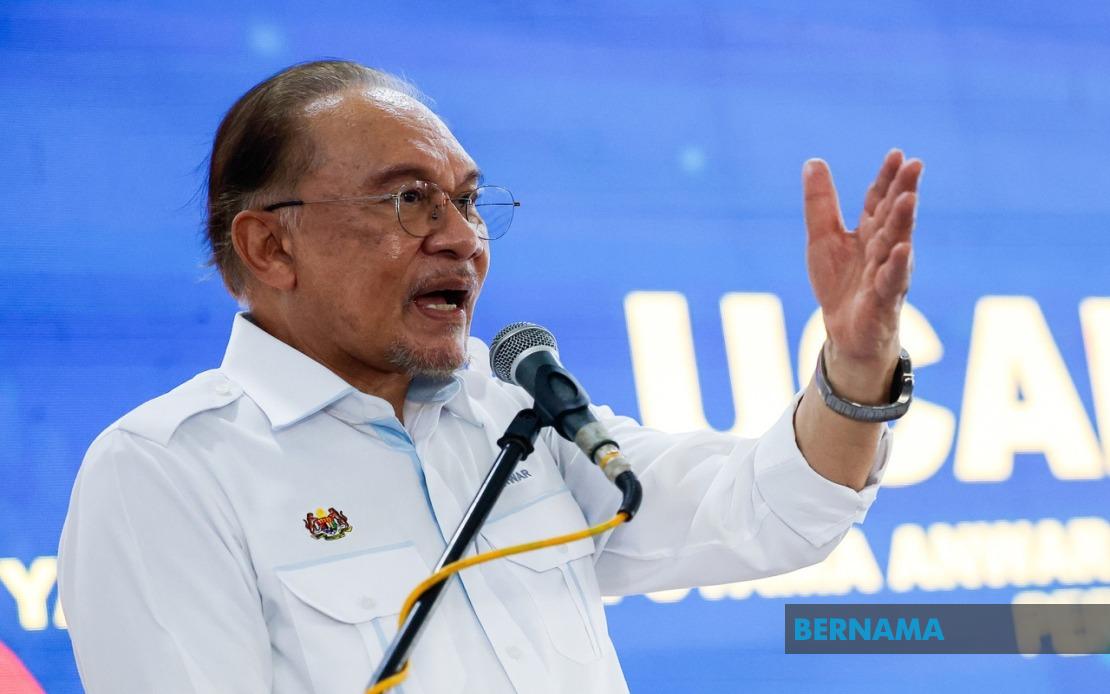
Prime Minister Datuk Seri Anwar Ibrahim has called for the Pakatan Harapan coalition to prioritise active campaigning over analysing the numerous predictions surrounding the Negeri Sembilan state election scheduled for August 1. Speaking at a youth engagement event in Port Dickson, the PH chairman emphasised that with limited time remaining before polling day, the coalition's resources should be directed towards voter outreach and mobilisation rather than getting distracted by divergent survey findings.
Anwar's directive comes as multiple polling organisations have released forecasts with strikingly different conclusions about the likely outcome in the 36-seat state assembly. The Prime Minister highlighted the inconsistency across these predictions, noting that six separate surveys have produced six entirely different results. This variation underscores the inherent uncertainty in electoral forecasting and suggests that ground-level activity could still meaningfully influence the final result. His message was clear: there remains sufficient time for effective campaigning to shift voter preferences.
One of the more prominent predictions came from the Ilham Centre, a research organisation that projected Barisan Nasional and Perikatan Nasional, combined, could capture 22 of the 36 seats, while Pakatan Harapan would win at least nine seats. However, Anwar's dismissal of poll-driven strategic thinking reflects a pragmatic understanding of electoral dynamics. Survey data, while useful for understanding general trends, often fails to capture last-minute voter movements, the impact of ground-level mobilisation, and the effectiveness of candidate-voter interactions in the critical final days of a campaign.
The Negeri Sembilan state election represents a significant test for Pakatan Harapan's political strength in the central region. The coalition has invested considerable effort into the campaign, with senior leaders regularly appearing at campaign events to energise supporters and reach undecided voters. By instructing party machinery to maintain focus on direct voter engagement, Anwar is essentially advocating for a time-tested electoral strategy: personal contact, community meetings, and grassroots organisation often prove more effective than media campaigns or analytical exercises.
For Malaysian political observers, Anwar's comments also reveal something about how national leadership evaluates competitive state elections. Rather than confidently projecting victory or expressing concern about unfavourable polls, he took a measured approach that acknowledges both the competitive nature of the contest and the potential for campaign intensity to make a difference. This positioning allows PH to maintain momentum among supporters while avoiding overconfidence that might reduce voter turnout among coalition backers.
The multiplicity of conflicting surveys mentioned by Anwar reflects a broader challenge in Malaysian electoral polling. Different methodologies, sample sizes, and weighting approaches produce varying results, making it difficult for parties or voters to identify clear consensus predictions. In such an environment, campaign organisers naturally face pressure to decide whether to trust positive or negative surveys. Anwar's instruction to essentially ignore this noise and focus on work sidesteps this dilemma entirely, providing clear direction to campaign teams across Negeri Sembilan.
From a regional perspective, the Negeri Sembilan election carries implications beyond the state itself. As a PH-controlled state, maintaining or expanding the coalition's presence there sends an important signal about the national government's political viability ahead of future elections. Conversely, a stronger-than-expected BN or PN performance would suggest shifting voter sentiment and potentially embolden opposition coalition strategies. This makes the final days of campaigning critical, as suggested by Anwar's emphasis on continued intensive ground work.
The Kembara Inspirasi Belia Akar Umbi (Kibar) programme at which Anwar made his remarks focuses on grassroots youth engagement, reinforcing the message that bottom-up mobilisation matters. By choosing this venue to discuss campaign strategy, the Prime Minister symbolically aligned his messaging with the type of grassroots activity he was advocating. This reflects a broader PH strategy of emphasising direct community connection and youth participation in political processes.
Anwar's statement also serves a secondary purpose: managing expectations within the coalition itself. By declining to endorse any particular poll projection and instead directing attention to campaign work, he avoids creating internal divisions should survey results prove inaccurate. Coalition partners and candidates hear the message that their efforts remain crucial and that no outcome is predetermined, which can help sustain campaign morale and volunteer participation through election day.
The emphasis on continuing work rather than analysing predictions also touches on the reality of Malaysian electoral politics, where late campaign developments, candidate-specific dynamics, and community-level issues can significantly sway outcomes in marginal constituencies. With 36 seats to contest, several may be decided by relatively small margins, making intensive final-week campaigning potentially outcome-determinative. Anwar's strategic guidance essentially recognises this competitive reality and positions PH to maximise its organisational advantages.

