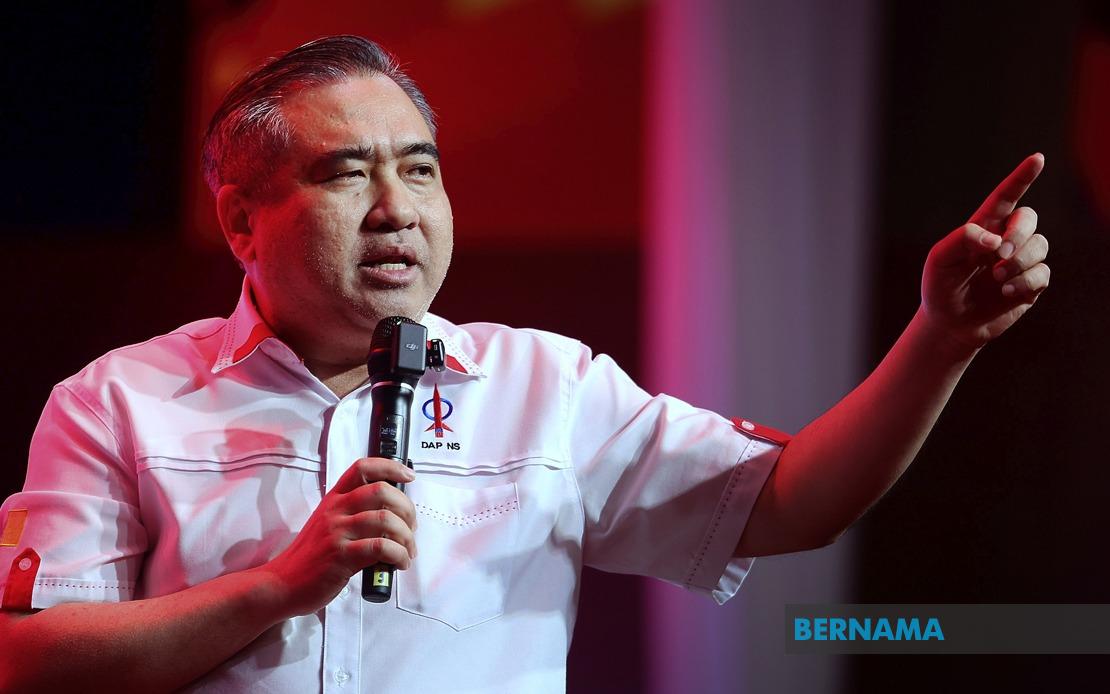
DAP secretary-general and Transport Minister Anthony Loke has urged political campaigns to prioritise substantive debate over personal attacks, setting a strategic tone for the Negeri Sembilan state election as the coalition battles to retain control of the state assembly. Speaking after a Pakatan Harapan dinner in Seremban, Loke explained that his decision to steer clear of targeting Cabinet colleagues reflects both practical governance realities and a broader push by Prime Minister Datuk Seri Anwar Ibrahim to keep the Unity Government stable during election season.
The Transport Minister's position carries particular weight given his dual role as both a federal minister and a state-level candidate contesting the Chennah seat. By choosing not to attack colleagues across the Cabinet table, Loke signals that the demands of coalition governance—which require weekly coordination and shared responsibility—supersede the temptation to exploit factional divisions for electoral advantage. This restraint stands in contrast to more combative campaigns seen in previous Malaysian elections, where federal and state-level politics have sometimes created messy overlaps and personal feuds.
Loke's approach extends beyond mere rhetoric. He has deliberately avoided campaigning in the Rantau state constituency, even though it represents a competitive battleground where Foreign Minister Datuk Seri Mohamad Hasan is standing as the Barisan Nasional candidate. By stepping back from this seat, Loke consciously prioritises the stability of the Unity Government coalition—which binds together Pakatan Harapan and BN—over the pursuit of short-term electoral gains. This restraint underscores a fundamental shift in Malaysian political culture, where maintaining functional government partnerships has begun to outweigh zero-sum competition in individual contests.
Prime Minister Anwar Ibrahim's guidance on maintaining discipline among government-holding politicians during campaigns appears to be gaining traction within Pakatan Harapan ranks. Loke's adherence to this standard suggests that federal leadership is successfully communicating the importance of preserving institutional unity, particularly as Malaysia navigates complex coalition arrangements that require broad consensus. For a Transport Minister managing national infrastructure portfolios, campaigning in a way that destabilises the Cabinet would undermine his ability to function effectively in his ministerial role.
Instead of attacking opponents, Loke has redirected his campaign energy toward promoting his track record and outlining the benefits his ministerial position brings to Chennah. He highlights concrete deliverables such as Kampung MADANI project allocations, framing his role in the Cabinet as a direct advantage to his constituents. This positive approach—focused on what the candidate can deliver rather than what rivals have allegedly done wrong—appeals to voters seeking tangible improvements to their communities. For Malaysian voters tired of personality-driven politics, such a platform offers a refreshing alternative.
Loke's campaign strategy also involves supporting other Pakatan Harapan candidates beyond his own seat, particularly assisting Menteri Besar Datuk Seri Aminuddin Harun in the Linggi constituency. This broader engagement allows him to build party momentum without resorting to personal attacks on specific rivals. By functioning as a team player within the coalition, Loke reinforces the message that Pakatan Harapan offers coherent governance rather than a collection of individual political entrepreneurs competing for power.
The decision to concentrate on DAP-contested seats while avoiding prominent BN figures reflects calculated political mathematics. Negeri Sembilan's state assembly composition has historically required multi-party cooperation, and the current Unity Government arrangement depends on maintaining functional relationships across traditional opponents. For Loke, campaigning aggressively against Mohamad Hasan or other BN colleagues would create friction that extends beyond election day, complicating post-election governance. In this sense, his restraint is not merely ethical but strategically rational.
Loke addresses a potential vulnerability by dismissing suggestions that his ministerial duties have caused him to neglect Chennah. He emphasises that his full-time constituency team manages local affairs while he handles his Cabinet responsibilities. This twin-track approach—maintaining both ministerial effectiveness and grassroots constituency connection—reflects the reality that modern Malaysian politics requires politicians to juggle multiple levels of governance simultaneously. His argument that being a Transport Minister actually enhances his ability to deliver for Chennah through federal allocations and programmes carries weight with voters who prioritise tangible benefits over political rhetoric.
The Negeri Sembilan state election represents an important test of whether the Unity Government framework can withstand electoral competition without fracturing. Loke's disciplined campaign approach suggests that Pakatan Harapan is attempting to demonstrate that coalitions can function while respecting internal hierarchies and maintaining professional boundaries. For Southeast Asian observers monitoring Malaysian political stability, such developments indicate whether coalition models can genuinely replace winner-take-all systems in the region.
With early voting scheduled for July 28 and polling day set for August 1, the campaign period allows roughly two weeks for parties to make their pitches to voters. Loke's framework—emphasising policy delivery over personal attacks—will face practical tests as the campaign intensifies and rival parties attempt to provoke responses. Whether discipline among government politicians holds throughout the campaign may ultimately determine not just Negeri Sembilan's outcome but also the viability of Malaysia's Unity Government model.
The broader implications of Loke's campaign philosophy extend beyond this single state election. If Pakatan Harapan and BN can successfully compete for Negeri Sembilan votes while maintaining the collaborative arrangements necessary for governing Malaysia, it suggests that the country's political system may be evolving toward more mature coalition dynamics. Conversely, if attacks escalate and personal feuds dominate the campaign, it would signal that Malaysian politics remains fundamentally adversarial despite the formal structures of unity government.

