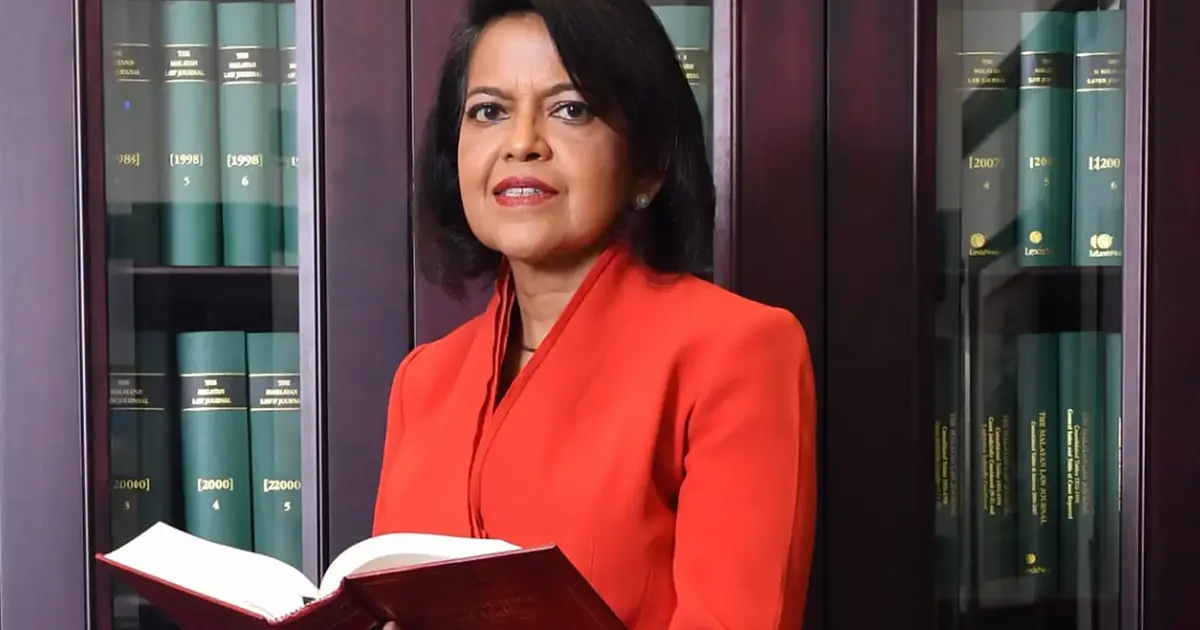
The Malaysian Media Council has installed Nallini Pathmanathan, a retired judge from Malaysia's highest court, as its new chairman, marking a significant leadership transition for the oversight body at a particularly turbulent moment for journalism and broadcasting in the region. The appointment signals the council's intent to draw upon judicial experience and legal expertise as it steers through an increasingly complicated media landscape marked by technological disruption, audience fragmentation, and evolving governance frameworks.
Pathmanathan's career on the Federal Court represents decades immersed in constitutional interpretation and the rule of law—credentials that the council evidently believes will prove invaluable as it navigates contemporary challenges confronting publishers, broadcasters, and digital platforms. Her judicial background positions her to understand the intricate balance between press freedom, public interest, and regulatory oversight, a equilibrium that has grown more elusive across Southeast Asia in recent years.
The council acknowledged that Pathmanathan's appointment arrives during a period when Malaysia's media sector faces mounting pressures from multiple quarters. These difficulties extend beyond simple economic headwinds facing traditional news outlets; they encompass questions about editorial independence, the appropriate boundaries of state oversight, and the evolving relationship between legacy media and digital-native news operations competing for audience attention and advertising revenue.
Malaysia's media environment has become demonstrably more complex since the country's political transformations over the past five years. The 2018 change of government initiated a period of genuine optimism regarding media freedom and journalistic accountability, yet subsequent shifts have created renewed uncertainty about the regulatory direction. News organisations continue grappling with questions about their operational sustainability while simultaneously addressing reader expectations for faster, more interactive, and multimedia-rich storytelling.
Pathmanathan's legal acumen may prove particularly relevant given rising disputes over media regulation, copyright infringement in digital spaces, and the proper definition of defamation in an age of instantaneous viral content. Malaysian courts have become increasingly involved in adjudicating media-related matters, and a council leadership with intimate familiarity with judicial reasoning could facilitate more productive dialogue between the judiciary, regulators, and media institutions.
The Malaysian Media Council itself functions as an important intermediary institution, theoretically independent from government while remaining accountable to stakeholders across the industry. The council addresses complaints about media conduct, develops professional standards, and advocates for industry interests with policymakers. Its effectiveness depends substantially on the credibility and judgment of its leadership, making the chairman's role particularly consequential during periods of institutional uncertainty.
For Malaysian and Southeast Asian observers, this appointment warrants close attention because leadership transitions at media governance bodies often signal shifting priorities and approaches. Whether Pathmanathan's tenure will emphasise strengthening industry self-regulation, facilitating adaptation to digital economics, or addressing allegations of editorial bias remains to be seen. Her judicial temperament, however, suggests an inclination toward principled reasoning over expedient compromise.
The appointment also reflects broader patterns across Asia where institutions increasingly recruit experienced legal professionals to lead media oversight bodies. This trend partly reflects the genuine complexity of modern media regulation, but also sometimes signals an attempt to lend perceived legitimacy to regulatory mechanisms that critics view as restrictive. Pathmanathan's specific approach to these tensions will substantially shape perceptions of the council's independence and utility.
Malaysian media faces concrete challenges requiring urgent attention. Newsroom economics have deteriorated markedly as advertising revenue migrates to digital platforms, compelling traditional outlets to contemplate redundancies and reduced editorial investment. Simultaneously, the proliferation of misinformation and disinformation through social media has elevated expectations that established news organisations will serve as reliable anchors of factual reporting. The council must help facilitate industry responses to these dual pressures.
Pathmanathan's background in constitutional law may also inform how the council engages with fundamental questions about press freedom's proper scope and limits. Malaysia's legal framework governing media conduct incorporates numerous provisions that journalists and civil society groups argue restrict legitimate reporting on matters of genuine public interest. A chairman with sophisticated understanding of constitutional principles could potentially advocate for regulatory approaches that protect institutional interests while respecting democratic values.
The timing of this appointment coincides with intensifying regional discussions about appropriate media governance in an era of rapid technological change. Southeast Asian governments are actively developing new regulatory frameworks addressing everything from online content moderation to data privacy, and Malaysia's approach will influence neighbouring countries' thinking. The Malaysian Media Council's positioning during this period could either strengthen industry voice in these policy discussions or risk marginalisation if viewed as insufficiently responsive to contemporary concerns.
Industry observers will watch closely to see how Pathmanathan utilises her judicial background to address the specific operational challenges confronting Malaysian media. Her appointment represents an opportunity for the council to establish itself as a thoughtful institution capable of protecting legitimate industry interests while maintaining credible commitment to public accountability and professional standards. The council's effectiveness under her leadership will substantially determine whether it remains relevant as Malaysia's media sector continues its tumultuous transformation.

