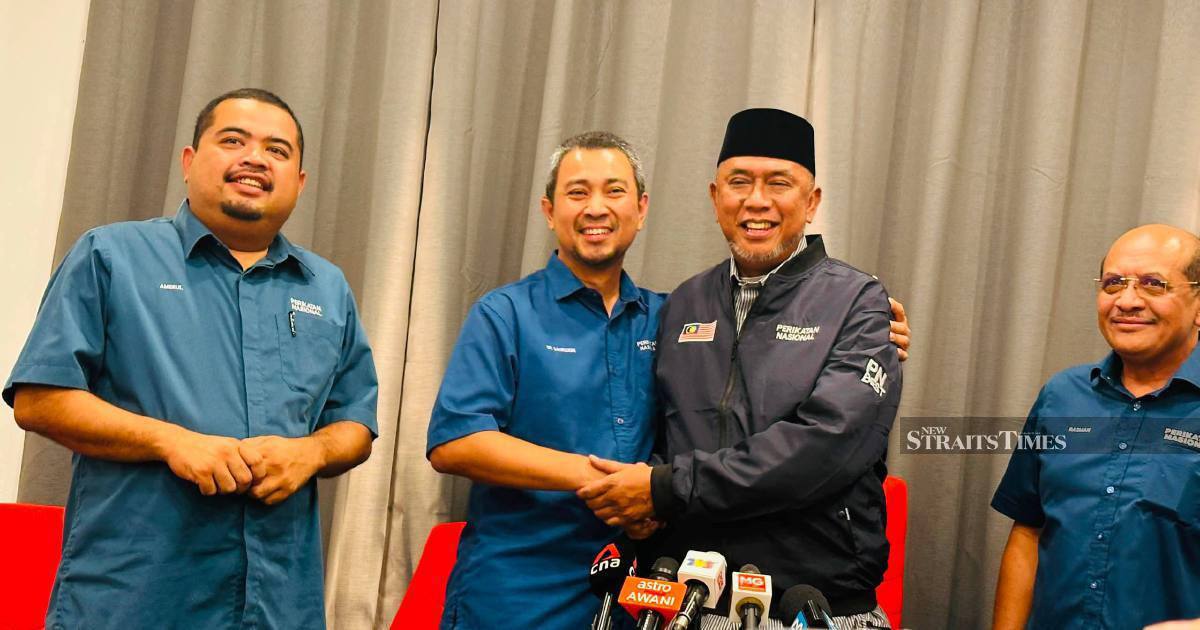
Abdul Mutalip Abd Rahim, the 56-year-old former representative for Layang-Layang, has terminated his membership with Umno and transferred his allegiance to Bersatu, intensifying the political flux that continues to characterize Johor's state politics. The departure underscores the fluid nature of Malaysia's political environment, where party loyalties frequently shift as individuals and groups reassess their strategic positioning within the evolving national coalition structures.
Layang-Layang, situated within the Muar parliamentary constituency, represents one of several Johor state seats that have witnessed transitions in recent years. The constituency has traditionally been a battleground between competing political forces, with the state government and opposition both attempting to consolidate their influence across the southern region. Abdul Mutalip's movement between these two Malay-Muslim parties reflects the broader realignment occurring throughout Johor, where the political boundaries separating Umno and Bersatu have become increasingly permeable.
Umno, historically the dominant political force in Malaysia and particularly strong in Johor, has experienced significant erosion of its support base over the past decade. The party's fragmentation began following the 2018 general election, when it lost federal power, and accelerated with internal disputes over leadership and direction. Bersatu, established in 2016 by Dr Mahathir Mohamad and initially positioned as a progressive alternative within the Malay-Muslim political sphere, has benefited from this fragmentation by attracting disaffected members seeking new political homes.
The context of this particular defection becomes clearer when examining Johor's recent political history. The state witnessed a significant political upheaval during the 2022 state election, when voters delivered a mixed mandate, subsequently leading to complex negotiations and realignments. These internal shifts have created opportunities for both established and emerging political parties to position themselves advantageously. Bersatu's steady expansion in Johor, particularly among state assemblymen and grassroots leaders, demonstrates the party's deliberate strategy to strengthen its organizational capacity in this crucial electoral battleground.
Abdul Mutalip's departure from Umno carries implications beyond the individual actor. Each defection contributes to a cumulative weakening of Umno's structural integrity at the state level, where control of assemblymen directly determines legislative strength and the ability to form governments. When established figures with local credibility and organizational experience transition to rival parties, they often bring along networks of supporters and sympathizers, further tilting the balance of forces. This dynamic has proven particularly consequential in Johor, where state government formation frequently depends on securing sufficient assemblymen to command legislative majorities.
For Bersatu, acquiring state-level personnel with existing constituencies and administrative experience represents a calculated investment in party building. Rather than relying solely on top-down appointments from the national leadership, Bersatu gains individuals with demonstrated electoral viability and local organizational networks. Abdul Mutalip's transfer, therefore, should be understood not merely as a single political movement but as part of a broader pattern whereby Bersatu systematically constructs deeper roots within state political structures. This gradual accumulation of local political capital positions Bersatu to contest future elections more competitively.
The relationship between Umno and Bersatu carries additional complexity within Malaysia's current political framework. Although both parties possess majority-Muslim and Malay constituencies, they have frequently positioned themselves as alternatives to one another. The 2023 general election demonstrated the potential volatility of this competition, as the division between these two parties fragmented the Malay-Muslim political base. For Johor specifically, this fragmentation has created unprecedented opportunities for opposition parties while simultaneously opening spaces for either Umno or Bersatu to gain disproportionate influence through careful coalition management.
Moreover, Abdul Mutalip's switch occurs during a period when both Umno and Bersatu are reassessing their political strategies. Umno, recently reunited with the Malaysian United Indigenous Party and other BN components, is attempting to reassert its dominance within the Malay-Muslim political landscape. Bersatu, conversely, is navigating complex relationships with various coalition partners while attempting to establish itself as an essential political force. Individual defections such as this one serve as barometers of these broader strategic calculations, revealing which party direction appears more credible to experienced political operators.
For voters in Layang-Layang and the broader Muar area, this transition highlights the continued fluidity of state-level politics in Johor. Constituents accustomed to clear partisan divisions often find themselves adjusting to rapidly shifting political alignments, where their representatives may change party affiliation without undergoing fresh electoral mandates. This phenomenon raises questions about democratic accountability and whether existing representation frameworks adequately reflect evolving voter preferences. The defection also suggests that residents of constituencies like Layang-Layang may face unexpected political representation during remaining terms before subsequent state elections.
Looking forward, Abdul Mutalip's recruitment into Bersatu likely signals that the party intends to contest Layang-Layang actively during future elections, whether at state or federal levels. This expanded competitive presence may galvanize Umno to strengthen its organizational efforts in the constituency, particularly if party leaders perceive the seat as vulnerable. The resulting intensified political competition between these two significant Malay-Muslim parties could ultimately influence campaign dynamics across Johor during the next electoral cycle. Such movements, while appearing incremental when examined individually, collectively reshape the political terrain that voters navigate during elections.

