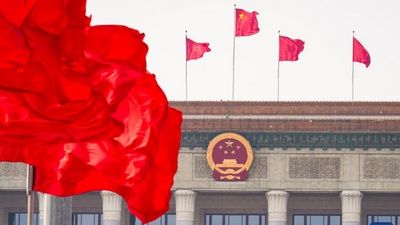
China's top anti-corruption watchdogs have launched a formal investigation into Zhu Changjie, a retired senior official who previously served as vice-chairman of the Xinjiang Uygur autonomous region. The Central Commission for Discipline Inspection and the National Commission of Supervision made the announcement public on Saturday, flagging allegations of serious violations against both Communist Party regulations and the nation's legal framework. The move marks another chapter in Beijing's ongoing crackdown on high-ranking cadres accused of misconduct, though authorities have revealed minimal detail about the specific transgressions in question.
Zhu's career trajectory spans nearly five decades in government service across western China's most sensitive province. Now aged 69, he initially studied agronomy before joining the Communist Party in 1985 and beginning his public sector work in 1976. His administrative experience encompassed progressively senior positions across multiple prefecture-level jurisdictions in Xinjiang, including stints in the Bayingolin Mongol autonomous prefecture and Aksu prefecture. This long tenure in regional governance gave him substantial influence over policy implementation in a strategically important territory.
The apex of Zhu's influence came during his tenure managing internal security apparatus across Xinjiang. From 2009 through 2017, he held the directorship of the region's public security department, placing him at the centre of law enforcement administration during a period of significant political and security challenges in the province. Such positions carry extraordinary operational authority over police forces, surveillance systems, and counter-terrorism initiatives. His overlapping appointment as vice-chairman of the Xinjiang regional government, which he held concurrently from 2011 to 2018, amplified his administrative reach across multiple policy domains simultaneously.
The investigation carries broader implications for understanding factional dynamics within China's regional governance structures. Senior officials in Xinjiang occupy highly visible roles owing to the region's geopolitical sensitivity, its economic significance, and the complex ethnic and security dimensions that characterise governance there. Investigations into individuals with Zhu's profile frequently reflect underlying tensions within Party leadership regarding policy direction, resource allocation, and the evaluation of previous administrative approaches.
For Malaysian and Southeast Asian observers, the case illustrates the fluid nature of political standing in China's one-party system, where high-ranking positions offer no permanent protection against prosecution. Officials who served with apparent institutional approval for years can face sudden reversal in their fortunes once political winds shift. This unpredictability affects how regional governments assess cooperation with Chinese counterparts and evaluate the reliability of relationship-building efforts with specific officials.
The opacity surrounding Zhu's alleged infractions is itself significant. Rather than releasing itemized charges or criminal specifics, Beijing's anti-corruption bodies simply referenced "serious violations of Party discipline and national laws" without elaboration. This circumscribed communication style reflects how China's disciplinary processes operate largely insulated from public scrutiny or transparent procedural accountability. Investigation conclusions may eventually emerge through controlled media channels, but the investigative phase itself unfolds without independent observation.
Zhu's Shandong origins merit contextual attention, as provincial connections and factional networks influence promotion patterns and political survival within China's governing structures. His rise through Xinjiang's administrative hierarchy despite coming from an eastern province suggests either unusual merit recognition or powerful patronage relationships that elevated him across regional administrative boundaries. Conversely, such connections might now complicate his situation if higher-level patrons have themselves encountered political difficulties.
The timing of the public announcement warrants consideration within China's broader anti-corruption agenda. Since launching its comprehensive Party discipline campaign over a decade ago, Beijing has sequentially investigated cadres at national, provincial, and sub-provincial levels. Investigations into officials with Zhu's seniority-rank serve dual purposes: simultaneously conducting genuine accountability efforts while demonstrating Party leadership's capacity to police its own ranks regardless of rank or tenure.
Xinjiang's prominence in contemporary China's strategic consciousness makes leadership accountability there particularly fraught with political resonance. Officials managing the region face competing imperatives between security objectives, economic development, interethnic coexistence, and compliance with central directives. How such tensions are navigated—and how missteps or overreach are subsequently addressed—reveals much about policy evaluation mechanisms within higher Party circles.
The investigation's conclusion remains uncertain regarding both timeline and outcome. Chinese disciplinary proceedings can extend over months or years, with public updates issued sporadically. Potential resolutions range from Party expulsion and criminal prosecution through lower-level sanctions or administrative adjustments. For regional observers tracking China's governance evolution and official accountability frameworks, the ultimate resolution will offer insight into how Beijing evaluates security-focused administrations in sensitive provinces and whether policy approaches previously endorsed face retrospective recalibration.
%22%2F%3E%3C%2Fpattern%3E%3C%2Fdefs%3E%3Crect%20width%3D%22100%25%22%20height%3D%22100%25%22%20fill%3D%22url(%23ph5bjwng)%22%2F%3E%3Crect%20width%3D%22100%25%22%20height%3D%22100%25%22%20fill%3D%22url(%23ph5bjwnp)%22%2F%3E%3Ctext%20x%3D%2250%25%22%20y%3D%2250%25%22%20text-anchor%3D%22middle%22%20dominant-baseline%3D%22central%22%20fill%3D%22rgba(255%2C255%2C255%2C0.95)%22%20font-family%3D%22Georgia%2C%20'Times%20New%20Roman'%2C%20serif%22%20font-weight%3D%22700%22%20font-size%3D%22226%22%20letter-spacing%3D%22-0.02em%22%3EHamzah%3C%2Ftext%3E%3C%2Fsvg%3E)
%22%2F%3E%3C%2Fpattern%3E%3C%2Fdefs%3E%3Crect%20width%3D%22100%25%22%20height%3D%22100%25%22%20fill%3D%22url(%23ph5pue1g)%22%2F%3E%3Crect%20width%3D%22100%25%22%20height%3D%22100%25%22%20fill%3D%22url(%23ph5pue1p)%22%2F%3E%3Ctext%20x%3D%2250%25%22%20y%3D%2250%25%22%20text-anchor%3D%22middle%22%20dominant-baseline%3D%22central%22%20fill%3D%22rgba(255%2C255%2C255%2C0.95)%22%20font-family%3D%22Georgia%2C%20'Times%20New%20Roman'%2C%20serif%22%20font-weight%3D%22700%22%20font-size%3D%22170%22%20letter-spacing%3D%22-0.02em%22%3ETambirat%3C%2Ftext%3E%3C%2Fsvg%3E)
%22%2F%3E%3C%2Fpattern%3E%3C%2Fdefs%3E%3Crect%20width%3D%22100%25%22%20height%3D%22100%25%22%20fill%3D%22url(%23ph444f3g)%22%2F%3E%3Crect%20width%3D%22100%25%22%20height%3D%22100%25%22%20fill%3D%22url(%23ph444f3p)%22%2F%3E%3Ctext%20x%3D%2250%25%22%20y%3D%2250%25%22%20text-anchor%3D%22middle%22%20dominant-baseline%3D%22central%22%20fill%3D%22rgba(255%2C255%2C255%2C0.95)%22%20font-family%3D%22Georgia%2C%20'Times%20New%20Roman'%2C%20serif%22%20font-weight%3D%22700%22%20font-size%3D%22194%22%20letter-spacing%3D%22-0.02em%22%3EBintulu%3C%2Ftext%3E%3C%2Fsvg%3E)