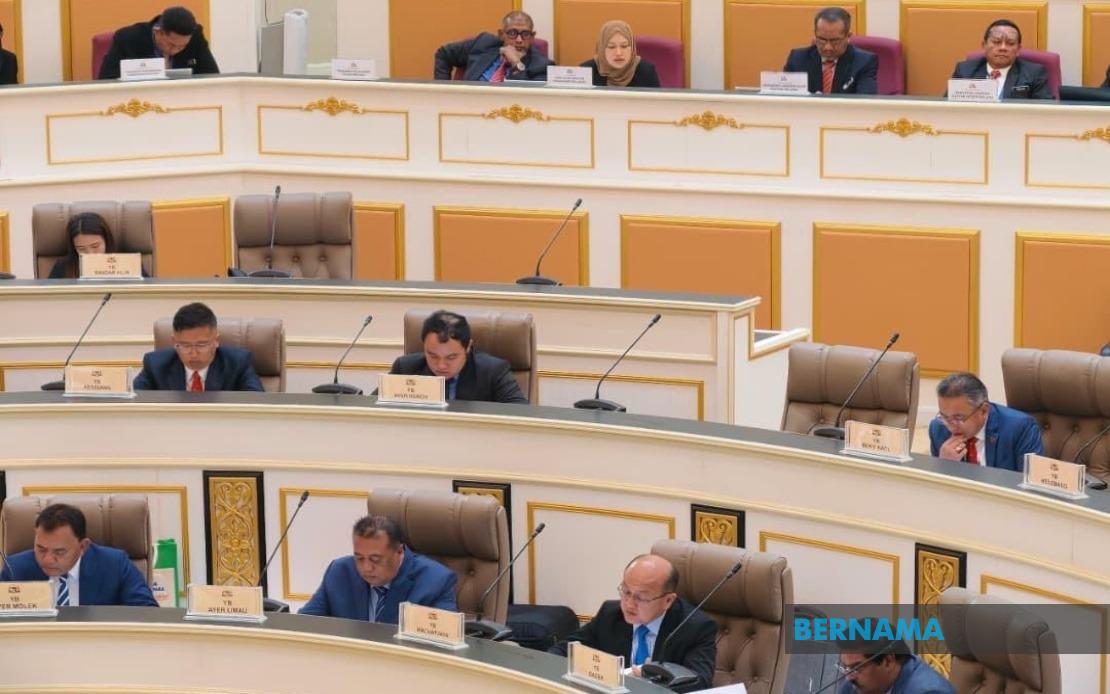
A significant political realignment unfolded in Melaka's State Legislative Assembly on July 15 as four Democratic Action Party representatives abandoned their seats in the government bloc, moving to join Perikatan Nasional and Independent assemblymen in opposition. The repositioning of Allex Seah Shoo Chin, Low Chee Leong, Leng Chau Yen, and Kerk Chee Yee marked a dramatic conclusion to the final sitting of the legislative session and reflected deepening fractures within the Pakatan Harapan coalition at the state level.
The departure followed DAP's announcement the previous day that it was terminating its support for the Barisan Nasional-led administration in Melaka. This withdrawal stemmed from the state assembly's passage of constitutional amendments that would enable the appointment of unelected assemblymen to the chamber, a mechanism the party views as fundamentally incompatible with democratic principles. The move represents one of the more serious challenges to BN's governance in the state in recent times and raises questions about the stability of the ruling coalition.
The sole representative from Parti Amanah Negara, Adly Zahari, who holds the position of Melaka Pakatan Harapan chairman, chose a different path by maintaining his seat within the government bloc. This decision to remain alongside BN colleagues rather than follow the DAP withdrawal introduces an additional layer of complexity to coalition dynamics within Pakatan Harapan, underscoring tensions between the partners at the state level even as they collaborate at the federal level under Prime Minister Datuk Seri Anwar Ibrahim.
Melaka DAP's stance against the constitutional amendments reflects broader concerns within the party about democratic governance and the integrity of electoral processes. Party chairman Khoo Poay Tiong characterised the amendments as antithetical to fundamental democratic values, arguing that allowing nominated rather than elected representatives undermines the legitimacy of the legislative chamber and the representation of constituents' interests. This principled opposition drove the decision to exit the government despite the political consequences of reduced influence within the state administration.
The timing of the withdrawal and the subsequent reseating of assemblymen during the final legislative sitting created a symbolic moment of political rupture. Assembly Speaker Datuk Ibrahim Durum appealed to all members to conduct themselves with discipline and adherence to house rules, a plea that acknowledged the sensitive nature of the proceedings and the potential for procedural disputes in a chamber experiencing significant shifts in political alignment.
Prime Minister Anwar Ibrahim had attempted to broker a delay in DAP's decision-making process, urging the party to postpone its withdrawal announcement to preserve the government's focus on development initiatives and public welfare. His intervention highlighted the complications that state-level political crises can create for federal coalition governance and suggested concern within the federal government about the ripple effects of Melaka's instability on broader Pakatan Harapan unity.
The constitutional amendments themselves warrant deeper examination within Malaysia's ongoing debates about legislative representation and democratic practices. The ability to appoint rather than elect assemblymen represents a departure from the principle of universal suffrage and constituent choice, concerns that resonate beyond Melaka into broader Southeast Asian discussions about democratic backsliding and the safeguarding of electoral integrity. Such mechanisms have historically been criticised by democracy advocates as potential tools for executive aggrandisement at the expense of legislative independence.
For Malaysian political observers, the Melaka realignment underscores the fragility of state-level coalition arrangements and the persistent challenge of maintaining partner cohesion around shared governance principles. The decision by Amanah to remain within the government fold while DAP departed suggests differing calculations about the cost-benefit analysis of remaining in office versus maintaining principled opposition to what they view as anti-democratic measures. This divergence within Pakatan Harapan at the state level complicates narratives of the coalition as a unified political force.
The shift in seating arrangements, though seemingly procedural, carries substantive implications for the balance of power in Melaka's legislature. With four fewer government-aligned voices, the BN-led administration faces increased scrutiny and reduced legislative buffer on contentious votes. This development may embolden other minority voices within the chamber and create opportunities for opposition members to influence policy outcomes or force the government to negotiate more visibly on legislative priorities.
Regionally, Malaysia's experience with coalition instability and state-level political ruptures offers lessons relevant to other Southeast Asian democracies navigating complex multi-party arrangements. The ability or inability of coalitions to accommodate principled dissent from partners on governance matters reflects broader questions about institutional maturity and the robustness of democratic practices. Melaka's situation demonstrates that even relatively stable democratic systems must continually negotiate the tension between maintaining coalition unity and preserving individual parties' integrity around core political principles.
The long-term consequences of this split remain uncertain, with potential scenarios ranging from early state elections to further realignment among remaining coalition partners. The concentration of attention on Melaka's constitutional amendments and their passage suggests that underlying governance questions about how best to populate the state assembly will continue to animate political discourse, particularly if appointed assemblymen prove controversial or visible in their legislative roles.

