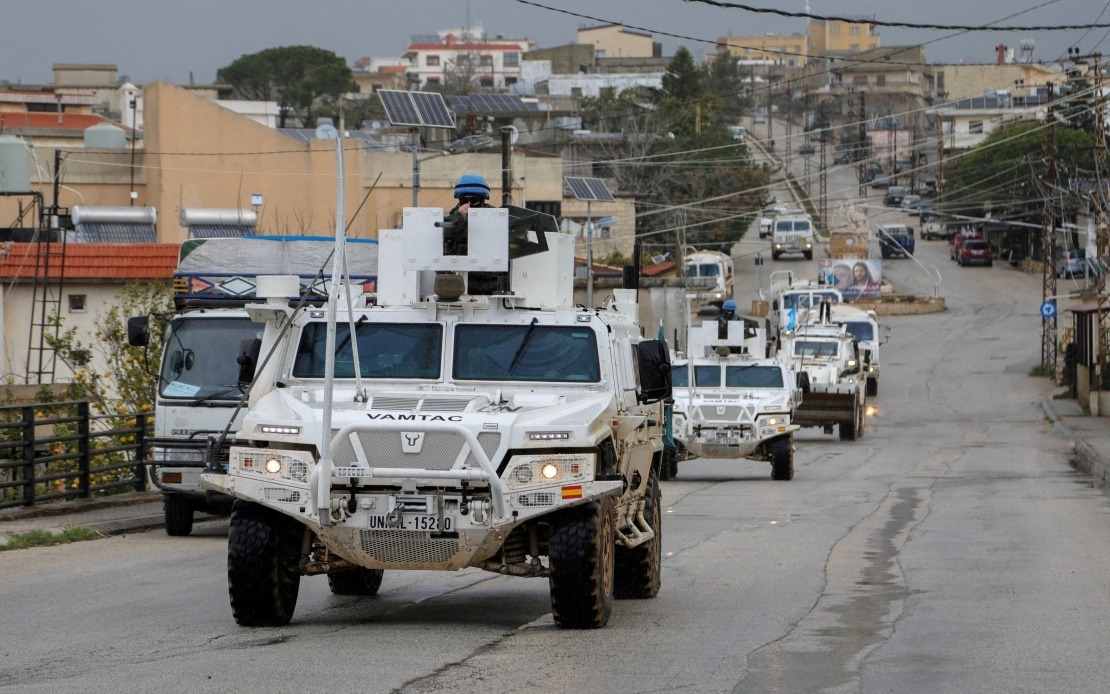
France and Italy have committed to forming an international coalition aimed at stabilising Lebanon once the United Nations Interim Force in Lebanon concludes its 40-year presence at the end of December. The announcement came during talks between French President Emmanuel Macron and Italian Prime Minister Giorgia Meloni in Antibes, reflecting European determination to maintain a constructive role in the eastern Mediterranean nation as it navigates an uncertain security landscape.
Macron framed the initiative as essential to preserving Lebanese sovereignty and strengthening the country's military institutions during a vulnerable transition period. The proposed coalition would operate under coordinated frameworks involving both the European Union and the United Nations, ensuring any subsequent international presence aligns with multilateral norms rather than unilateral action. This carefully structured approach signals European preference for consensus-based interventions, contrasting with historical patterns of Great Power rivalry in Lebanon.
Meloni emphasised the acute risks of allowing a security vacuum to emerge in Lebanon, characterising such a development as "extremely dangerous" for the broader region. Her concern reflects Italy's long-standing Mediterranean interests and the practical reality that Lebanese instability could trigger refugee flows, radical group resurgence, or proxy conflicts affecting European security. Italy's participation alongside France underscores how Lebanon's challenges extend beyond Middle Eastern boundaries to touch European strategic calculations directly.
The Security Council resolution governing UNIFIL's withdrawal provides a defined timeline that creates both opportunity and urgency. Under Resolution 2790, the mission's formal conclusion is set for December 31, with complete personnel withdrawal occurring within twelve months thereafter. This measured drawdown period theoretically allows adequate time for transition planning, yet the compressed window also concentrates pressure on establishing successor arrangements before instability exploits the gap.
For Malaysia and Southeast Asian observers, this Franco-Italian initiative carries instructive implications about how developed nations approach peacekeeping transitions. The emphasis on coordinating with both regional bodies and the UN reflects lessons learned from previous interventions where unilateral action complicated rather than resolved local conflicts. The coalition model represents a potential template for burden-sharing in post-conflict environments where no single power can sustain extended commitments.
Lebanon's specific context adds complexity to the proposed arrangement. The country has endured political paralysis, economic collapse, and intensifying sectarian tensions in recent years, with Hezbollah's growing influence further complicating international engagement. Any multinational coalition operating there must navigate these internal divisions while avoiding perceptions of favouring particular confessional communities, a diplomatic challenge that has defeated many previous international efforts.
The Franco-Italian proposal also reflects shifting European attitudes toward Middle Eastern involvement. Rather than scaling back commitments following Afghanistan's withdrawal, European powers are attempting to maintain strategic influence through lighter-footprint, coalition-based approaches. This reflects both resource constraints and lessons about the dangers of unilateral occupations, positioning multinational frameworks as more sustainable and politically acceptable domestically.
UNIFIL itself has operated continuously since 1978, making it one of the UN's longest-running missions. Its withdrawal represents the conclusion of an era in Lebanese stabilisation efforts, though the mission's limited success in containing cross-border tensions from Israel and Syria highlights how external force alone cannot resolve deeply rooted regional conflicts. The coalition's effectiveness will largely depend on whether it can improve upon UNIFIL's constraints while working within comparable resource limitations.
Southeast Asian nations with peacekeeping contributions elsewhere may find the Lebanon case study relevant to their own considerations. The willingness of developed nations to commit to post-UNIFIL arrangements suggests that multinational coalitions, when properly resourced and mandated, can provide alternatives to complete withdrawal. However, the initiative also underscores how international engagement in Middle Eastern conflicts remains contested and demanding, requiring continuous diplomatic calibration alongside security provision.
The coordination between France and Italy, traditional partners within European frameworks, demonstrates how established alliances can extend beyond European boundaries. This partnership model differs fundamentally from NATO-style collective defence arrangements, instead emphasising flexible coalition-building tailored to specific regional contexts. Such flexibility may appeal to Southeast Asian nations seeking models for addressing subregional challenges without rigid institutional frameworks.
Looking forward, the success of the Franco-Italian coalition proposal depends on multiple factors beyond bilateral Franco-Italian capacity. Securing Lebanese government consent, managing regional state interests—particularly Israel and Syria—and maintaining financial commitments represent substantial obstacles. Additionally, the coalition must articulate clear success metrics and exit strategies to avoid reproducing UNIFIL's characteristic entrenchment and mission creep.

