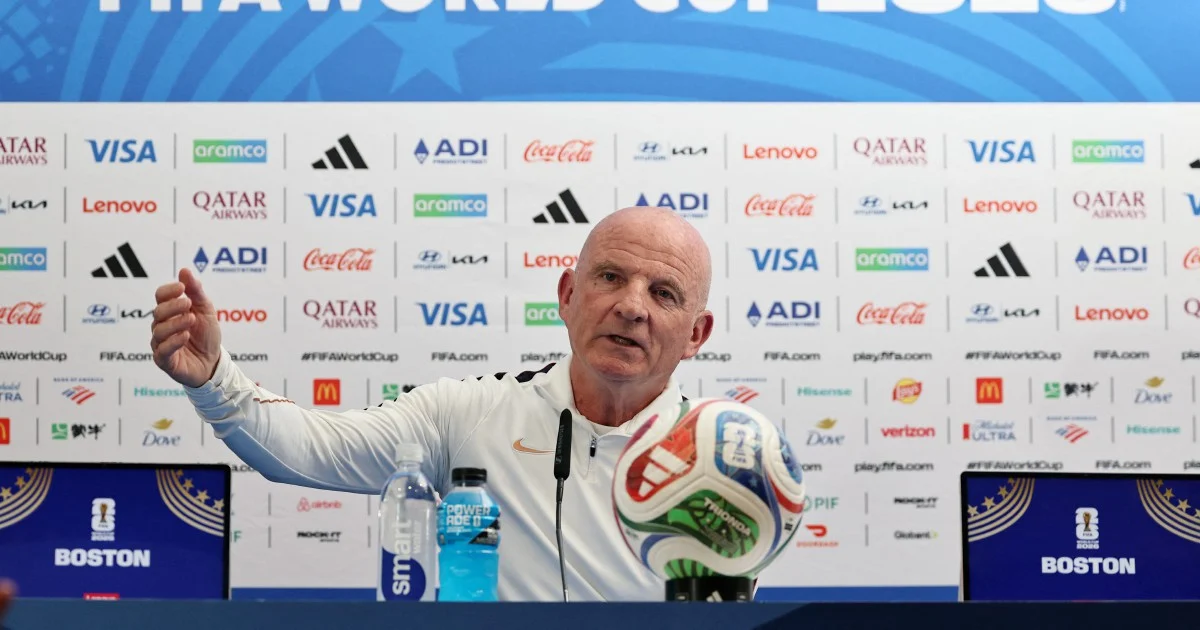
France will seek to clinch first place in their World Cup Group I when they face an equally impressive Norway on Friday, with assistant coach Guy Stephan stressing that securing the top spot would provide crucial logistical advantages. Speaking in Boston on Thursday, Stephan took the place of manager Didier Deschamps, who has temporarily returned to France following his mother's death. The tactical positioning at the group's conclusion carries far more significance than mere pride, as the tournament structure creates vastly different travel demands for first and second-place finishers in the regional groupings.
The logistical calculus weighing on the French team reflects a fundamental reality of the competition's venue distribution across North America. Should France finish atop Group I, they would remain in the Northeastern United States until the quarter-final stage, allowing the squad to establish a stable operational base in the Boston area. Conversely, a second-place finish would condemn Les Bleus to extensive road travel, with matches potentially requiring journeys to Dallas, Miami, and Atlanta—each separated by considerable distances. For a professional sports organization managing player recovery, medical staff coordination, and squad morale, such geographical fragmentation presents genuine strategic disadvantages that extend beyond simple inconvenience.
Stephan elaborated on how these practical considerations intersect with environmental factors specific to competing across diverse American climates. The varying temperatures encountered from the Northeast to the Deep South would present physiological adaptation challenges for European athletes accustomed to more temperate conditions. By maintaining operations from Boston, the team could avoid the dramatic thermal shifts that characterize the continental United States, thereby preserving player conditioning and reducing injury risk during the demanding knockout stages ahead. This environmental dimension, though sometimes overlooked in tournament commentary, significantly impacts athletic performance at elite levels.
France's position entering the Norway clash reflects their commanding performance through the group stage's opening phase. After winning both their initial matches, the 2018 champions have accumulated six points—a situation Stephan noted rarely occurs so decisively after merely two fixtures. This early excellence places the team on firm ground, with qualification to the knockout rounds already mathematically secured regardless of Friday's result. The assistant coach's observation underscores how thoroughly the squad has dominated their preliminary competition, leaving no genuine doubt about their advancement credentials.
The mathematical framework of Group I means France requires only a draw against Norway to secure first place, given their superior goal difference. This favorable position removes some pressure from an already composed squad and reflects their commanding goal-scoring record throughout the group stage. Conversely, Norway enters the matchup having also demonstrated considerable strength, winning their opening fixtures and matching France's perfect record through two games. The encounter thus represents a meeting between two of the tournament's genuinely impressive early performers, even as one team chases technical advancement while the other seeks to establish their trajectory.
Deschamps' temporary absence, while marked by sorrowful circumstances, has not disrupted the team's continuity or preparation protocols. Stephan, functioning as the de facto manager's representative, has maintained frequent communication with his superior despite the geographical separation. However, Stephan acknowledged that Friday—the day of Deschamps' mother's funeral—would necessarily involve reduced contact, as the manager's personal and family obligations must take precedence over tournament operations. This human element reflects how international competitions, while demanding intense professional focus, intersect with the personal realities affecting even the most successful coaches.
France's squad composition presents some complications entering the Norway fixture. Central defender William Saliba is unavailable for the match, requiring tactical adjustments to a defensive unit that has performed creditably thus far. Additionally, striker Marcus Thuram is managing calf discomfort, a persistent concern for an attacking player whose mobility and explosiveness form central elements of his contribution to the team's offensive strategy. While neither situation constitutes an insurmountable crisis given France's qualified status, managing these physical concerns becomes increasingly important as the tournament progresses toward its climactic stages where squad depth determines outcomes.
From a broader tournament perspective, France's determination to top their group reflects evolving strategic thinking about World Cup competition structure. The geographic sprawl characterizing North American tournaments creates material advantages for teams able to minimize travel between matches, a consideration that barely existed in previous World Cups contested across more compact territories. Southeast Asian observers watching the competition might reflect on how different venue distributions affect tournament dynamics—a consideration particularly relevant if Malaysia or neighboring nations eventually host major tournaments requiring similar continental-scale venue planning.
The Norway-France encounter also carries implications for the broader tournament narrative developing around established powers versus rising competitors. Norway's emergence as a genuine Group I contender demonstrates how tournament structures can create compelling competitive narratives even when pre-tournament favorites demonstrate their expected quality. The Friday fixture will ultimately determine not merely first place but provide a final indicator of how thoroughly each team has mastered the early-stage competition before facing knockout-round opponents of demonstrably higher caliber.
For French supporters and neutral observers tracking the tournament, the group-stage finale represents an opportunity to assess whether Deschamps' squad possesses the consistency and resilience required to challenge for championship honors despite their manager's personal adversity. The team's response to Friday's encounter, conducted under the continuing shadow of their manager's absence, will provide meaningful evidence of their emotional resilience and tactical discipline—qualities that ultimately separate tournament winners from merely capable competitors.

