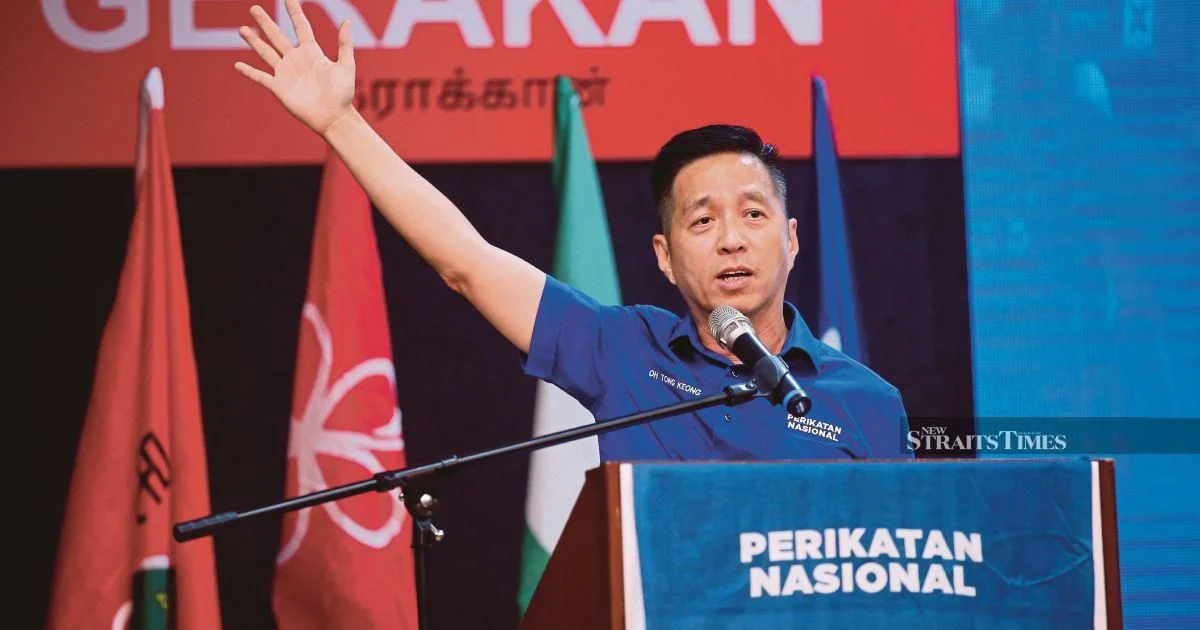
In a strategic repositioning move, Gerakan has formally announced its withdrawal from the upcoming Johor state election, according to a statement from the party's election director Oh Tong Keong. Rather than fielding its own candidates across the state, the political outfit has chosen to concentrate its energy and organisational support on strengthening the electoral prospects of other component parties operating under the Perikatan Nasional banner.
This decision reflects broader coalition dynamics within Malaysia's political landscape, where smaller parties frequently calibrate their involvement in state-level contests based on electoral calculations and intra-coalition agreements. By stepping back from the Johor race, Gerakan effectively signals its commitment to broader PN cohesion rather than pursuing seat gains that might fragment the opposition vote or create friction with larger alliance members.
Johor remains a politically significant state in Malaysia's federation, representing a substantial electoral prize and a traditional stronghold of different political factions across different eras. The state's electoral dynamics have historically been competitive, with multiple contenders vying for influence. Gerakan's withdrawal alters the political arithmetic for the upcoming contest and may reshape voter options in constituencies where the party previously held a presence.
For Gerakan, the decision carries implications about its perceived electoral viability within the state context. The party has undergone considerable transformation in recent years, adapting to shifting coalitional arrangements and recalibrating its political positioning. Withdrawing from a high-stakes state election suggests either a pragmatic assessment that resources would be better deployed elsewhere, or a calculated effort to enhance its standing within the larger PN framework by demonstrating coalition loyalty.
The Perikatan Nasional coalition itself remains in flux as a political entity, with its composition and direction frequently subject to negotiation among member parties. By pulling back from Johor, Gerakan positions itself as a facilitator of PN unity rather than a competitor for state-level influence. This approach may yield benefits through enhanced influence over coalition strategy, even if immediate electoral representation is reduced.
This move carries broader significance for Malaysian opposition politics. Coalition management—particularly the ability of smaller parties to coordinate with larger ones—shapes electoral outcomes and ultimately government formation at state and federal levels. Gerakan's prioritisation of coalition support over individual contest participation demonstrates how contemporary Malaysian politics increasingly operates through negotiated arrangements rather than unfettered electoral competition.
For voters in Johor, Gerakan's withdrawal simplifies the ballot options in some constituencies while potentially concentrating anti-government sentiment within fewer competing parties under the PN umbrella. Whether this consolidation proves electorally beneficial depends on numerous factors, including the popularity and organisational capability of the parties replacing Gerakan's presence on the ground.
The timing of Gerakan's announcement reflects the party's assessment of current political momentum and coalition prospects. State elections in Malaysia typically generate significant national attention and serve as barometers of voter sentiment between general elections. Gerakan's choice to sit out this particular contest, while maintaining formal coalition participation, suggests confidence that its long-term interests are better served through strategic positioning than through direct electoral contestation.
For the Perikatan Nasional coalition more broadly, absorbing Gerakan's usual electoral space requires that other component parties either expand their candidate lists or geographic reach. This redistribution of seats and campaigning responsibilities will test the operational capacity of PN member parties and their ability to translate coalition loyalty into voter support. Uneven performance across PN-aligned parties could expose internal fractures or coordination difficulties.
This development also highlights the complex ecosystem of Malaysian political parties, where participation in coalitions frequently takes forms beyond simple seat-sharing arrangements. Through manpower provision, voter mobilisation, and strategic endorsements, smaller parties like Gerakan maintain relevance even when not fielding candidates in particular contests. Such behind-the-scenes coalition work often receives limited public attention but shapes campaign dynamics substantially.
Regional observers will likely view Gerakan's move as indicative of PN's current operational effectiveness and internal stability. Coalition management remains challenging in Malaysian politics, where parties must balance individual electoral ambitions against collective strategic interests. Gerakan's decision to subordinate immediate contests to coalition unity may establish precedent for how other alliance members approach upcoming electoral cycles.

