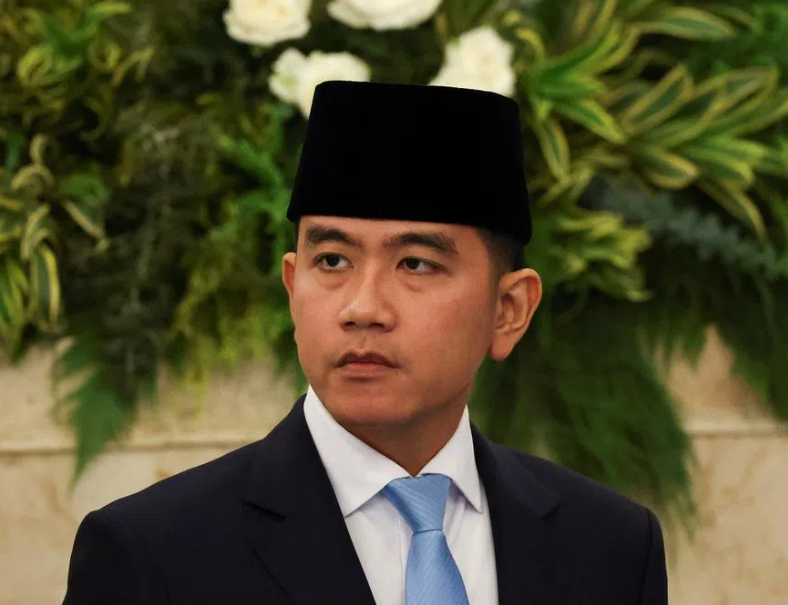
Vice-President Gibran Rakabuming Raka's recent move to invite protesting university students aboard a government aircraft for a regional tour of eastern Indonesia has thrown into sharp relief the evolving dynamics of his position within President Prabowo Subianto's administration. Just three days before boarding a plane with five student activists on June 18, Gibran had conducted a closed-door meeting at the palace with representatives from across Indonesia's university system who had taken to the streets demanding revision of the government's flagship free meals programme and the Red and White Cooperative initiative, an ambitious scheme to establish thousands of village-operated enterprises nationwide.
The gathering itself was framed as receptive and collaborative, with student attendees emerging to tell media that the 38-year-old vice-president had listened intently to their research findings and pledged to audit the materials before presenting them to President Prabowo. Muhammad Abdi Maludin, a student leader from Bung Karno University, characterised the encounter as genuinely positive, suggesting that meaningful dialogue had occurred between the administration and its youthful critics. Yet the narrative fractured almost immediately on social media, where observers questioned the authenticity of the engagement, noting that organisers had selected students from less prominent institutions rather than inviting representatives from Indonesia's largest and most influential campuses. The selection raised eyebrows among commentators who suggested the meeting had been carefully curated for appearance rather than genuine accountability.
The scrutiny intensified when multiple news outlets reported that some of the students who attended the palace meeting had subsequently received cash transfers totalling between 2 million and 20 million rupiah. The Presidential Palace acknowledged investigating the payments, but their source and intended purpose remained opaque, lending credence to critics who characterised the entire exercise as a calculated public relations manoeuvre. Analysts at Jakarta's Center for Strategic and International Studies interpreted the engagement strategy as deliberately designed to present Gibran as a communicative and accessible vice-president responsive to public concerns, a persona that served clear political interests, particularly as Indonesia approaches its 2029 presidential election cycle.
Gibran's heightened visibility around these contentious policy areas comes at a moment when his governmental role remains poorly defined. Since assuming office alongside President Prabowo in October 2024, the eldest son of former president Joko Widodo has largely occupied a peripheral position in major decision-making architecture, despite ceremonial linkages to high-profile assignments including Papua development initiatives and the nascent capital relocation to Nusantara. Unlike previous vice-presidents who wielded substantial policy portfolios, Gibran operates without a defined administrative domain, with government agencies and ministries instead reporting directly to the president. This structural absence of real authority has created a political void that the vice-president appears intent on filling through visibility and strategic public positioning.
The free meals and Red and White Cooperative programmes, though nominally within the purview of multiple government bodies, actually operate beyond Gibran's substantive control. The National Nutrition Agency, which administers the free meals initiative, reports directly to President Prabowo, while cooperative development falls under a presidential priority programme coordinated across several ministries and security agencies including military and police involvement. When Gibran visited a primary school in East Nusa Tenggara during his four-day regional tour on June 18, his acknowledgement of shortcomings in the free meals programme and calls for governance improvements appeared symbolic rather than substantive—rhetorical positioning that stopped short of actual policy authority.
The backdrop to this engagement involves genuine controversies that have damaged public confidence in flagship initiatives. The free meals programme confronted serious credibility problems following June corruption allegations against the National Nutrition Agency, which culminated in the replacement and subsequent arrest of agency chief Dadan Hindayana alongside two former deputies on accusations of procurement irregularities. These scandals generated legitimate student activism and public anger directed at government competence and institutional integrity. By inserting himself into the narrative of reform and responsiveness, Gibran sought to redirect criticism toward constructive channels while portraying himself as an empathetic intermediary between frustrated citizens and administrative structures.
Academic observers largely concur that Gibran's outreach represents a deliberate performative strategy rather than an exercise in substantive policy influence. Researchers at CSIS characterised the approach as selecting relatively low-cost visibility tactics that required minimal institutional change yet generated meaningful public attention. The vice-president was essentially riding momentum created by student movements without committing to concrete policy reversals or administrative reforms. This interpretation aligns with broader observations about Gibran's position within the Prabowo administration, where he functions more as a symbolic figure than as a wielder of executive authority capable of redirecting government priorities.
For Malaysian observers and Southeast Asian analysts tracking Indonesia's political trajectory, Gibran's manoeuvrings signal important developments regarding the consolidation of power within the Prabowo administration and the political positioning underway ahead of the 2029 presidential election. That Gibran would seek to cultivate an independent political identity distinct from the presidency itself suggests calculation regarding future electoral prospects. The vice-president appears intent on establishing himself as a responsive, accessible, and reform-minded alternative to the more militaristic governance style associated with President Prabowo, potentially positioning himself for an independent presidential candidacy in coming years.
The incident also reveals tensions within Indonesia's broader political ecosystem regarding authenticity of engagement between government and civil society. Student activists discovered themselves navigating a complex landscape where genuine policy concerns collided with performative governance and financial inducements of unclear purpose. The strategic selection of participants, coupled with the mysterious cash transfers and the invitation to tag along on official regional visits, suggested that government engagement with critics operated according to a carefully controlled script designed to neutralise rather than genuinely address public grievances. This dynamic carries implications for future government-student relations and the prospects for meaningful democratic deliberation.
Experts consulted by analysts studying Indonesia's political development emphasised that Gibran's visibility around these initiatives did not necessarily indicate substantive policy role or influence. Rather, the vice-president appeared to be performing relevance within a governmental structure that had not provided him with meaningful administrative portfolio or decision-making authority. His engagement with students functioned as a low-risk mechanism for establishing independent political presence and cultivating a distinct public image. Whether such tactics would translate into actual policy influence or simply constitute performative positioning remained an open question, though the consensus among Indonesian scholars suggested that real power over flagship programmes remained concentrated in the presidency and allied institutional structures.
The broader significance extends to questions about how vice-presidential roles evolve within Indonesian political practice, particularly when structural limitations on power create incentives for alternative sources of influence and legitimacy. Gibran's approach—emphasising visibility, responsiveness, and direct engagement with ordinary citizens and protesters—represented one possible template for occupying an office historically marginalised within Indonesia's presidential system. Whether this strategy would prove electorally advantageous or would merely reinforce perceptions of a vice-president without real governmental substance remained to be determined, but the trajectory suggested that Gibran understood the necessity of establishing independent political capital beyond his association with the Prabowo presidency itself.

