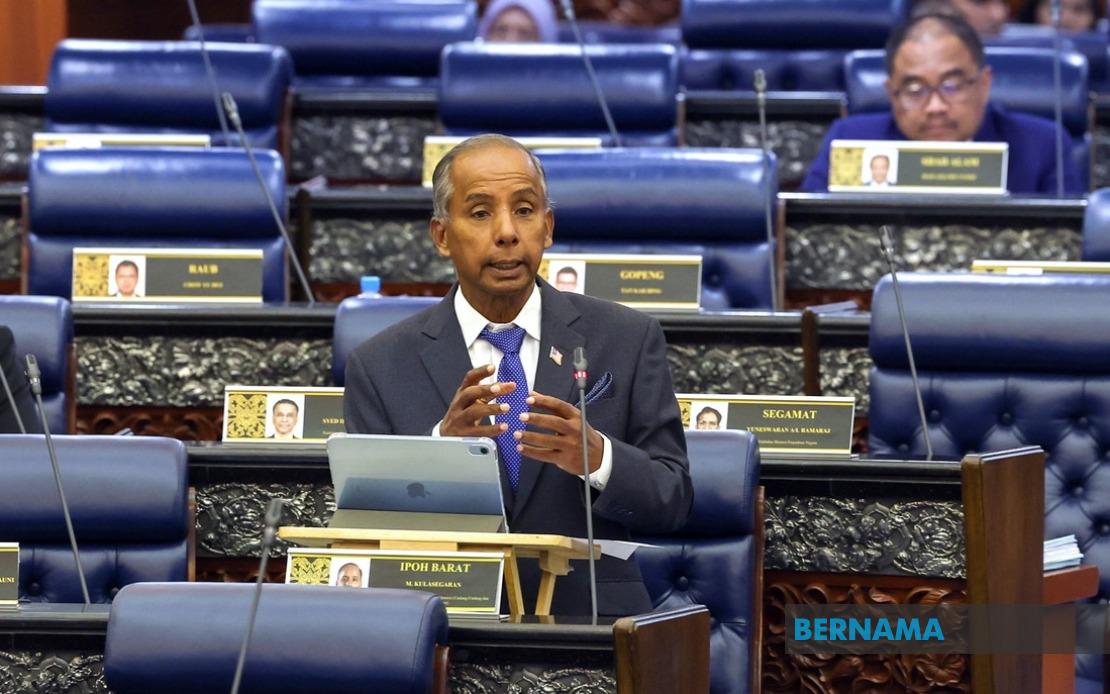
The government is actively considering a proposal that would grant Members of Parliament direct access to closed-circuit television footage documenting the Taiping Prison incident that led to an inmate's death last year. The move represents a potential expansion of parliamentary oversight mechanisms and reflects ongoing scrutiny of prison management practices following the high-profile incident.
Deputy Minister in the Prime Minister's Department (Law and Institutional Reform) M. Kulasegaran expressed broad support for the proposal, acknowledging that providing legislators with such access would strengthen their capacity to discharge constitutional oversight responsibilities. His endorsement signals receptiveness within the executive branch to enhanced parliamentary scrutiny of institutional matters, particularly those involving loss of life in government facilities. The official statement underscores recognition that transparency mechanisms strengthen accountability within the democratic system.
However, Kulasegaran cautioned that the proposal requires substantial refinement before implementation. Legal complexities present significant obstacles to straightforward implementation, particularly concerns surrounding sub judice rules that prevent public discussion of matters currently before the courts. The ongoing nature of related legal proceedings creates a jurisdictional gray area where releasing materials to parliamentarians could potentially compromise judicial processes or create evidentiary complications. These technical hurdles explain the government's deliberative approach rather than immediate approval.
The January 17, 2025 incident at Taiping Prison triggered widespread concern about institutional safety and management standards. The disturbance, reportedly initiated by alleged prisoner provocation, resulted in approximately 100 inmates sustaining injuries alongside one fatality. The incident's severity and scale generated significant parliamentary interest and prompted multiple inquiries into operational conditions and security protocols within the prison system. This context explains why MPs are pressing for comprehensive documentation access.
Kulasegaran indicated that relevant government agencies and stakeholders would engage in further consultations before final determination. The timeline for these discussions remains undefined, though he expressed hope that resolution would materialise quickly. This measured pace reflects the complexity of balancing transparency imperatives against legal and security considerations that constrain information disclosure in sensitive contexts.
Beyond the CCTV access question, the government is simultaneously examining broader proposals to expand the Human Rights Commission of Malaysia's institutional capacity. These initiatives include granting SUHAKAM unannounced access to detention facilities, a power that would enhance monitoring capabilities significantly. Additionally, proposals contemplate establishing new SUHAKAM branch offices in Sabah and Sarawak to extend the commission's geographic reach across the federation, subject to budgetary constraints and operational feasibility assessments.
The Ministry of Health has implemented systemic responses to address detention facility healthcare deficiencies highlighted by the incident. An Institutional Health Unit, formally established on October 1, 2025, now coordinates healthcare delivery quality monitoring across prison institutions. This administrative restructuring reflects recognition that adequate health infrastructure within detention facilities requires dedicated institutional oversight. The ministry is simultaneously developing comprehensive healthcare service guidelines in collaboration with the Prisons Department while progressively increasing health worker deployment to correctional facilities.
Healthcare access for undocumented populations within correctional facilities presents another dimension of the institutional reform agenda. The Health Ministry reaffirmed commitment to providing medical services regardless of citizenship documentation status, though uninsured individuals unable to produce identification documents such as MyKad, MyKid, or birth certificates remain subject to standard service charges. This approach balances humanitarian principles with financial sustainability considerations within the public health system.
Beyond prison-specific reforms, the government is pursuing broader social welfare enhancements targeting marginalised populations. The Women, Family and Community Development Ministry plans establishing forty additional Activity Centres for Senior Citizens by 2030, with systematic implementation scheduled from 2027 onwards at an approximate rate of ten centres annually. This expansion responds to Human Rights Commission recommendations emphasising equitable access to senior citizen programming across diverse geographic and socioeconomic contexts.
To overcome practical constraints in regions lacking suitable dedicated facilities, the Social Welfare Department has initiated the PAWE 3A programme, which conceptualises senior activity delivery as adaptable and mobile rather than venue-dependent. This innovative approach enables senior citizen engagement through flexible location-based programming at accessible community sites, responding to geographic and infrastructure disparities that otherwise limit programme participation across the country. The initiative exemplifies adaptive policy design addressing real-world implementation barriers.
The parliamentary debate on the Human Rights Commission's 2024 Annual Report generated substantive discussion across multiple government portfolios, each addressing institutional deficiencies and reform trajectories within their respective domains. The Human Resources Ministry and Prime Minister's Department (Religious Affairs) also contributed to the winding-up discussion, indicating whole-of-government engagement with human rights institutionalisation questions. This multi-ministerial participation suggests sustained governmental focus on implementing systematic reforms across detention, healthcare, and social welfare systems in response to documented institutional failures and international human rights standards.
The motion ultimately passed with parliamentary support following the departmental winding-up presentations, affirming legislative backing for the reform agenda outlined by government speakers. This outcome demonstrates parliamentary consensus around the necessity for institutional improvements, though the specific mechanics of implementation, particularly regarding MP access to sensitive materials, remain subject to ongoing negotiation between legislative and executive branches. The trajectory suggests incremental rather than revolutionary reform, with legal safeguards carefully balanced against transparency objectives.

