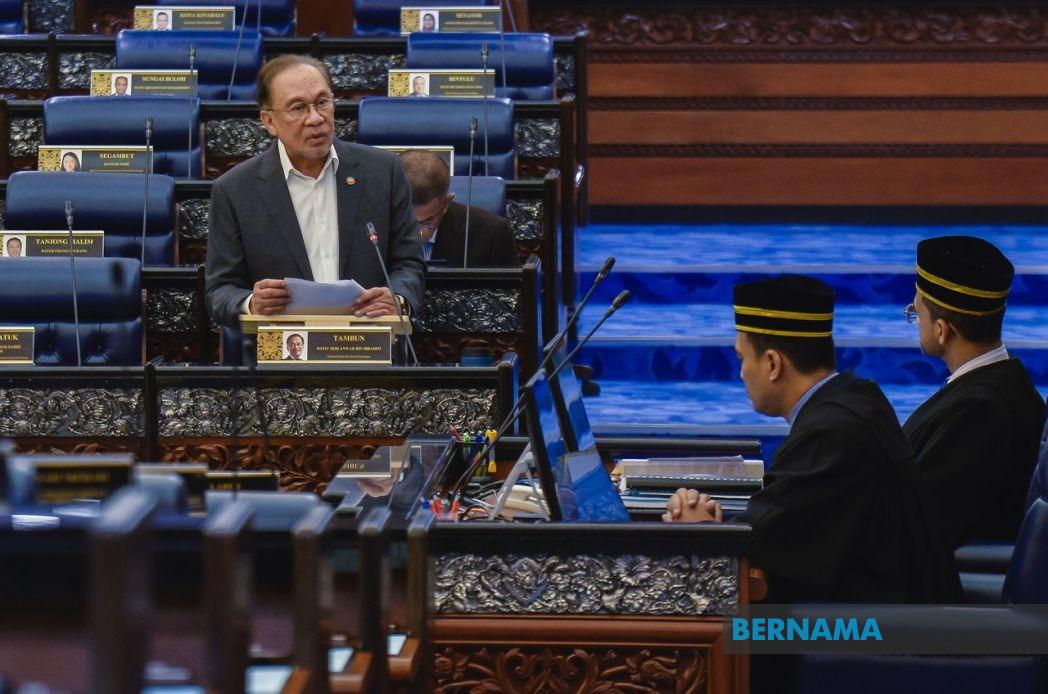
Prime Minister Datuk Seri Anwar Ibrahim moved to dispel concerns about restrictions on activities in Federal Land Development Authority settlements, asserting during parliamentary question time that the government has never prevented programmes from being held across FELDA communities. His remarks came in direct response to suggestions that the administration had imposed blanket prohibitions on events organised by state governments or other bodies within these federally-established agricultural areas.
The distinction Anwar drew was critical: while programmes themselves remain entirely permissible in FELDA settlements, election laws establish clear parameters around the deployment of government resources for campaign purposes. State governments retain full discretionary authority to organise their own events, issue land titles, and conduct administrative functions within FELDA areas according to their constitutional jurisdiction. The constraint, he emphasised, targets the machinery of governance itself rather than the activities or initiatives that communities might undertake.
Anwar specifically addressed controversy surrounding the cancellation of the FELDA Settlers' Day programme originally scheduled for Kluang in Johor on June 20 and 21. He categorically denied having issued any directive to cancel this event, effectively rebuffing suggestions that the federal administration had weaponised its authority to suppress activities in these communities. The clarification carried particular significance given that FELDA settlers represent a politically important demographic that successive governments have courted, and any perception of discriminatory treatment risked damaging government credibility within these constituencies.
The Prime Minister's comments reflected a broader frustration with what his administration characterises as misunderstandings about federal governance boundaries. Election regulations prohibit the deployment of any component of government machinery—whether federal civil service resources, FELDA administrative structures, or related institutional capacity—toward electioneering activities. This prohibition applies universally regardless of which political coalition controls state or federal power, creating a regulatory framework intended to prevent the instrumentalisation of public resources for partisan advantage.
Beyond the immediate clarification, Anwar used the parliamentary platform to outline his government's substantive commitment to FELDA communities, framing the MADANI administration's approach as fundamentally restorative. He argued that FELDA settlements had endured systematic neglect under previous governments, left without adequate development infrastructure or social provision commensurate with their status as federal projects. This narrative positioned current initiatives not as extraordinary beneficence but as essential correction of accumulated deficits.
The government has introduced several tangible programmes designed to enhance living standards within FELDA areas. Establishment of dialysis centres represents a direct health intervention addressing chronic disease management in rural communities where accessing specialised medical facilities would otherwise require extensive travel. These centres provide both immediate healthcare benefits and reduce the economic burden on settlers requiring regular treatment. Simultaneously, the administration has expanded development infrastructure through federal government agencies, attempting to modernise amenities and services across settlements.
Deputy Prime Minister Datuk Seri Dr Ahmad Zahid Hamidi has been positioned as a co-architect of this revitalisation effort, suggesting coordinated action across the senior government leadership to signal sustained commitment to FELDA uplift. This institutional partnership carries symbolic weight beyond the policy substance itself, demonstrating that addressing FELDA community needs occupies priority space within the cabinet's strategic considerations.
For Malaysian readers, particularly those with family ties to FELDA communities, these remarks carry implications extending beyond parliamentary procedure. The clarification suggests that concerns about federal overreach into state-administered activities within FELDA settlements lack foundation, even as it implicitly acknowledges that confusion had existed sufficiently to warrant prime ministerial intervention. This dynamic raises questions about governmental communication effectiveness—if misunderstandings could circulate widely enough to trigger parliamentary questions, did initial messaging about election law constraints lack clarity?
The broader Southeast Asian context enriches understanding of these domestic political dynamics. Across the region, agricultural settlement schemes similarly occupy contested political terrain where federal administrations balance development provision against electoral considerations. Thailand's Royal Project settlements, Indonesia's transmigration initiatives, and comparable programmes elsewhere face analogous tensions between using public resources for equitable development versus preventing their conversion into campaign machinery. Anwar's emphasis on regulatory neutrality—that restrictions apply universally regardless of political affiliation—reflects international best practices in election administration.
The FELDA settler constituency itself merits attention as a barometer of government-community relations. These communities represent an experiment in planned agricultural development spanning decades, creating distinct socioeconomic and political identities. Their receptiveness to government initiatives, perceptions of fairness in resource allocation, and voting preferences have historically influenced electoral outcomes in several constituencies. Anwar's investment of parliamentary time and clarity in addressing their concerns suggests recognition of this political significance combined with genuine commitment to institutional development.
Looking forward, the government's emphasis on facility expansion and healthcare provision might generate positive sentiment within FELDA communities if implementation proceeds effectively. However, the need for prime ministerial clarification about what should represent routine government operations also highlights underlying communication gaps. As the MADANI administration continues developing policy for these constituencies, translating rhetorical commitment into visible, sustained improvement will prove essential for maintaining credibility and public confidence in governmental fairness and capacity.

