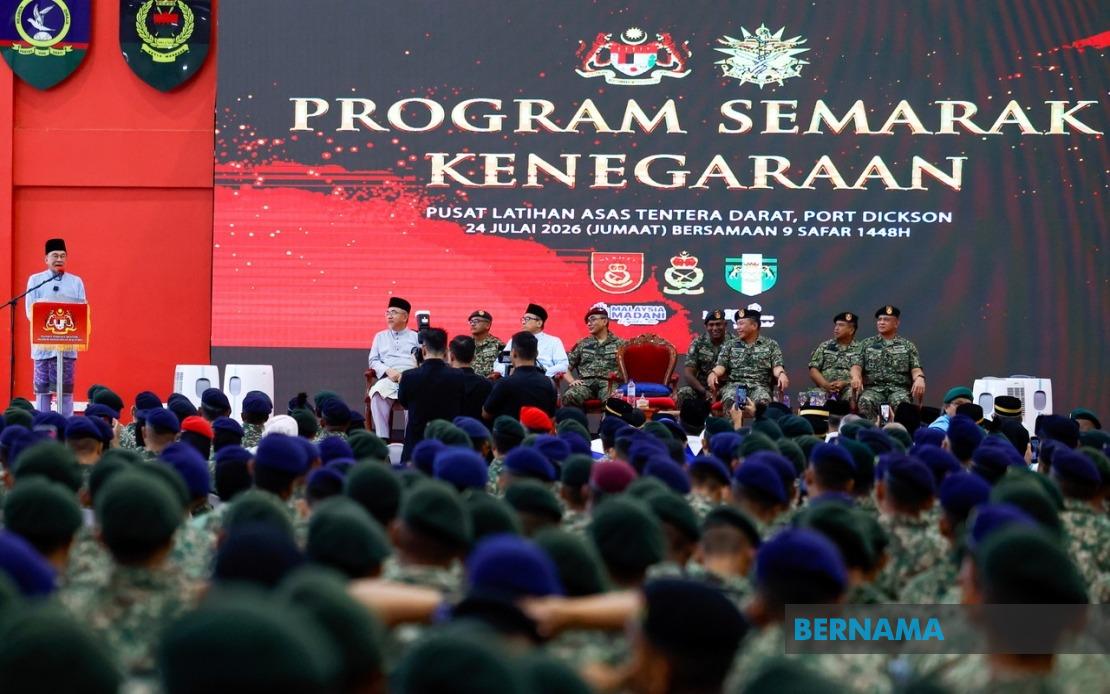
Prime Minister Datuk Seri Anwar Ibrahim has announced a landmark increase in government support for Warriors' Day, approving an additional RM2 million allocation that nearly doubles the annual funding typically dedicated to the occasion. Speaking in Port Dickson on July 24, Anwar framed the boost as recognition of the extraordinary contributions made by Malaysian Armed Forces veterans in safeguarding national sovereignty and territorial integrity. The decision reflects a deliberate policy shift under the current administration to prioritise the wellbeing of those who have served in uniform, positioning military welfare as a central pillar of national governance.
Historically, the government has allocated between RM1 million and RM1.5 million annually for Warriors' Day festivities. The RM2 million supplementary grant represents a substantial increase that acknowledges what officials describe as exemplary financial stewardship in previous years. Anwar, speaking simultaneously as Prime Minister and Finance Minister, indicated that the enhanced allocation stems partly from confidence in how previous Warriors' Day funds have been managed, signalling that performance-based budgeting criteria now influence defence sector funding decisions. This approach suggests the government may reward departments demonstrating fiscal discipline with expanded resources in future budget cycles.
Warriors' Day itself holds particular significance in Malaysia's national calendar, observed annually on July 31 since 1968 as a remembrance of sacrifices made by military and security personnel. The occasion rotates annually between the Malaysian Armed Forces and the Royal Malaysia Police, ensuring both defence and internal security pillars receive formal recognition. For Malaysian citizens, the day represents a structured opportunity to honour those deployed in peacekeeping operations, border security, and internal stability missions that often involve considerable personal risk and family separation. The expanded funding allocation demonstrates official acknowledgment that meaningful commemoration requires adequate resource allocation.
Accompanying Anwar at the Port Dickson announcement were senior government and military officials, including Chief Secretary to the Government Tan Sri Shamsul Azri Abu Bakar, Deputy Defence Minister Adly Zahari, Chief of Defence Forces General Tan Sri Malek Razak Sulaiman, and Army chief General Tan Sri Azhan Md Othman. This high-level presence underscored the significance the administration places on defence and military personnel matters. The gathering of top bureaucratic and military leadership reflected broader coordination between civilian and defence establishments in formulating comprehensive welfare and infrastructure initiatives.
Beyond the Warriors' Day allocation, Anwar outlined an expansive welfare framework targeting military families nationwide. The government has approved RM844 million specifically for Armed Forces Family Housing projects, intended to repair, maintain, and construct residential facilities for service personnel and their dependents. This substantial commitment encompasses multiple initiatives, including 1,300 new housing units planned for Syed Sirajuddin Camp in Gemas, Negeri Sembilan. Such infrastructure investments directly address long-standing complaints from military families regarding inadequate accommodation, potentially improving recruitment and retention of defence personnel by enhancing quality of life.
The housing programme signals recognition that military service demands considerable personal sacrifice, and government support should extend beyond salaries to encompassing family security and stability. Quality housing at or near military installations reduces commute burdens, strengthens community cohesion among military families, and provides dependents with proximity to defence-related amenities and support services. For Southeast Asian observers, Malaysia's investment in defence housing contrasts with resource constraints faced by counterpart nations, reflecting Kuala Lumpur's expanded fiscal capacity in this sector.
Education also features prominently in the government's military welfare strategy. Anwar announced RM3 million in school maintenance allocations for educational institutions in Negeri Sembilan serving children of Armed Forces personnel, specifically naming Sekolah Kebangsaan Sungala and Sekolah Kebangsaan Si-Rusa in Port Dickson. These allocations target facility improvements and maintenance to ensure military families' children study in adequately resourced environments. The approach recognises that educational quality significantly influences military personnel morale and family satisfaction, potentially affecting career longevity and unit cohesion.
The Prime Minister emphasised that this multi-faceted approach to military welfare forms part of a coherent government strategy recognising defence personnel as essential stabilising forces. Anwar framed military and security services as foundational pillars sustaining Malaysia's peace and economic stability, implicitly arguing that supporting these institutions constitutes prudent national investment rather than discretionary spending. This rhetorical positioning may influence future budget debates, establishing military welfare as a priority claim on public resources alongside health and education.
Beyond welfare investments, Anwar committed the government to modernising defence capabilities through transparent asset acquisition processes. This pledge addresses longstanding concerns about defence procurement opacity in Southeast Asia, where opaque military spending occasionally provokes public scrutiny and accountability questions. By emphasising transparency in defence acquisitions, the government signals receptiveness to oversight mechanisms and international standards, potentially distinguishing Malaysia from regional peers facing corruption allegations in military procurement.
Improving basic amenities and facilities across Armed Forces installations nationwide constitutes the final element of Anwar's articulated defence policy framework. This broader commitment suggests systematic upgrades affecting barracks, training facilities, medical services, and operational infrastructure at military bases throughout Malaysia. Such investments enhance operational effectiveness and personnel morale simultaneously, creating multiplicative benefits for national security preparedness.
For Malaysian observers, these announcements reflect evolving government priorities under the current administration. The substantial fiscal commitments to defence and military welfare represent strategic choices prioritising security sector development amid complex regional security environments. The announcement sequence—Warriors' Day allocation, housing investment, educational facility improvements, and broader modernisation commitments—constructs a comprehensive narrative of enhanced military support, potentially resonating with serving personnel and veteran communities.
Regionally, Malaysia's expanded military welfare spending may influence defence policy discussions throughout Southeast Asia, where comparable resource allocations remain contested. Other ASEAN nations monitoring Malaysian defence sector developments may face domestic pressure to match welfare investment levels, potentially triggering spending competitions among regional militaries. Conversely, Kuala Lumpur's emphasis on transparent procurement and facility improvements establishes benchmarks against which other nations' defence governance practices may be measured.

