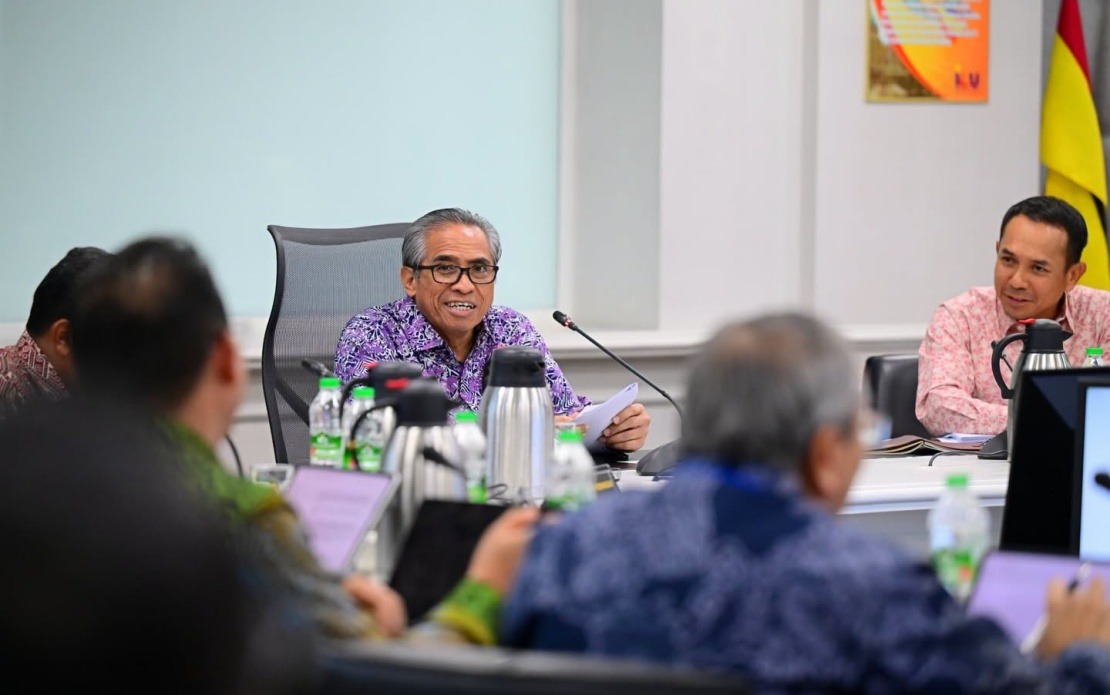
Malaysia's top civil servant has issued a comprehensive directive to expedite implementation of more than 40,000 small-scale development projects spanning the entire country, signalling a shift in government focus towards quick-win initiatives that can deliver tangible benefits to ordinary Malaysians in the near term. Chief Secretary to the Government Tan Sri Shamsul Azri Abu Bakar made the announcement through a social media post following a National Development Action Committee meeting, underscoring the administration's commitment to translating policy into visible ground-level improvements.
The initiative reflects a strategic recalibration of development priorities away from large, capital-intensive infrastructure towards smaller, high-impact projects that address immediate community needs. These encompass a diverse portfolio including road resurfacing and pothole repairs, drainage system maintenance and cleaning, refurbishment of government residential quarters, remedial works on school classroom infrastructure, enhancements to healthcare facilities ranging from clinics to hospitals, and improvements to public markets and informal trading stalls. The breadth of this portfolio suggests a recognition that effective governance often hinges on addressing the unglamorous but essential maintenance and upkeep of existing public assets rather than perpetually pursuing new megaprojects.
What distinguishes this programme from typical development rollouts is the emphasis on achievability within compressed timelines. Shamsul Azri specifically highlighted that most projects can reach completion within three to six months, a timeframe that compresses the usual bureaucratic and implementation cycles that characterise Malaysian government projects. This acceleration strategy carries significant political and administrative implications, suggesting that the government intends to demonstrate tangible progress and responsiveness to public concerns within a measurable window, potentially strengthening citizen confidence in institutional effectiveness.
The directive places concrete responsibilities on ministry secretaries-general, the top administrative officers in each government department, to personally oversee project execution rather than delegate oversight to lower bureaucratic tiers. Ministers are now required to conduct site visits, actively supervise implementation progress, and troubleshoot obstacles as they emerge. This hands-on approach represents a departure from traditional top-down governance models and implies that senior officials will be held accountable for project delivery, creating a chain of responsibility that extends from the Chief Secretary through to ground-level implementation teams.
For Malaysian citizens, particularly those in rural and underserved urban areas, this initiative addresses persistent frustrations with deteriorating public infrastructure. Crumbling roads, clogged drainage systems, and poorly maintained schools have long been sources of public complaint, yet remedying these issues often languishes in bureaucratic backlogs. By designating such maintenance work as priority initiatives with defined timelines, the government is essentially acknowledging that fixing what exists may be more immediately valuable than building new facilities. The emphasis on projects that are "close to the hearts of the people" suggests political recognition that voter satisfaction is often determined by incremental improvements to daily life rather than ceremonial opening of grand infrastructure.
The clustering of 40,000 projects across numerous categories creates logistical complexity that will test Malaysia's administrative machinery. Coordinating implementation across multiple ministries, ensuring funding allocation doesn't bottleneck certain regions, and preventing scope creep or project abandonment requires sophisticated project management infrastructure. For states and federal territories, this initiative will likely necessitate strengthening local governance structures to translate national directives into effective execution, potentially exposing gaps in regional administrative capacity.
Regionally, Malaysia's pivot towards rapid-deployment small-scale development initiatives reflects broader governance trends across Southeast Asia, where governments are increasingly expected to demonstrate efficiency and responsiveness to constituents. Countries like Vietnam and Thailand have employed similar "quick-win" strategies to build institutional credibility during periods of governance transition or reform. The success or failure of Malaysia's 40,000-project initiative will influence perceptions of whether the current administration can execute effectively, a crucial factor as the country navigates complex economic and political challenges.
The economic implications extend beyond infrastructure improvement. Rapid project completion requires mobilising labour, materials, and funding across thousands of discrete undertakings, potentially stimulating demand among small and medium-sized contractors, construction workers, and suppliers. This could generate localized economic activity, particularly in regions where such projects cluster, offering indirect stimulus to communities that depend on government spending multipliers.
Implementation success will ultimately determine whether this initiative becomes a model for future governance or remains an unfulfilled mandate. The three to six month completion window creates built-in accountability mechanisms; by late 2024 or early 2025, measurable results should be evident. Should the programme fail to deliver at scale, it risks undermining public trust and further confirming perceptions of bureaucratic inertia. Conversely, demonstrating that government can execute thousands of projects with reasonable competence would signal institutional capability and responsiveness, attributes increasingly valued in competitive governance environments across the region.

