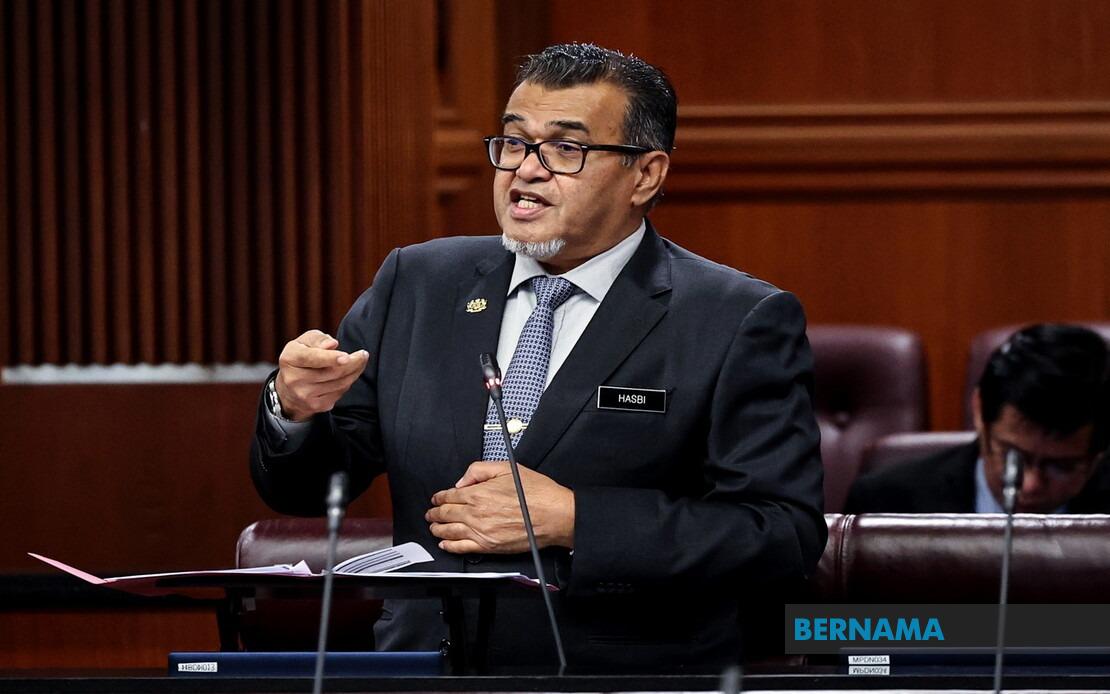
The Malaysian government is moving swiftly to overhaul its legal framework governing railway security, recognising that existing statutes have become inadequate in combating an alarming surge in criminal activity targeting rail infrastructure. Deputy Transport Minister Datuk Hasbi Habibollah announced during parliamentary proceedings that comprehensive amendments to relevant legislation are being finalised and are scheduled for parliamentary tabling within the coming months, signalling government determination to close loopholes that have allowed offenders to operate with relative impunity.
The urgency of the legislative push reflects the severity of the security crisis facing Malaysia's railway network. Over the past three years, authorities documented 393 separate incidents of cable theft, resulting in the loss of 19,756 metres of cable infrastructure and causing financial damage estimated at RM16.3 million. These figures underscore not merely an economic burden but also a potential public safety hazard, as railway cable systems are integral to operational safety and signalling mechanisms. The scale of the problem has prompted policymakers to recognise that incremental reforms are insufficient, necessitating a comprehensive rewrite of the penalties and enforcement mechanisms governing railway asset protection.
Central to the government's proposed legislative overhaul is a dramatic recalibration of criminal penalties for offences against railway property. Datuk Hasbi highlighted the glaring inadequacy of current provisions, noting that trespassing on railway premises carries a maximum fine of merely RM500 to RM1,000 — a sum so trivial that it offers minimal deterrent value to opportunistic criminals. Cable theft, particularly when intertwined with security vulnerabilities, will feature substantially harsher punishments under the revised framework, reflecting government recognition that cable theft networks are often orchestrated by organised criminal syndicates rather than lone petty thieves. This escalation in sentencing severity represents a fundamental recalibration of how Malaysian law treats crimes against critical infrastructure.
Beyond legislative amendments, the government is pursuing a multi-pronged operational strategy designed to dismantle the economic incentive structures sustaining railway crime. Authorities are intensifying cooperative engagement with the Royal Malaysian Police to target not merely the thieves themselves but the downstream market that converts stolen goods into cash. This approach specifically targets scrap metal operators and dealers who knowingly or negligently purchase stolen railway cable, effectively breaking the supply chain that rewards theft. By severing the connection between crime and profit, authorities believe they can substantially reduce the motivation for individuals to target railway assets in the first place. This market-disruption strategy represents sophisticated organised crime countermeasures increasingly employed across Southeast Asia.
Technological investment forms a cornerstone of the government's multifaceted security response. The Railway Assets Corporation has deployed 1,146 units of intelligent closed-circuit television systems, each incorporating artificial intelligence capabilities designed to detect suspicious activity without constant human monitoring. This substantial investment of RM14 million reflects confidence in technological solutions for addressing security challenges in sprawling rail networks where physical personnel presence cannot be maintained comprehensively. The AI-enabled systems can automatically flag unusual patterns of behaviour, such as fence-cutting attempts or prolonged trespassing, triggering immediate response protocols. The deployment concentrates surveillance resources on high-risk locations previously identified through incident analysis, creating a graduated security architecture.
Complementing fixed surveillance infrastructure, authorities have introduced aerial monitoring capabilities utilising drone technology to cover expansive rail corridors and remote sections particularly vulnerable to theft owing to limited accessibility. Drones enable regular reconnaissance of hotspot areas where traditional foot patrols prove impractical or overly resource-intensive, providing real-time situational awareness and photographic documentation suitable for subsequent law enforcement action. This innovation extends security coverage across terrain and locations previously undermonitored, effectively democratising surveillance capacity across the rail network.
Ground-level enforcement capability is also being enhanced through acquisition of motorised rapid response units. Keretapi Tanah Melayu Berhad has secured approval to procure twenty scrambler motorcycles for its Auxiliary Police force, enabling faster response to incident reports and establishing a more visible security presence in high-risk rail corridors. The motorcycles' manoeuvrability across varied terrain provides advantages over traditional patrol vehicles, particularly when pursuing suspects through informal routes and peripheral areas adjacent to rail lines. The visible presence of auxiliary police on motorcycles serves as a deterrent whilst enabling rapid response to criminal activity.
The comprehensive nature of this security recalibration reflects understanding that cable theft networks operate across multiple dimensions — the crime itself, the disposal of stolen goods, and the enabling environment created by inadequate legal provisions and insufficient enforcement presence. By simultaneously addressing legislative inadequacy, market incentive structures, surveillance capability, and ground-level enforcement, authorities are attempting to create a layered security architecture offering no escape routes for would-be offenders. This holistic approach mirrors international best practices in critical infrastructure protection, increasingly vital as railway networks serve not merely commercial purposes but also essential public transportation and economic connectivity.
For Malaysian rail users and the broader economy, these initiatives promise restoration of reliable rail infrastructure increasingly essential for urban mobility and freight logistics. The tourism and hospitality sectors particularly depend on functioning rail networks to move international and domestic visitors, whilst manufacturing and agriculture rely on rail freight for cost-effective distribution. Cable theft-induced service disruptions impose cascading costs across these dependent sectors, making infrastructure security a broader economic concern rather than merely a policing matter.
The timing of these legislative and operational initiatives reflects political willingness to treat railway security as a priority governance issue worthy of parliamentary attention and substantial capital allocation. As Malaysia continues infrastructure development and seeks to position itself as a regional logistics hub, the ability to maintain secure, functioning rail networks becomes strategically vital. The government's multifaceted response demonstrates acknowledgment that protecting critical infrastructure requires integration of legislative reform, technological investment, inter-agency coordination, and tactical enforcement presence operating in concert rather than isolation.

