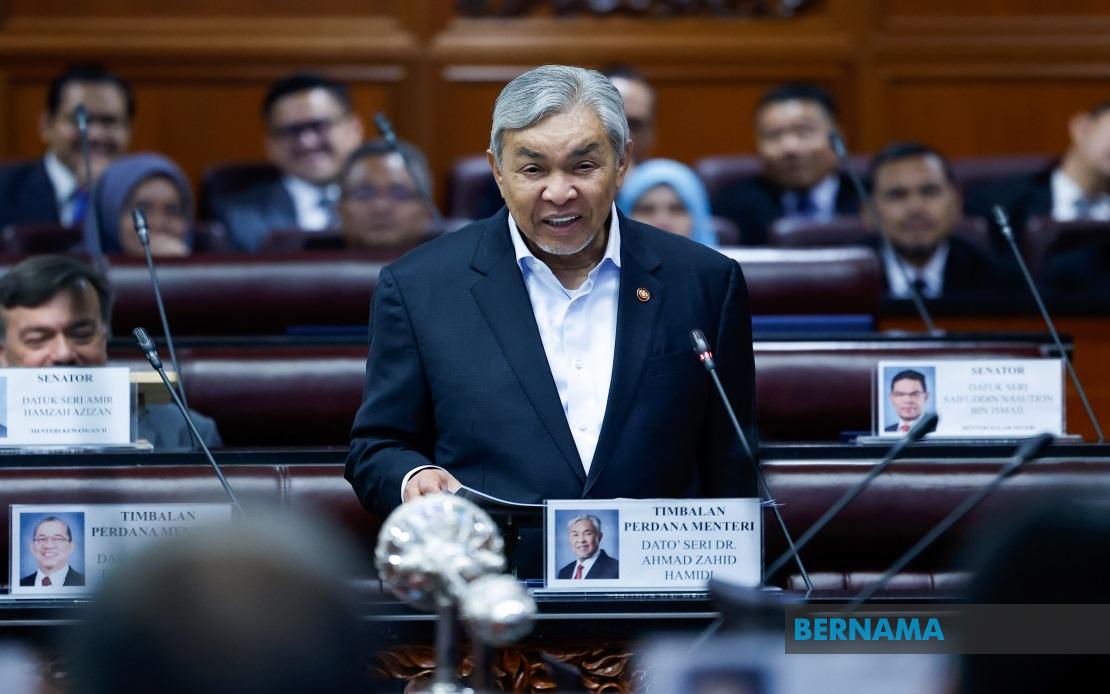
The Malaysian government is undertaking a comprehensive review of the land administration framework governing Group Settlement Areas under the 1960 Land Act, with proposals designed to address both current challenges and future generational needs. Deputy Prime Minister Datuk Seri Dr Ahmad Zahid Hamidi announced the initiative through a parliamentary reply, signalling official recognition that the country's settler communities require updated mechanisms to reflect contemporary housing demands and inheritance practices.
Among the substantive reforms under consideration is a proposal to streamline the heir registration process by limiting nominees to two individuals, a move intended to simplify administration and reduce bureaucratic complications that have historically plagued settlement estates. Simultaneously, the government is examining the appointment of a single representative to manage administrative affairs on behalf of settler communities, a structural change that could enhance coordination between authorities and resident groups while reducing fragmentation in decision-making processes.
Perhaps most significantly for younger Malaysians seeking to establish households, the administration is exploring mechanisms that would permit the construction of multiple residential units on a single residential lot, subject to strict conditions and approval from relevant state and local planning authorities. This proposal directly addresses the constrained housing supply affecting second-generation FELDA members and reflects the government's awareness that demographic changes and economic pressures have created genuine shortages for young families attempting to purchase their own homes.
The Deputy Prime Minister, who simultaneously holds the Rural and Regional Development portfolio, emphasised that any legislative amendments must strike careful equilibrium among several competing interests. These include the welfare of existing settlers who have long occupied these lands, the legitimate inheritance claims of their heirs, the aspirations of younger FELDA-connected citizens seeking to build independent households, the fiscal interests of state governments that retain supervisory authority over these areas, and Malaysia's broader national development agenda.
Current progress on land title distribution provides context for understanding why these reforms have become necessary. Ahmad Zahid disclosed that 109,104 settlers out of a total 112,638 nationwide have received formal land titles, representing 96.86 per cent completion. While this figure appears relatively strong, it conceals ongoing complications in the titling process and highlights the residual challenges affecting thousands of households. The government's continued coordination with FELDA, state Land and Mines Offices, and District Land Offices demonstrates the multi-tiered administrative complexity involved in resolving these matters.
Progress at FELCRA Berhad, the parallel resettlement authority, illustrates similar patterns. As of June 2026, the organisation had completed land title issuance for 4,274 residential lots from a total of 6,025 across 43 projects nationwide. The remaining 1,751 lots remain in processing stages with various State Land and Mines Offices, indicating that despite coordinated efforts, bureaucratic procedures continue to create processing backlogs affecting nearly one-third of participants.
The significance of these reforms extends beyond individual settler circumstances to encompass broader implications for rural development and intergenerational equity in Malaysia. FELDA schemes, established over decades to redistribute land and create agricultural communities, now face the reality that their original single-unit residential model no longer accommodates family expansion or market pressures. Second and third-generation members often lack the land assets their parents possessed, creating economic disadvantages that systematic housing restrictions only exacerbate.
For Malaysian policymakers, the land administration review presents an opportunity to modernise governance structures that have remained relatively static since the 1960s, despite transformations in family structures, employment patterns, and housing markets. The proposal to limit heir nominations to two individuals may seem arbitrary but addresses legitimate concerns about fragmentation of ownership and administrative confusion when estates pass through multiple generational claims.
Regionally, Malaysia's approach to these land administration challenges carries lessons for other Southeast Asian nations grappling with similar issues in state-administered settlement schemes. Countries including Indonesia and Thailand operate comparable programmes and face analogous pressures from demographic change and economic development. Malaysia's deliberate, multi-stakeholder review approach contrasts with more ad-hoc policymaking in some neighbouring jurisdictions.
The government's commitment to completing the land titling process in stages demonstrates recognition that legal certainty over property ownership constitutes a foundation for broader development. Without secure titles, settlers cannot effectively leverage their assets through credit, inheritance planning, or rational household management decisions. The delays affecting even six per cent of FELDA and nearly one-third of FELCRA participants represent tangible barriers to economic participation.
Implementation of the proposed reforms will require balancing innovation with protection of existing rights, a delicate political calculation particularly acute in rural constituencies where FELDA represents significant electoral constituencies. Expansion of housing units per lot must occur within planning frameworks that prevent overdevelopment or infrastructure strain, necessitating coordination between state and local authorities accustomed to rigid settlement designs.
The review process itself signals broader recognition within government that settlement administration requires regular updating as social and economic conditions evolve. By explicitly soliciting input from relevant stakeholders and acknowledging multiple competing interests, the administration indicates sensitivity to the political dimensions of land policy while attempting to craft solutions that acknowledge legitimate claims from various constituencies dependent on these settlement areas.

