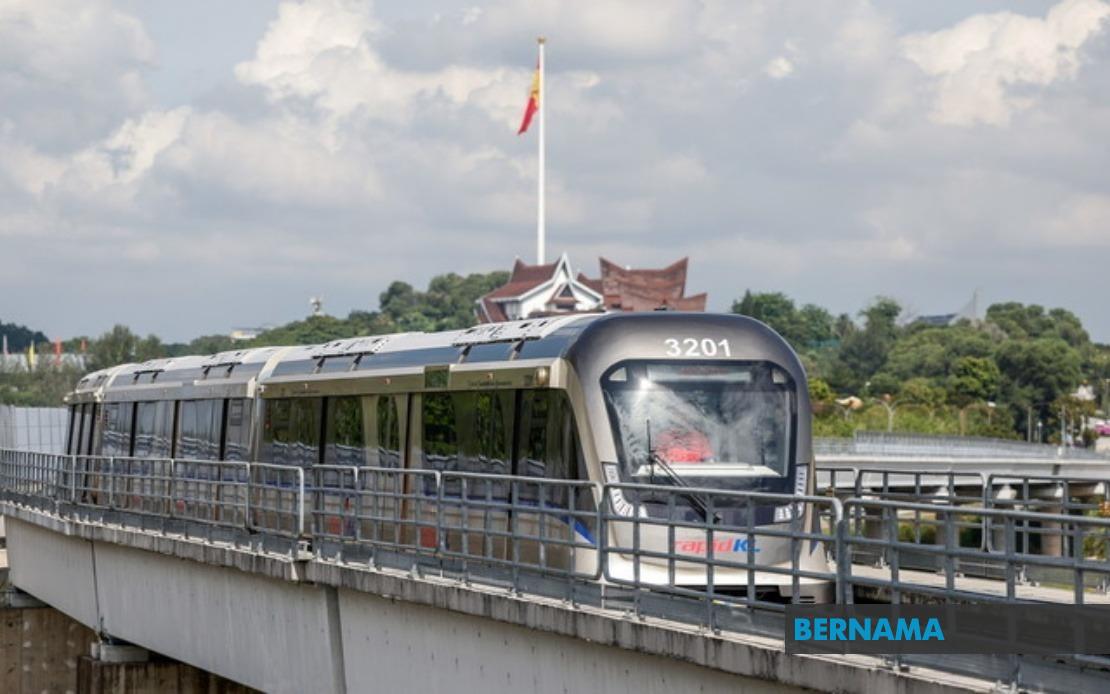
The federal government has committed to meeting with Sultan Sharafuddin Idris Shah, the Sultan of Selangor, to provide a comprehensive explanation regarding the troubled LRT3 Shah Alam Line project. Transport Minister Anthony Loke made the announcement following the Ruler's recent public critique of the scheme, indicating that the administration takes the concerns of the palace seriously and views a direct briefing as essential for clarifying the project's trajectory.
The decision to seek a formal audience underscores the political sensitivity surrounding the light rail transit initiative, which has become emblematic of deeper governance questions about infrastructure delivery under successive administrations. Sultan Sharafuddin's remarks, delivered the previous day, had highlighted a pattern of setbacks spanning several years, creating a narrative of mismanagement that the government now feels compelled to address at the highest institutional level. Loke's willingness to engage directly with the Ruler reflects both respect for the palace's constitutional role and an acknowledgement that public confidence in the project has been eroded.
The Sultan's critique focused on a cascade of disruptions that have fundamentally altered the project's original vision. When the MADANI Government took office in 2018, the LRT3 initiative was placed in suspension for more than 18 months as policymakers reassessed its viability and financial implications. This initial pause was followed by an additional 19-month delay triggered by the COVID-19 pandemic, which stretched into 2021 and compounded construction challenges. Collectively, these interruptions consumed nearly three years of what was already an extended timeline, raising legitimate questions about project management and the government's ability to execute large-scale infrastructure commitments.
Beyond scheduling delays, the practical manifestation of these problems became visible through substantive changes to the project's specifications. The scope of the LRT3 initiative was materially reduced during the period of reassessment and pandemic disruption. Station designs were downsized to reduce construction complexity and expenditure, suggesting that cost considerations had overridden initial planning assumptions. The planned number of train carriages was cut, compromising capacity and the system's ability to serve anticipated passenger volumes efficiently. Most significantly, five stations originally designated for inclusion along the alignment were eliminated entirely, meaning communities that had expected improved connectivity would not benefit from the infrastructure.
Sultan Sharafuddin's perspective on these modifications carried implicit criticism of the government's approach to public infrastructure. The Ruler emphasised that the LRT3 was conceived not as a vanity project designed to burnish a government's legacy through grandiose expenditure, but rather as a practical service meant to enhance the daily lives of citizens and residents across the Selangor corridor. This framing shifted the conversation from technical or financial metrics to fundamental questions about whether the government was adequately prioritising public welfare in its decision-making. The implication was that scaling back the project raised concerns about whether the ultimate system would deliver the promised benefits to communities it was meant to serve.
Transport Minister Loke's acceptance of the Sultan's remarks and his commitment to a clarification session suggest that the government recognises the need for a reset in communication around this initiative. The minister's public statement, made during a charity dinner attended by senior Pakatan Harapan figures including Communications Minister Datuk Fahmi Fadzil, indicates that addressing the palace's concerns has become a priority across the coalition leadership. Such high-level engagement signals that the LRT3 issue has transcended the purely technical realm and acquired political dimensions that require careful management at the highest levels of government.
Parallel to these infrastructure governance questions, the Transport Ministry has been directing attention toward other public transport enhancements with more immediate visibility. The ministry has coordinated with Keretapi Tanah Melayu Berhad (KTMB) to increase the frequency of the Electric Train Service (ETS) between Kuala Lumpur and Johor Bahru, a move framed as facilitating the movement of voters returning home for the 16th Johor State Election scheduled for July 11. This initiative demonstrates the government's capacity to mobilise transport operators for specific objectives, though the decision to highlight such measures in the context of an election campaign has invited questions about the motivations underlying infrastructure decisions.
The ETS frequency enhancement was presented as serving multiple constituencies. Voters returning from Johor Bahru to cast ballots in their constituencies of residence would benefit from additional services. The improved connectivity would equally serve travellers returning from Singapore, offering them onward connections to secondary cities including Segamat and Labis rather than restricting them to the Kuala Lumpur terminus. Northern region voters travelling to Johor would similarly find enhanced transportation options. The government's framing emphasised that these measures were intended to remove logistical barriers to electoral participation, presenting increased transport capacity as supporting civic responsibility.
The 16th Johor State Election itself represents a significant political contest, with 172 candidates vying for representation across 56 state seats. Early voting was scheduled for July 7, with main polling on July 11, creating a compressed campaign period that has intensified efforts to mobilise support. The government's transport initiatives must be understood within this electoral context, though official statements have consistently presented such measures as administrative support for the electoral process rather than campaign activities. The distinction between facilitating voter participation and partisan campaigning has been a recurring tension in Malaysian electoral politics, and this instance exemplifies the fine line that governments navigate when wielding control over public services during election periods.
Looking forward, the planned audience with Sultan Sharafuddin will test whether government explanations can adequately address the palace's substantive concerns about LRT3's evolution. The meeting represents an opportunity for the MADANI Government to articulate a coherent narrative about how project modifications reflected necessary adjustments to fiscal realities and changed circumstances, rather than a retreat from commitments to Selangor residents. Successfully navigating this engagement could help restore public confidence in the initiative, while failure to satisfy the Sultan's queries risks amplifying perceptions that the government has mishandled a significant infrastructure responsibility.

