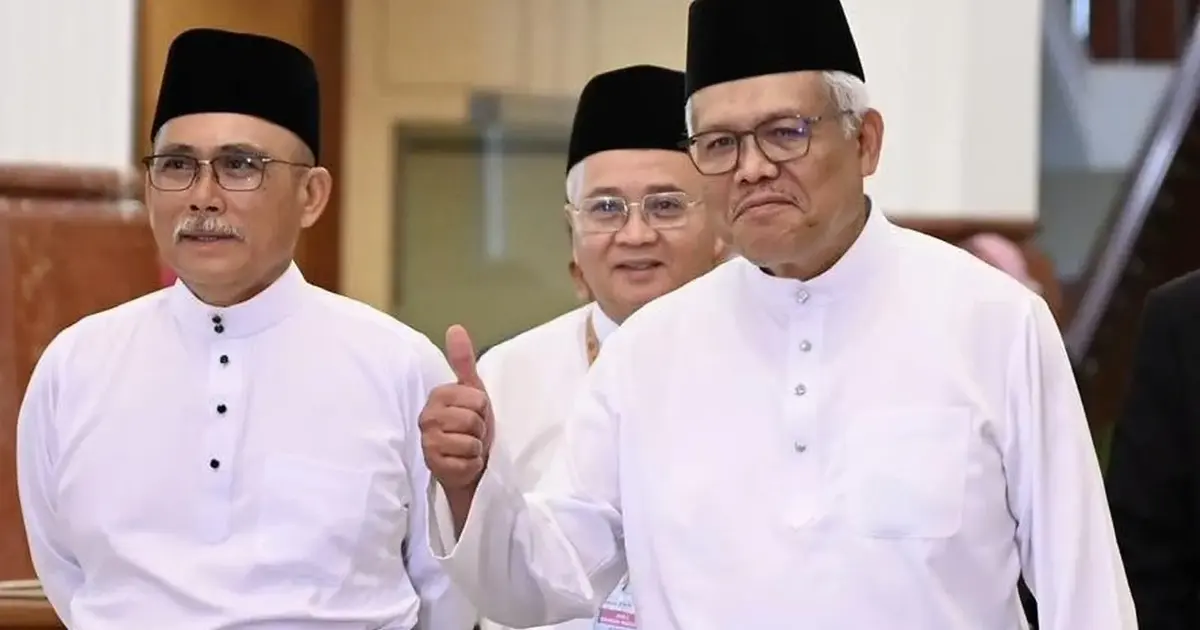
Hamzah Zainuddin, the Larut MP, has been formally named opposition leader following what sources confirm was a coordinated show of support from both PAS and a substantial faction within Bersatu. The appointment reflects broader efforts within the opposition bloc to consolidate parliamentary strength and present a unified leadership structure ahead of critical parliamentary proceedings.
Kiandee, a suspended Bersatu vice-president, has publicly validated the appointment by laying out the factual basis for Hamzah's selection. According to his statement, PAS delivered its backing on a collective basis, signalling that the Islamic party had reached consensus on supporting the Larut MP. Equally important, Kiandee emphasised that Hamzah enjoyed backing from a majority of Bersatu's parliamentary contingent, suggesting that divisions within the party did not prevent coalescing around a single opposition figurehead.
This development carries significant implications for Malaysian opposition dynamics, which have been fragmented across multiple parties and factions for years. The ability to designate a single opposition leader requires navigating competing interests, regional representation concerns, and personal ambitions within a multi-ethnic, multi-religious coalition. That Hamzah secured support from both PAS, which represents conservative Islamist constituencies, and a dominant group within Bersatu, which draws from former UMNO dissidents and Malay-Muslim voters, suggests the opposition has managed to engineer at least temporary alignment on this structural question.
Bersatu's internal politics have been notably turbulent since the party's founding. The appointment of its former chairman Muhyiddin Yassin as prime minister in 2020, followed by subsequent factional disputes, fractured the party into competing blocs with different visions and allegiances. That Kiandee, whose suspension from the vice-presidency signals he may belong to one faction, nonetheless validated a majority-based consensus around Hamzah indicates the decision enjoyed legitimacy beyond any single faction within Bersatu.
For Malaysian readers monitoring opposition strategy, this move signals an intention to present coherent institutional opposition in Parliament. The presence of a designated opposition leader facilitates procedural efficiency in parliamentary business, enables clearer communication of opposition positions to the media and public, and provides a focal point for coordination on legislative strategy. In Westminster-style systems, the opposition leader's role, though not constitutionally mandated in Malaysia's case, carries symbolic weight and functional importance.
PAS's bloc support for Hamzah deserves particular attention given the party's recent political trajectory. PAS has alternated between cooperation with UMNO, governance in several states, and periods in opposition. Its willingness to back Hamzah as a unified bloc suggests either a formal agreement within the opposition alliance structure or a convergence of views on his suitability. PAS's stance may reflect calculations about representation, parliamentary committee assignments, or policy influence that could accrue through a coordinated opposition front.
The timing of this appointment also warrants context. Parliamentary dynamics in Malaysia have shifted considerably following recent electoral outcomes and defections. Opposition parties have attempted multiple times in recent years to coalesce around shared positions on governance, accountability, and legislative priorities. The designation of a single leader represents another such attempt, though success in translating structural appointments into actual parliamentary leverage depends on maintaining coalition discipline across multiple parties with competing interests.
For Hamzah personally, the appointment represents significant elevation despite his party's fractious state. As Larut MP, he commands a single seat, but the opposition leadership designation amplifies his platform considerably. It provides him with visibility, access to parliamentary machinery typically granted to opposition leaders, and positioning for future political developments. However, it also places him in a position where managing competing demands from PAS, Bersatu factions, and any other opposition constituent parties will be operationally challenging.
The strength of this coalition arrangement will ultimately be tested through practical parliamentary performance. Opposition unity in procedural votes, legislative strategy, and public positioning will demonstrate whether the structural appointment translates into functional coordination. Malaysian political history contains numerous examples of opposition coalitions that fractured under pressure or when individual party interests diverged from collective positions.
Kiandee's confirmation of the appointment's legitimacy through majority support signals an effort to anchor the decision in democratic process within the opposition bloc itself. This framing—emphasizing that multiple parties backed Hamzah rather than portraying the appointment as imposed—suggests opposition strategists understand the importance of maintaining internal coalition confidence. For Southeast Asian observers tracking Malaysian politics, this represents a notable effort at opposition institutionalization in a region where such arrangements frequently prove unstable.
Moving forward, the sustainability of this arrangement depends on several factors: maintaining bloc discipline on critical votes, ensuring Hamzah represents opposition interests fairly across constituent parties, and preventing defections that would undermine the coalition's parliamentary strength. Opposition leaders in Malaysia face considerable pressure from both government incentives for defection and internal party dynamics, making the durability of any such appointment inherently uncertain.