The Johor State Government is preparing to launch an ambitious educational partnership with Harvard University aimed at developing the next generation of scientific leaders. Beginning January 2027, approximately 100 students from two state secondary schools will participate in the Program for Scientifically-Inspired Leadership (PSIL), a rigorous curriculum designed to nurture critical thinkers and innovative problem-solvers equipped for global challenges.
The collaboration represents a significant strategic investment in Johor's education ecosystem. Aznan Tamin, the state's Education and Information Committee chairman, revealed that participating institutions will include SMK Tasek Utara and SMK Seri Kota Puteri 2. These schools are expected to serve as pilot sites for what could potentially expand into a broader initiative across the state's secondary education system. The programme, originally established by Harvard University in 2019, has already demonstrated its effectiveness in cultivating qualities essential for 21st-century leadership.
Beyond student participation, the initiative extends substantial benefits to educators. Forty teachers from the pilot schools will receive intensive professional development through active learning pedagogy workshops. This investment in faculty development reflects a holistic approach to educational transformation, recognizing that sustainable improvement requires equipping educators with contemporary teaching methodologies. These workshops will focus on shifting from traditional didactic instruction toward interactive, creative classroom environments that better engage students and foster deeper learning outcomes.
The philosophical foundation of PSIL emphasises several interconnected competencies. Active learning environments encourage students to take ownership of their educational journey rather than passively receiving information. Coupled with instruction in critical thinking, students develop the analytical capacity to evaluate complex problems from multiple perspectives. The programme also prioritizes effective communication skills, essential for translating scientific insights into actionable solutions. Leadership development rounds out the framework, preparing participants to guide initiatives and influence peers.
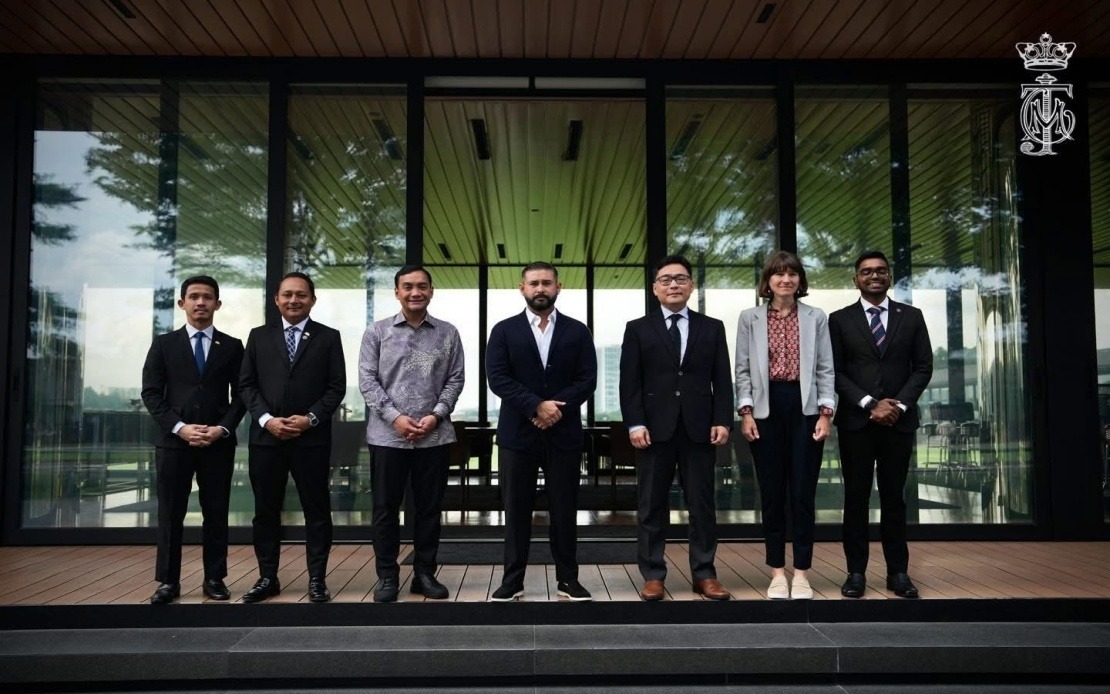
The Johor State Government's commitment to this partnership received high-profile endorsement when the Regent of Johor, Tunku Mahkota Ismail, received a delegation from Harvard University. The visiting team included Dr Dominic Mao, assistant director of Undergraduate Studies and lecturer in Molecular and Cellular Biology, alongside Dr Andrea Wright, assistant dean of Harvard College. Such direct engagement at the highest levels of state leadership underscores the significance attributed to the collaboration and signals serious institutional commitment to implementation.
For Malaysian readers, this development carries broader implications for educational excellence within Southeast Asia. The partnership signals that Malaysian institutions are increasingly competitive locations for international academic collaboration. Rather than being passive recipients of Western educational models, Johor is actively shaping a programme that integrates global best practices with national educational priorities. This approach respects Malaysia's commitment to strengthening English-language proficiency and Malay language mastery while simultaneously building science, technology, engineering and mathematics capabilities that Malaysia's economy increasingly demands.
Sekolah Rintis Bangsa Johor, the overarching institution coordinating the initiative, operates under a distinctive educational philosophy. The school balances linguistic development with STEM specialization, ensuring students achieve international-standard competencies while maintaining cultural and linguistic identity. This integrated approach addresses a perennial challenge in developing nations: how to become globally competitive without sacrificing local values and languages. The emphasis on personality development and student marketability reflects realistic understanding that technical knowledge alone proves insufficient in competitive job markets.
The timing of the programme's launch deserves consideration. Beginning in January 2027 allows several years for preparation, curriculum adaptation, and teacher training. This measured timeline contrasts with rushed implementation that often undermines such initiatives. The planning period permits educators to study the PSIL framework in depth, adapt materials for Malaysian contexts, and develop assessment protocols that measure not merely knowledge retention but application of critical thinking and leadership capabilities.
From a regional perspective, Johor's partnership with Harvard establishes a model potentially replicable across Malaysia and Southeast Asia. As countries throughout the region grapple with preparing students for artificial intelligence-driven economies, programmes emphasizing scientifically-informed decision-making and adaptive leadership become increasingly valuable. The Johor initiative provides a tested framework and international accreditation pathway that other states or nations might consider emulating or adapting.
The assessment methodology underlying PSIL represents another significant dimension. By implementing competency assessments calibrated to international standards while aligning with Malaysia's Ministry of Education policies, the programme creates transparent benchmarking mechanisms. Students, parents, and educators gain clear visibility into progress measured against both national expectations and global standards. This transparency supports informed decision-making about educational trajectories and helps identify students ready for advanced international opportunities.
For the 100 selected students and 40 participating teachers, this programme offers transformative possibilities. Exposure to Harvard's pedagogical approaches and the wider American university system may inspire aspiration toward further educational advancement. More immediately, students develop practical competencies—scientific reasoning, articulate communication, collaborative problem-solving—that enhance prospects across diverse career pathways. The 40 teachers return to their institutions equipped with refreshed methodologies and renewed enthusiasm for educational excellence.
As implementation approaches, attention will inevitably focus on sustainability and scalability. How effectively does PSIL translate from the American university context to Malaysian secondary schools? What barriers to implementation might emerge? How will success be measured beyond academic metrics? These questions will shape the programme's trajectory and determine whether the initial 100 students represent merely a limited experiment or the foundation for systemic educational transformation. The coming years will reveal whether this Harvard-Johor partnership fulfills its ambitious potential to cultivate a generation of leaders capable of addressing the region's most pressing challenges through rigorous scientific thinking and ethical leadership.

