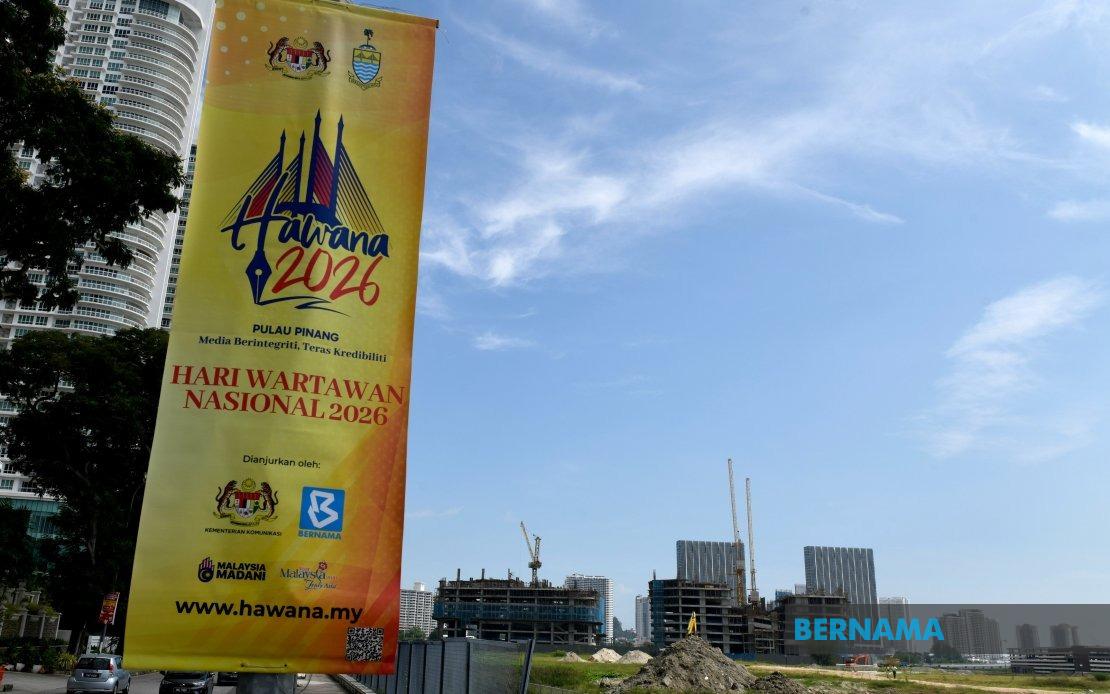
Penang is poised to become the inaugural host of Malaysia's National Journalists' Day celebration in 2026, an appointment that officials believe will generate substantial economic activity and international visibility for the state. The three-day event, anchored by the main ceremony at PICCA Convention Centre @ Butterworth Arena on June 20, is expected to draw approximately 1,000 media practitioners from across Malaysia and the broader ASEAN region. Prime Minister Datuk Seri Anwar Ibrahim will officiate the proceedings, lending further prestige to an occasion themed around 'Media Integrity Strengthens Credibility'.
The selection of Penang as HAWANA's 2026 venue represents more than ceremonial recognition—it validates the state's capacity to host large-scale international gatherings and underscores its standing as a premier tourism destination. State Tourism and Creative Economy Committee chairman Wong Hon Wai characterised the appointment as an opportunity to demonstrate Penang's credentials on a regional stage, particularly given the anticipated attendance of prominent media figures and industry stakeholders from neighbouring countries. This convergence of influential voices is expected to amplify the state's profile significantly beyond traditional marketing channels.
From an economic perspective, Wong outlined how the influx of visitors and media personnel translates into concrete benefits for Penang's hospitality and retail sectors. The anticipated demand for hotel accommodation, dining experiences, transport services, and shopping opportunities will stimulate activity across multiple industries. Early indicators suggest confidence in the market, with tourism operators reporting robust hotel bookings ahead of the June 19-21 event window. The Seberang Perai venue has been confirmed as capable of accommodating the expected volume of visitors, alleviating supply-side concerns that might otherwise constrain visitor numbers.
Beyond the immediate economic stimulus, Wong stressed the strategic importance of media partnerships in building and maintaining a destination's competitive advantage. He articulated how journalists, when armed with accurate information and compelling narratives, function as essential marketing conduits for tourism boards and regional economies. The presence of regional media at HAWANA 2026 creates an organic opportunity for Penang to communicate its distinctive attributes—its layered cultural heritage, celebrated food scene, and emerging creative enterprises—to audiences across Southeast Asia who might otherwise have limited exposure to the state's offerings.
The creative economy dimension of HAWANA 2026 extends the event's significance beyond tourism infrastructure. Wong noted that media coverage of local artistic talent, design innovation, and cultural production helps validate and elevate these sectors in the public consciousness. For emerging creative professionals in Penang, the visibility afforded by national and regional media attention can translate into expanded market opportunities, networking connections, and enhanced credibility. This alignment between cultural production and media narrative-building creates a virtuous cycle that benefits both individual creators and the broader ecosystem.
Accompanying the formal HAWANA 2026 conference is the RIUH Pi HAWANA Carnival, a complementary three-day festival commencing June 19 at the same convention centre. Free admission to this carnival is expected to attract approximately 30,000 visitors eager to experience hands-on creative workshops and sample offerings from over 24 local creative brands and 20 food vendors. This populist component democratises access to the event, allowing members of the general public to participate in activities that might otherwise remain confined to industry professionals.
The carnival's programming reflects deliberate curation designed to showcase Penang's creative talent pipeline. Featured live performances from local artists including Exists, Bunkface, Masdo, Sakura Band, Budak Nakal Hujung Simpang, and Chelsea Ng will provide entertainment while simultaneously giving emerging musicians and performers meaningful exposure to large audiences. The combination of performance opportunities and vendor participation effectively transforms the carnival into an incubator moment for Penang's creative ecosystem, allowing practitioners to connect directly with consumers and potential collaborators.
Wong's framing of media as essential partners in state development reflects a broader regional recognition of journalism's role in economic and cultural policy. Rather than treating the media as merely external observers or critics, the Penang government positions journalists as stakeholders invested in the state's trajectory. This collaborative approach acknowledges that tourism destination-building and creative economy development depend fundamentally on narratives that circulate through media channels—both traditional and digital—reaching potential visitors and investors across geographic and demographic boundaries.
The timing of HAWANA 2026 coincides with what appears to be Penang's consolidation as a regional creative hub. The decision to dedicate significant state resources to this event, and to structure complementary programming that engages both professionals and the public, suggests institutional commitment to positioning the state as more than a heritage tourism destination. By marriage of media professionals' presence with visible creative activity and tourism infrastructure, Penang aspires to demonstrate integrated capacity across multiple growth vectors that contemporary destination marketing increasingly demands.
For journalists themselves, HAWANA 2026 offers a gathering point to reflect on professional standards and industry challenges within the thematic framework of media integrity. The choice of this theme, particularly in an era of information fragmentation and declining trust in institutions, signals attention to journalism's legitimacy crisis. By hosting this conversation in Penang, organisers create opportunity for Malaysian and Southeast Asian journalists to exchange perspectives on maintaining credibility and ethical standards while operating within diverse political and commercial pressures.
The broader implications for Malaysian tourism and creative industries extend beyond Penang's immediate interests. Successful execution of HAWANA 2026—demonstrated by smooth event logistics, quality media coverage, and positive visitor experiences—establishes precedent for other Malaysian states seeking to host similar calibre international events. The festival model pioneered through RIUH Pi HAWANA Carnival offers a replicable template for integrating professional conferences with public-facing creative programming, potentially informing future event strategies across the country.
As preparations advance toward the June 2026 dates, all stakeholder groups—from hospitality providers to creative practitioners to media organisations—will be monitoring early indicators of participation interest and engagement levels. The success metrics will extend beyond conventional measures of visitor numbers and hotel occupancy to encompass media coverage quality, the tangible outcomes for featured creative businesses, and whether the event ultimately translates into sustained tourism and economic benefits for Penang in the years following HAWANA 2026.

