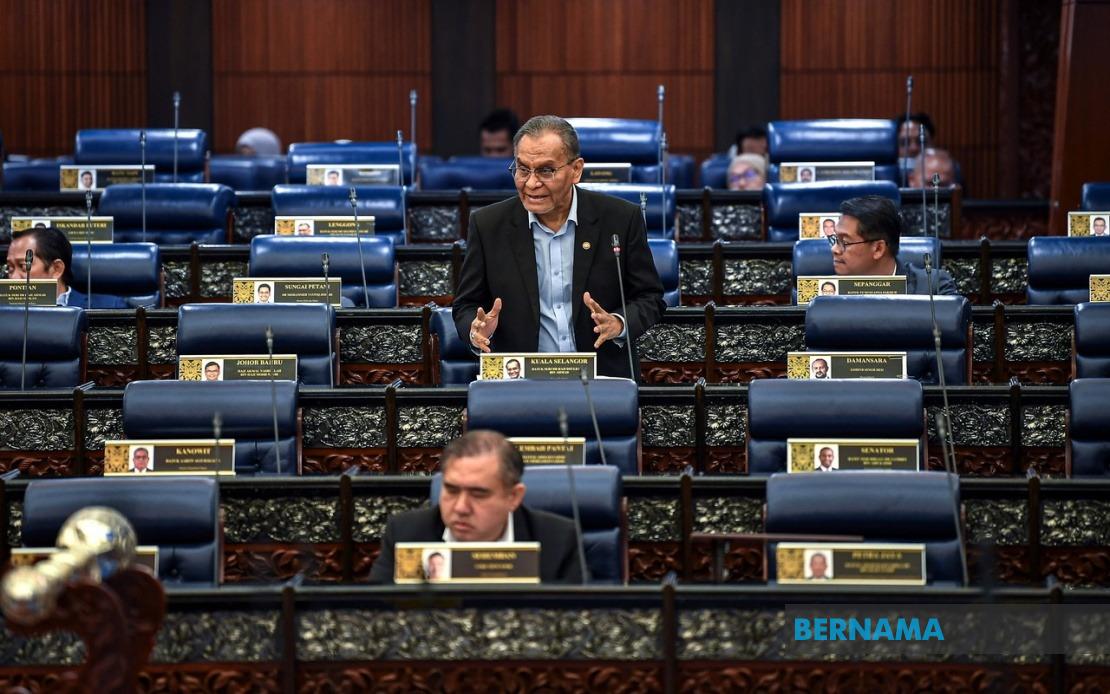
The Malaysian government is moving to stabilise the embattled private general practice sector by introducing fresh support mechanisms and regulatory adjustments aimed at reversing a long-running decline in clinic operations across the country. Speaking during parliamentary question time in Kuala Lumpur on June 23, Health Minister Datuk Seri Dr Dzulkefly Ahmad signalled the ministry's resolve to prevent further erosion of the private medical workforce, which has been losing ground since the start of the decade.
The commitment comes against a backdrop of mounting pressure on Malaysia's private primary healthcare infrastructure. Since 2013, approximately 2,034 private medical clinics have shuttered their doors, a trend that reflects deepening structural challenges within the sector. Contributing factors include declining recruitment of house officers into private practice, rising operational costs, and shifting patient demand patterns that have made it increasingly difficult for independent practitioners to maintain viable businesses. The closures have occurred even as Malaysia's healthcare system faces mounting demand from an ageing population and rising prevalence of chronic diseases.
Dr Dzulkefly acknowledged the severity of the challenge, drawing on his direct experience managing the fallout during the COVID-19 pandemic when clinic closures accelerated sharply. His comments suggest the ministry recognises that private general practitioners occupy an indispensable position within Malaysia's broader healthcare architecture, functioning as a critical first point of contact for patients before they progress to secondary or tertiary facilities. This acknowledgement represents a significant shift in positioning the private sector not as competition to public health services, but as a complementary pillar essential to system resilience.
To provide immediate relief, the government has substantially increased the regulated minimum consultation fee for private practitioners. The new baseline of RM80 represents an eight-fold increase from the previous floor of RM10, a substantial adjustment intended to improve the economics of running a small practice. This regulatory intervention signals recognition that fee compression has become unsustainable for many clinic operators, particularly those serving lower-income communities where demand for affordable private care remains strong. The move suggests policymakers understand that without improved revenue capacity, even well-intentioned practitioners cannot maintain service quality or afford to employ adequate staff.
Beyond immediate fee adjustments, the ministry is pursuing longer-term structural reforms centred on outsourcing arrangements and closer integration between the public and private sectors. These mechanisms are designed to create new revenue streams for private clinics while simultaneously addressing systemic inefficiencies in the public system. By channelling certain functions or patient cohorts toward private practitioners through formal contracting arrangements, the government aims to enhance the stability of the private sector without necessarily increasing direct subsidies. This approach mirrors international models where regulated private providers operate within a publicly-managed framework.
The scale of Malaysia's primary healthcare infrastructure underscores why this sector matters strategically. The 2,916 government health clinics that form the ministry's direct network are complemented by 10,208 private general practitioner clinics, meaning the private sector operates roughly three times as many facilities as the public system. This disparity reflects decades of policy that allowed the private sector to expand organically while government clinics remained relatively static in number. Consequently, preserving private sector viability is not merely about protecting individual practitioners' livelihoods but about maintaining the overall capacity of Malaysia's frontline healthcare delivery apparatus.
Disease management frameworks are central to the government's broader strategy for revitalising public-private collaboration. The 13th Malaysia Plan explicitly includes provisions for integrated management of non-communicable diseases between private clinics and MOH facilities, recognising that hypertension, diabetes, and other chronic conditions now constitute the dominant burden of illness in Malaysian society. By distributing the clinical load for NCD management across both sectors, the government hopes to reduce the crushing pressure currently borne by overcrowded public hospitals while creating sustainable work for private practitioners. This represents a meaningful departure from historical patterns where public and private systems operated largely in parallel.
The reference to international models employed in the United Kingdom and Taiwan highlights the ministry's intent to adopt proven frameworks for managing this integration. Both these healthcare systems maintain robust primary care networks where generalist practitioners coordinate patient care and manage chronic disease, substantially reducing unnecessary emergency department attendance and hospital admissions. Translating these lessons to the Malaysian context requires careful attention to local factors including income levels, patient expectations, and the existing distribution of facilities, but the aspiration toward greater systematisation is evident.
For Malaysian patients and the broader healthcare ecosystem, these developments carry significant implications. A more stable and prosperous private primary care sector could improve access to preventive care and early management of chronic diseases, potentially alleviating pressure on public hospitals to provide basic services that could be managed more efficiently in clinic settings. Private practitioners, when adequately remunerated and integrated into coordinated pathways, often provide rapid access, personalised attention, and continuity of care that patients value highly. Conversely, the continued collapse of private clinics would further concentrate demand on an already strained public system.
The health minister's parliamentary intervention also reflects shifting political dynamics around healthcare policy. Previous administrations often maintained an implicit bias toward public provision, viewing private medicine as a luxury service for the wealthy. The current framing positions the private sector as a legitimate and necessary component of universal healthcare, provided it operates within a regulated framework that serves public health objectives. This recalibration opens space for more nuanced policy discussions about how public and private resources can be deployed more efficiently across the system.
Implementation will prove critical to determining whether these announced measures translate into genuine stabilisation of the private clinic sector. Fee adjustments must be accompanied by administrative simplification and protection from arbitrary regulatory changes that create uncertainty for practitioners. Outsourcing arrangements require careful contract design to ensure that payment rates adequately cover costs and that administrative burden on clinics does not offset the benefit of additional work. Public health officials will also need to invest in training and systems to coordinate care effectively across sector boundaries, ensuring that patients experience integrated services rather than fragmented encounters.
Looking ahead, the trajectory of Malaysia's private primary healthcare sector will likely become an important barometer of whether the government can sustain its stated commitment to public-private collaboration. The next several years will reveal whether regulatory support and partnership frameworks prove sufficient to reverse decades of clinic closures, or whether deeper structural reforms to medical education, physician remuneration, and patient financing mechanisms become necessary. For Malaysia's healthcare system to serve its growing and increasingly diverse population effectively, both sectors must flourish within an coordinated framework.

