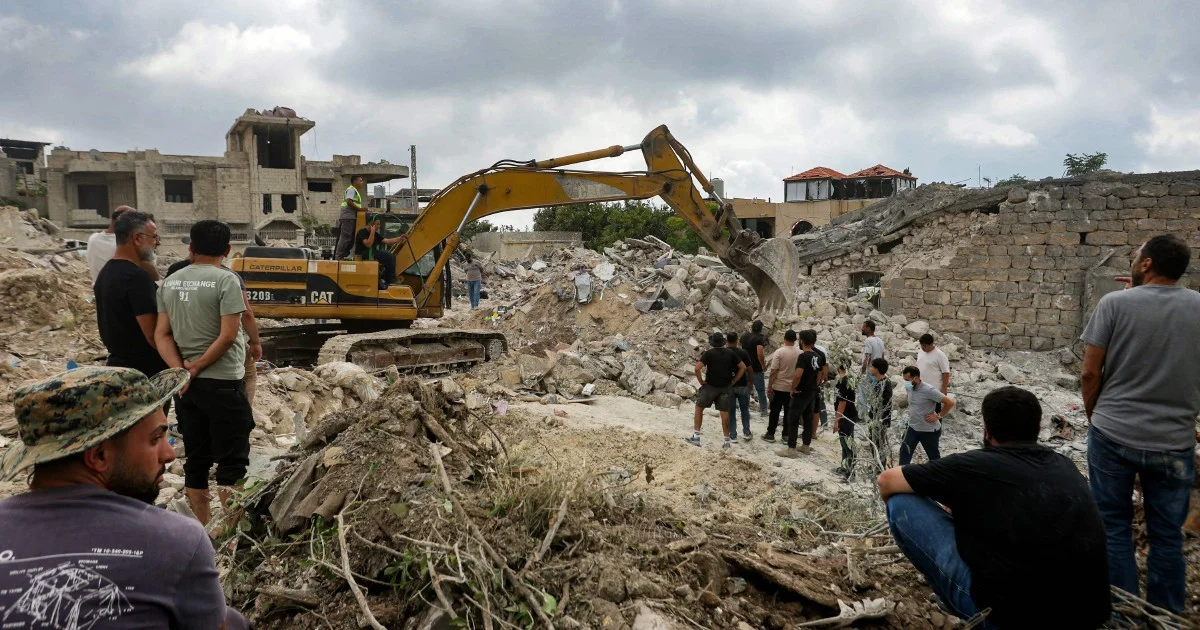
The conflict between Israel and Hizbollah over the future of Lebanon's southern border has entered a new and potentially volatile phase, with Hizbollah's political leader Naim Qassem categorically refusing to countenance any Israeli-controlled security zone on Lebanese territory. His categorical rejection came in response to remarks made by Israeli Prime Minister Benjamin Netanyahu, who declared that Israeli forces would remain positioned in southern Lebanon for whatever duration deemed necessary to ensure Israel's security interests. This collision of irreconcilable positions underscores the fundamental disagreement between the two parties regarding post-conflict arrangements and the practical mechanics of establishing sustainable peace.
The creation of security zones or buffer areas represents a recurring flashpoint in Middle Eastern conflicts, often intended to provide one party with geographic depth for defensive operations while limiting the other's capacity to conduct military activities. However, such arrangements have historically proven contentious when imposed or maintained against the wishes of the affected nation's government and armed groups. In the Lebanese context, any long-term Israeli military footprint would represent a continuation of occupation rather than a temporary stabilisation measure, a distinction that shapes how Hizbollah and other Lebanese actors frame their opposition.
Qassem's statement carries particular weight given his position within Hizbollah's command structure and his regular role as a public spokesperson on political matters. His unequivocal language signals that the organisation will not compromise on this fundamental issue through conventional negotiations. The rejection also reflects broader sentiment among Lebanese political factions and the general public, where Israeli military presence has historically been viewed as an infringement on national sovereignty and territorial integrity. This widespread domestic opposition constrains the Lebanese government's negotiating flexibility, as any formal acceptance of Israeli security zones would likely trigger severe internal political consequences.
Netanyahu's insistence on maintaining troop deployments in southern Lebanon stems from Israeli security doctrine regarding Hizbollah's capabilities and intentions. The organisation has been designated as a terrorist entity by Israel and several Western nations, and Israeli strategists view its military infrastructure and arsenal as a persistent threat to northern Israeli communities. Israeli officials argue that ground presence provides verification mechanisms to prevent weapons smuggling and the reconstitution of military capabilities near the border. However, this security rationale does not address the fundamental question of Lebanese sovereignty and the rights of the Lebanese state to exercise exclusive control over its own territory.
The humanitarian and economic dimensions of prolonged Israeli military occupation in southern Lebanon warrant careful consideration. Previous Israeli military operations in Lebanese territory, including the 1982 invasion and subsequent occupations lasting until 2000, resulted in substantial civilian casualties, infrastructure destruction, and long-term displacement. Lebanese communities in the south have experienced decades of conflict-related trauma, and the prospect of indefinite Israeli military presence threatens their ability to pursue normalcy and economic recovery. The psychological toll of occupation extends beyond immediate combat zones, affecting regional development prospects and cross-border commerce.
Regional actors including Syria, Iran, and various Palestinian groups maintain stakes in Lebanon's political and military configuration. Hizbollah's positioning as an armed actor extends beyond its domestic Lebanese role to encompass its function within regional resistance networks. Any security arrangement in southern Lebanon necessarily affects this broader regional dynamic and has implications for the balance of power across the Levant. The international community, including the United Nations and various diplomatic initiatives, has attempted to mediate these competing interests, though their effectiveness remains limited given the parties' entrenched positions.
The practical enforceability of either side's stated position presents a significant challenge. Hizbollah cannot unilaterally prevent Israeli military occupation without engaging in sustained military conflict, which would carry enormous costs for Lebanese civilians and the broader Lebanese state. Conversely, Israel cannot indefinitely maintain a military presence in southern Lebanon without managing international pressure and the economic costs of sustained deployment. This asymmetry between rhetorical positions and operational realities suggests that eventual resolution will require some form of negotiated settlement, though the current dynamic shows little indication of movement toward compromise.
For Malaysia and Southeast Asian observers, this dispute illustrates the enduring challenges of conflict resolution in regions where territorial disputes, security imperatives, and questions of sovereignty intersect. The Lebanese situation offers cautionary lessons regarding the difficulty of establishing internationally-brokered solutions when fundamental interests remain incompatible. The role of non-state armed actors like Hizbollah in complicating traditional state-to-state negotiations particularly resonates in Southeast Asia, where several nations grapple with similar dynamics involving armed groups and transnational security concerns.
The international legal framework governing occupation and security zones provides limited guidance for navigating these disputes. While international humanitarian law establishes protections for civilians under occupation, the political question of what constitutes legitimate security arrangements versus illegitimate occupation remains contested. The Lebanese government's own capacity to enforce territorial integrity and prevent militant activity has been questioned by Israel and others, though this weakness stems largely from decades of conflict and external interference rather than inherent state incapacity.
Moving forward, the trajectory of Israeli-Hizbollah relations and the ultimate configuration of Lebanon's southern border will likely depend on developments beyond the Israeli-Lebanese axis. Changes in regional power dynamics, shifts in international support for various parties, and the evolution of broader Middle Eastern geopolitics could create openings for modified arrangements. For now, however, Qassem's categorical rejection and Netanyahu's unwavering commitment signal that this particular dispute remains far from resolution, with implications extending well beyond Lebanon's borders.
%22%2F%3E%3C%2Fpattern%3E%3C%2Fdefs%3E%3Crect%20width%3D%22100%25%22%20height%3D%22100%25%22%20fill%3D%22url(%23ph243big)%22%2F%3E%3Crect%20width%3D%22100%25%22%20height%3D%22100%25%22%20fill%3D%22url(%23ph243bip)%22%2F%3E%3Ctext%20x%3D%2250%25%22%20y%3D%2250%25%22%20text-anchor%3D%22middle%22%20dominant-baseline%3D%22central%22%20fill%3D%22rgba(255%2C255%2C255%2C0.95)%22%20font-family%3D%22Georgia%2C%20'Times%20New%20Roman'%2C%20serif%22%20font-weight%3D%22700%22%20font-size%3D%22272%22%20letter-spacing%3D%22-0.02em%22%3EAnwar%3C%2Ftext%3E%3C%2Fsvg%3E)
%22%2F%3E%3C%2Fpattern%3E%3C%2Fdefs%3E%3Crect%20width%3D%22100%25%22%20height%3D%22100%25%22%20fill%3D%22url(%23ph50glvg)%22%2F%3E%3Crect%20width%3D%22100%25%22%20height%3D%22100%25%22%20fill%3D%22url(%23ph50glvp)%22%2F%3E%3Ctext%20x%3D%2250%25%22%20y%3D%2250%25%22%20text-anchor%3D%22middle%22%20dominant-baseline%3D%22central%22%20fill%3D%22rgba(255%2C255%2C255%2C0.95)%22%20font-family%3D%22Georgia%2C%20'Times%20New%20Roman'%2C%20serif%22%20font-weight%3D%22700%22%20font-size%3D%22136%22%20letter-spacing%3D%22-0.02em%22%3EDemocratic%3C%2Ftext%3E%3C%2Fsvg%3E)