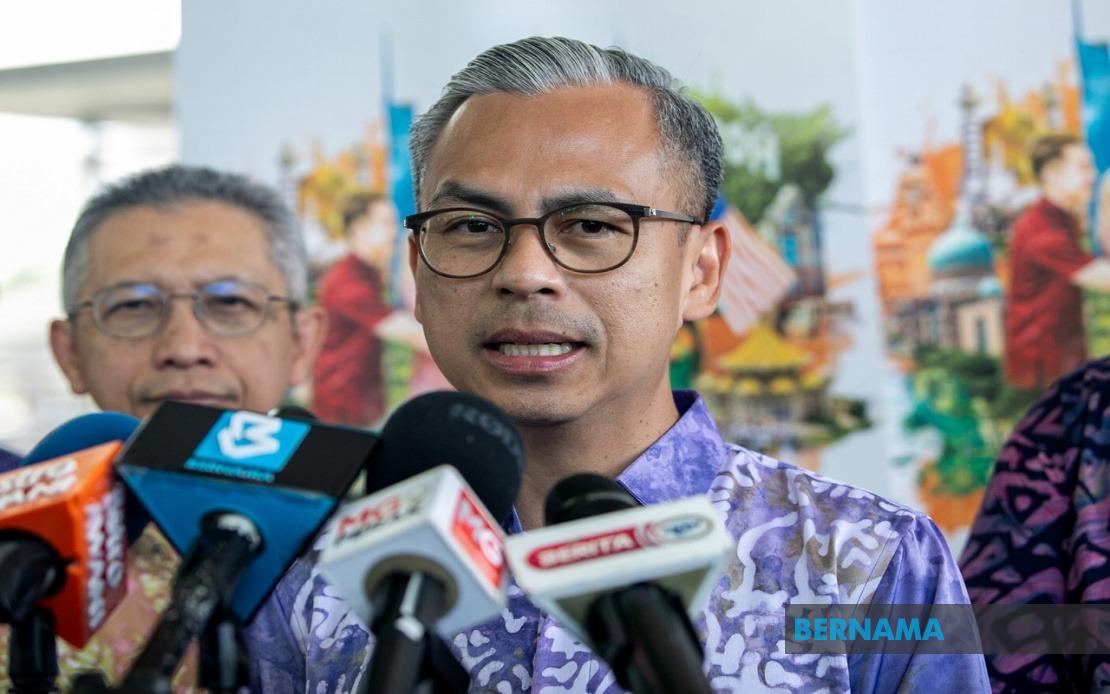
Communications Minister Datuk Seri Fahmi Fadzil has unveiled the overarching theme for Malaysia's 2026 National Day and Malaysia Day (HKHM2026) celebrations, positioning it as a statement of the MADANI Government's foundational pledge to ensure the nation's advancement reaches across all segments of society. The chosen theme, 'Malaysia MADANI: Kesejahteraan Dinikmati' or 'Malaysia MADANI: Shared Prosperity', moves beyond conventional development messaging to encapsulate a vision where growth and opportunity are distributed fairly and inclusively throughout the country. Speaking at the official launch of the 2026 National Month and Fly the Jalur Gemilang campaign in Ipoh, Fahmi emphasised that this thematic direction represents far more than economic metrics or gross domestic product expansion.
The minister articulated that shared prosperity, as conceived by the current administration, embraces a holistic understanding of national development encompassing enhancements to living standards, broadened access to opportunities, and balanced allocation of development gains across diverse populations. Rather than narrowing success to purely financial indicators, the framework acknowledges quality of life improvements and equitable opportunity distribution as essential components of genuine national advancement. This conceptualisation carries particular resonance in Malaysia's diverse society, where historical disparities across regions, communities and socioeconomic strata necessitate deliberate policy approaches to ensure inclusive growth. Fahmi's articulation suggests the government views shared prosperity not merely as an aspirational goal but as a practical governance principle guiding resource allocation and policy implementation.
Underscoring the administration's commitment to leave no Malaysian behind, Fahmi stressed that development benefits must reach citizens across all demographic boundaries—transcending divisions of ethnicity, faith, geographic location and personal background. This declaration addresses longstanding concerns within Malaysian society regarding uneven development distribution and the perception that certain groups or regions receive disproportionate advantages. By positioning inclusivity as a cornerstone principle rather than a secondary consideration, the MADANI Government signals recognition of citizen expectations for fairness in how national resources are deployed and how opportunities are created. The emphasis on building a prosperous, unified and harmonious nation suggests an integrated approach where economic advancement and social cohesion reinforce rather than undermine one another.
Prime Minister Datuk Seri Anwar Ibrahim formally inaugurated the event at the Sultan Azlan Shah Ministry of Health Training Institute in Tanjung Rambutan, with attendance from National Unity Minister Datuk Aaron Ago Dagang and Perak Menteri Besar Datuk Seri Saarani Mohamad. The presence of the premier and multiple cabinet-level officials underscores the significance the government attaches to these annual commemorations and to the particular messaging embedded within the 2026 theme. The venue selection—a health ministry training facility—carries symbolic weight, potentially reflecting emphasis on healthcare accessibility and human capital development as components of shared prosperity.
Fahmi further contextualised Malaysia's diversity as more than a demographic characteristic; he framed it as a historical asset and the bedrock upon which contemporary national unity, mutual respect and social harmony rest. This perspective reorients how citizens understand the nation's multicultural composition, moving from viewing diversity as a potential friction point requiring management toward understanding it as a foundational strength requiring active stewardship. In a regional context where several Southeast Asian nations grapple with intercommunal tensions, Malaysia's relatively stable pluralistic model merits preservation and reinforcement. The minister's emphasis on cherishing this legacy through unity preservation, harmony strengthening and sovereignty protection articulates a vision where celebration of the nation's founding principles directly supports ongoing stability and international standing.
The government has orchestrated multiple complementary programmes designed to cultivate patriotic sentiment and reinforce unity across the Malaysian population during the 2026 celebrations. The 'One House, One Jalur Gemilang' campaign represents a grassroots initiative encouraging households throughout the nation to display the Malaysian flag, transforming neighbourhoods and communities into visible expressions of national pride and collective identity. The Kembara Merdeka Jalur Gemilang convoy programme extends this engagement beyond static displays, creating mobile platforms for public interaction and celebration of national identity across different regions. These initiatives recognise that effective national celebration requires sustained public participation rather than relying solely on official ceremonies or media messaging.
The launch event demonstrates coordination across multiple government levels, with officials from federal, state and local spheres collaborating to ensure cohesive messaging and comprehensive programme rollout. This multi-layered approach acknowledges that successful implementation of nationally-conceived initiatives requires alignment and cooperation among diverse administrative entities. For Malaysian citizens and regional observers, the breadth of planning suggests the government's serious commitment to making these celebrations substantively meaningful rather than ceremonial in nature. The involvement of the health ministry facility further suggests integration of shared prosperity principles into sector-specific governance, linking the abstract concept to concrete policy domains affecting daily citizen experience.
Information dissemination channels including the Merdeka 360 portal and the Information Department's social media platforms ensure that citizens can access celebrations details and participate according to their preferences and capacities. This multi-channel approach acknowledges varying demographic comfort levels with different communication technologies and ensures inclusive access to celebration information. The reliance on digital platforms reflects contemporary governance communication practices while the maintenance of traditional information department channels preserves accessibility for segments less engaged with social media. This dual approach operationalises the shared prosperity principle by ensuring celebration participation does not require technological access that some populations lack.
For Malaysia's regional standing, the 2026 celebrations theme signals continued emphasis on stability, unity and inclusive governance—qualities that international actors value when assessing Southeast Asian nations' development trajectories and reliability as partners. The explicit commitment to ensuring all citizens benefit from national progress potentially addresses international perceptions and facilitates continued investment and trade relationships premised on stable, predictable governance. The timing of the theme announcement allows sufficient lead time for comprehensive celebration planning, suggesting institutional confidence in the government's ability to deliver on the shared prosperity vision through tangible programmes.
The articulation of shared prosperity as a central governance principle carries implications extending beyond ceremonial national celebrations. If operationalised effectively across budgeting, infrastructure investment, education policy and economic development initiatives, this framework could reshape how the MADANI Government allocates resources and evaluates policy success. The challenge lies in translating thematic commitment into measurable outcomes demonstrating that development benefits are indeed reaching all segments of Malaysian society equitably. How citizens perceive the alignment between the shared prosperity theme and their lived experiences will ultimately determine whether these celebrations reinforce national unity or fuel cynicism regarding government proclamations. The coming years will reveal whether the 2026 celebrations represent the culmination of concrete inclusive policies or primarily symbolic exercises.

