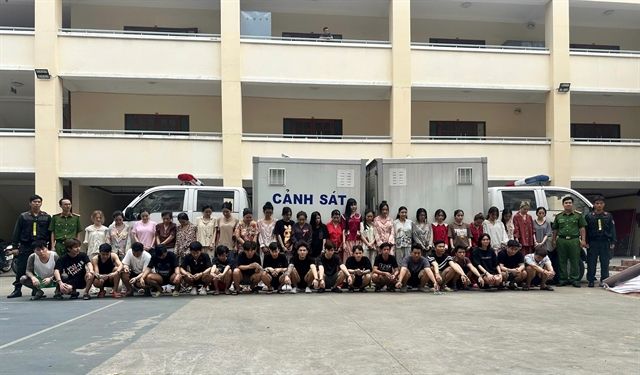
Police in Ho Chi Minh City have broken apart a complex network trafficking an illegal anaesthetic substance concealed within electronic cigarettes, resulting in the arrest of 49 people including four foreign nationals. The operation, which involved multiple interconnected supply chains, yielded the seizure of 1,670 vape pods alongside hundreds of grams of ketamine and methamphetamine, according to the city's drug crime investigation unit.
At the heart of the illicit operation was etomidate, a potent short-acting sedative approved only for surgical anaesthesia under controlled medical settings. The Vietnamese government designated etomidate as a controlled substance in January, transforming its unauthorized sale and consumption into a criminal matter. Traffickers exploited the drug's chemical properties by dissolving it into liquid sweeteners used in e-cigarettes, then marketing the contaminated products under deceptive brand names such as "chill pod", "relaxation pod", "sleep-well pod" and "fly pod", deliberately targeting recreational users seeking novel experiences.
The investigation commenced when authorities received intelligence regarding a street-level dealer operating under the alias Ba Giá on An Duong Vuong Street in Ho Chi Minh City's An Lac Ward. Police identified him as Nguyen Huu Huan, a 28-year-old from Dong Thap province in the Mekong Delta region. On June 25, officers apprehended Huan alongside his wife, Ngo Thi Kim Chi, aged 30, after they sold contaminated vape products to Tran Phuc, a 31-year-old city resident. This arrest opened a broader investigation that exposed two distinct supplier networks feeding the distribution chain.
The first supplier group operated under Huynh Ngoc Thuy Nhu, a 26-year-old Ho Chi Minh City resident assisted by Hua Tuong Vy, 20. The second network was directed by Le Quoc Duy, a 40-year-old from An Giang province, who orchestrated the smuggling of vape products from Cambodia across porous border crossings in his province before routing them to Ho Chi Minh City. When apprehended, Duy was found with 37 vape pods, 200 grams of ketamine and 200 grams of methamphetamine, indicating significant trafficking volumes. A third group, led by Cambodian national Han Kiat and three other foreign suspects, specifically targeted expatriate communities throughout Ho Chi Minh City, suggesting the operation had evolved into a sophisticated market segmentation strategy.
The pharmacological profile of etomidate when inhaled presents particular dangers that distinguish it from traditional recreational drugs. Once inhaled, the substance bypasses normal metabolic pathways and transits directly through lung tissue into the bloodstream, reaching the brain in mere seconds—a significantly faster absorption rate than oral consumption. Initial effects may manifest as light-headedness and mild visual disturbances, but the drug's acute phase produces serious neurological damage, profound sedation, involuntary muscle contractions and potential unconsciousness. The risk escalates dramatically when etomidate combines with alcohol or other central nervous system depressants, creating conditions for sudden respiratory failure and death—a particularly insidious danger for young people consuming these products in social settings where alcohol consumption is normalized.
The deceptive marketing strategy employed by traffickers exploited both the aesthetic appeal of vaping culture and critical gaps in contemporary drug detection technology. E-cigarettes carry an inherent aura of modernity and social acceptability among youth demographics, making them an effective Trojan horse for narcotics distribution. Criminals capitalized on this perception by falsely claiming their products were "undetectable" or would generate "100 per cent negative" results on standard rapid-test kits available to the public. This assertion held surface validity because conventional field testing equipment can identify classical illicit substances such as heroin, cannabis and methamphetamine, but proves entirely inadequate against etomidate's distinct molecular architecture, which requires sophisticated forensic laboratory analysis to confirm.
From a regional public health perspective, this bust reflects broader Southeast Asian drug trafficking patterns that have increasingly incorporated pharmaceutical substances into black market networks. The cross-border smuggling operations through Cambodia highlight how porous frontier regions continue facilitating narcotics distribution, while the involvement of foreign nationals—South Korean, Chinese and Cambodian suspects—demonstrates the increasingly international character of drug trafficking in major urban centers. The targeting of expatriate communities suggests organized crime groups have recognized a lucrative market segment willing to pay premium prices for novel recreational substances perceived as safer than traditional drugs.
The sophistication of this operation underscores how criminal networks continually adapt to regulatory frameworks. By concentrating on a recently controlled substance that few law enforcement agencies had encountered previously, traffickers gained a temporary operational window before police developed investigation protocols and forensic capabilities. The use of appealing marketing language and packaging designed to resemble legitimate commercial products represents a calculated strategy to normalize consumption among young people who may lack the experience or knowledge to identify health hazards.
For Malaysia and other Southeast Asian nations, this case provides instructive lessons about emerging drug threats and the necessity for coordinated law enforcement responses across borders. The prevalence of etomidate trafficking in Ho Chi Minh City suggests similar operations may already be operational in Malaysian urban centers, particularly among expatriate and youth networks. Authorities should anticipate that drug traffickers continuously innovate their product offerings and distribution methods, rendering drug policy and detection capabilities perpetually one step behind emerging threats. Enhanced intelligence sharing between regional narcotics agencies, investment in forensic laboratory capacity to identify novel substances, and public awareness campaigns specifically targeting the dangers of unverified e-cigarette products represent essential countermeasures for protecting vulnerable young populations across Southeast Asia.

