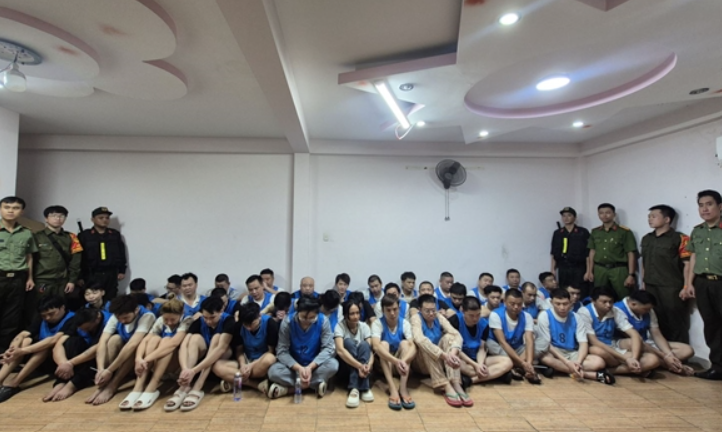
Ho Chi Minh City authorities have successfully dismantled several coordinated networks engaged in smuggling foreign nationals into the city to orchestrate large-scale online fraud operations. The crackdown involved 22 task forces working alongside specialist units and local police divisions, resulting in charges against 26 suspects across eight separate criminal cases and the seizure of hundreds of electronic devices.
The scope of the enforcement operation was substantial, with officers inspecting 1,616 accommodation establishments and commercial premises suspected of harbouring foreign nationals engaged in illegal activities. During these inspections, authorities discovered 160 facilities that had failed to comply with temporary residence registration requirements for foreign guests. More significantly, officers identified 311 foreign nationals involved in various violations including immigration breaches, unlawful employment, irregular residency status and conduct indicative of criminal intent.
Central to the investigation was the discovery of sophisticated criminal infrastructure prepared specifically for transnational fraud schemes. On May 18, 2026, police conducting an administrative inspection at an accommodation facility in Thuan Giao Ward uncovered 85 Chinese nationals residing without proper documentation or registration. This single location yielded approximately 200 desktop computers, numerous laptops and more than 550 mobile phones alongside other specialised electronic equipment, suggesting an advanced operation designed to target victims across multiple countries.
Investigations revealed a deliberate organisational strategy whereby individuals were dispatched from overseas to Vietnam specifically to scout suitable locations, secure rental properties, establish network infrastructure and assemble the technological systems needed to launch fraud operations. The suspects had systematically planned to recruit and train personnel to carry out fraudulent schemes targeting foreign nationals, indicating a pre-planned, professionally managed enterprise rather than opportunistic criminal activity.
The investigation identified a broader ecosystem of complicity extending beyond the primary fraud operators. Several accommodation proprietors had knowingly or negligently permitted foreign nationals to reside on their premises without conducting basic identity verification or ensuring completion of mandatory residency registration procedures. In some instances, these operators had actively facilitated illegal entry, essentially becoming enablers of the larger criminal infrastructure.
Subsequent operations in early June yielded further evidence of the network's scale. On June 8, police discovered 83 Chinese nationals assembled at a hotel in Binh Duong Ward where fraud equipment and devices were being prepared for deployment. Just nine days later, authorities conducting a residency inspection at a private residence in Hiep Binh Ward found 42 foreign nationals in breach of regulations, again uncovering electronic devices and digital evidence consistent with online fraud activities.
Forensic analysis of seized materials and investigative findings established that these groups operated according to a compartmentalised model with specialised functions clearly demarcated among participants. Roles included property acquisition, accommodation arrangement, network system installation and personnel management, all designed to facilitate criminal enterprise. This structured approach mirrors legitimate business operations but was exclusively oriented toward enabling large-scale fraud.
Prosecutors initiated criminal proceedings under Article 348 of Vietnam's Penal Code, charging suspects with "organising for others to remain illegally in Vietnam." The Security Investigation Agency of HCM City Police has placed 26 individuals in pre-trial detention, encompassing operators of fraud operations, accommodation proprietors who facilitated illegal residence, and intermediaries who brokered these arrangements. This tiered approach recognises that criminal networks depend upon multiple levels of complicity for operational success.
Authorities emphasised that financial motivation had driven some accommodation operators to overlook their legal obligations regarding foreign guest management. The crackdown serves as a warning that such negligence, whether driven by profit or indifference, carries criminal liability and severe penalties. Police subsequently issued detailed guidance to hotels, guesthouses and rental establishments requiring rigorous identity verification, completion of temporary residence registration and prompt reporting of suspicious activity to authorities.
The broader context of this operation reflects increasing sophistication in transnational crime targeting Vietnamese citizens and regional residents. Authorities have noted a parallel surge in fraud schemes marketed under the guise of "holiday ownership" programmes, suggesting coordinated investment in multiple fraud methodologies. The HCM City Police command has signalled commitment to expanding screening and management protocols for foreign nationals, with particular emphasis on early identification of risks posed by high-technology crime and cross-border fraud networks.
For Malaysian and regional business communities, the crackdown carries significant implications. As economic integration and tourism increase throughout Southeast Asia, the risk of similar infrastructure emerging in other jurisdictions requires heightened vigilance by authorities across the region. The Vietnamese case demonstrates how fraud networks exploit accommodation sectors and investment environments while leveraging digital infrastructure to conduct operations at scale. Relevant agencies throughout the Association of Southeast Asian Nations should consider whether comparable networks operate undetected within their territories.
Vietnamese authorities have also urged individuals with knowledge of or participation in such criminal enterprises to voluntarily surrender and cooperate with investigators, promising consideration for leniency under applicable law. This appeal recognises that many participants, particularly lower-level operatives and facilitators, may be coerced or financially pressured into complicity. The investigative priority now extends to comprehensive network mapping, identification of overseas coordinators and disruption of financial channels sustaining these operations.

