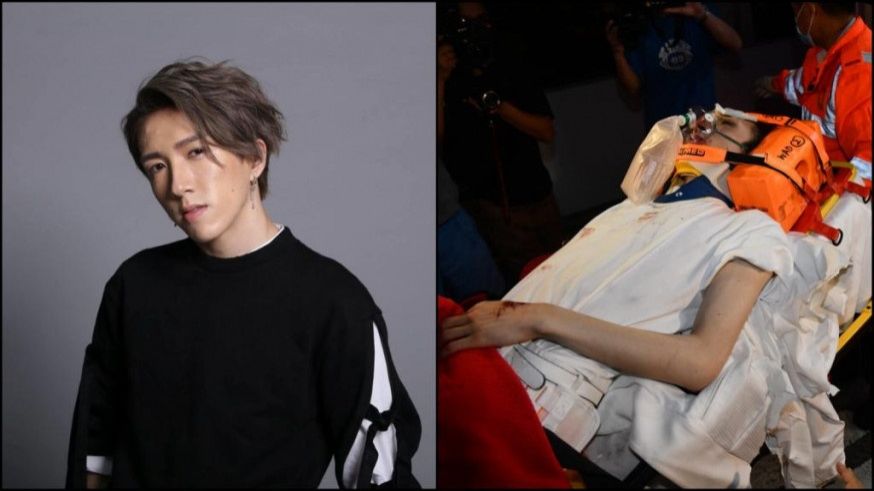
A Hong Kong court has awarded HK$6.29 million (approximately RM3.32 million) in damages to dancer Mo Li Kai-yin, who suffered catastrophic spinal injuries when a large LED screen fell on him during a concert by popular Cantopop boy band Mirror in July 2022. The District Court's June 15 judgment represents a significant victory for the 31-year-old performer, who has been left permanently paralysed and entirely dependent on round-the-clock care.
The accident occurred on July 28, 2022, at Hong Kong Coliseum during the fourth performance of Mirror's planned 12-concert series. A four-by-four-metre LED panel detached from the ceiling and struck Mo as he danced on stage. The immediate impact resulted in a cervical spine dislocation, rendering him quadriplegic—paralysed from the neck downward. Emergency responders rushed him to Queen Elizabeth Hospital, where surgeons performed urgent operations to stabilise his spine and prevent further neurological deterioration.
The court's ruling acknowledged the totality of Mo's condition, describing his injuries as "catastrophic" and his resulting disability as "permanent total incapacity." Judges determined that the performer has become entirely incapable of independent living and will require constant supervision and assistance for the remainder of his life. This assessment informed the court's decision to award maximum compensation across multiple categories: permanent total incapacity, ongoing caregiving expenses, periodic payments for future needs, and comprehensive medical costs. The judgment reflects the severity of transformation from an active, working professional to someone wholly reliant on others.
The compensation structure acknowledges the extraordinary demands now placed on Mo's life. He requires three dedicated caregivers providing 24-hour personal assistance with all aspects of daily living—dressing, bathing, feeding, toileting, and mobility. Prior to his accident, Mo had built a multifaceted dance career. He worked as both performer and instructor, having discovered his passion for dance while studying at university between 2015 and 2019. By 2019, he had transitioned to full-time performance work, appearing in concerts, television broadcasts, commercial advertisements, and music videos. Simultaneously, he taught classes at four dance studios, including Studiodanz, the employer cited in the court case.
Mo's employer, Studiodanz, faced significant legal consequences beyond the compensation award. The company did not contest the claim and was ordered to pay interest on the damages plus all legal costs incurred during proceedings. Additionally, Studiodanz had previously received a regulatory fine of HK$132,000 for violations of occupational safety regulations related to the incident. The employer's absence from trial proceedings suggests an acknowledgment of liability and responsibility for the accident conditions.
The personal toll on Mo's family has been profound and ongoing. His father, Reverend Derek Li Shing-lam, made the extraordinary decision to abandon his pastoral responsibilities in Canada and return to Hong Kong to serve as his son's full-time caregiver. Reverend Li remained Mo's primary support system until his death on April 25, underscoring the emotional and physical demands placed on families when tragedy strikes a young person. The loss of his father while still navigating his own recovery represents an additional layer of hardship for Mo during his rehabilitation journey.
Despite the severity of his paralysis, Mo has demonstrated remarkable resilience through his engagement with advanced rehabilitation technologies. He is participating in an intensive therapy program that incorporates cutting-edge treatments including regenerative medicine techniques and an implantable microstimulator designed to restore neural function. These interventions have yielded measurable, though gradual, improvements. Mo has regained partial movement in his right arm and has recovered sensation in his bladder and bowel functions—achievements that, while limited, represent significant victories in spinal cord injury rehabilitation. A video he posted on his Instagram account in March documented his progress, showing him successfully operating an electric wheelchair using his restored right-hand mobility.
The compensation award carries implications beyond Mo's individual circumstances. In Southeast Asia's entertainment industry, workplace safety standards vary considerably, and high-profile accidents like the Mirror concert incident prompt broader scrutiny of production safety protocols. Hong Kong's robust compensation system and occupational safety framework enabled Mo to pursue meaningful legal recourse and secure lifetime financial support. For Malaysia's entertainment and events sector, this case serves as a cautionary reminder of the critical importance of rigorous safety inspections, secure rigging protocols, and comprehensive liability insurance for large-scale productions. The costs incurred here—both human and financial—illustrate why prevention through safety excellence must be paramount.
Mo's ongoing recovery represents a long-term commitment to rehabilitation that extends far beyond the court award. The financial settlement provides the foundation for sustained medical treatment and professional caregiving, but the psychological and emotional dimensions of adapting to permanent paralysis remain deeply personal challenges. His documented progress with advanced technologies offers hope to others with spinal cord injuries throughout the region, suggesting that emerging medical innovations may offer possibilities for functional improvement even in severe cases. For the Malaysian entertainment industry and broader Southeast Asian events sector, Mo's case underscores both the fragility of performers' safety and the importance of institutional accountability when negligence causes life-altering harm.

