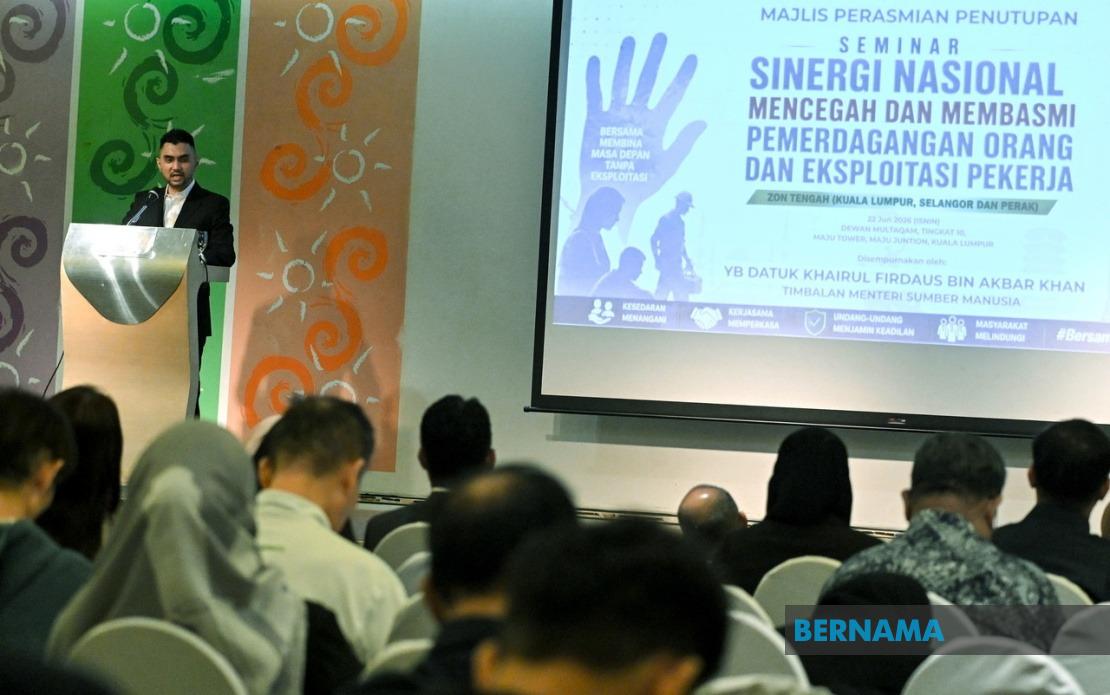
Malaysia's efforts to combat human trafficking and labour exploitation appear to be gaining traction, with official data showing a sharp decline in the number of victims rescued over the past two years. Speaking at an event in Kuala Lumpur, Deputy Human Resources Minister Datuk Khairul Firdaus Akbar Khan revealed that cases have fallen dramatically from 70 victims in 2023 to just four by May 2025, suggesting that coordinated government interventions are producing measurable results in curbing this persistent form of modern slavery.
The trajectory of rescued victims reflects three distinct periods. The Peninsular Malaysia Manpower Department (JTKSM) documented 70 cases in 2023, a figure that plummeted to 10 throughout 2024. The year 2025 opened with a slight uptick to 17 victims, though the pace has slowed considerably—only four rescues were recorded in the five months from January to May. This overall downward pattern suggests that deterrence and prevention mechanisms are functioning, yet the modest increases in certain periods indicate fluctuations in victim detection and rescue operations.
Yet Datuk Khairul Firdaus injected an important note of caution into the optimistic narrative. While acknowledging satisfaction with declining official figures, he stressed that recorded cases represent only the visible portion of a potentially much larger problem. The government cannot assume that fewer reported incidents equate to fewer victims; instead, the hidden caseload—those suffering in silence without official intervention—remains a profound concern. This acknowledgment reflects a sophisticated understanding of trafficking dynamics: many victims remain undetected, unaware of assistance options, or trapped in exploitative situations where reporting is suppressed.
To address the broader landscape of labour exploitation, authorities have intensified enforcement operations across Malaysia. Between January and May 2025, the government conducted 386 labour-related enforcement operations nationwide, resulting in the opening of 311 investigation papers. These figures demonstrate a systematic approach to identifying potential violations and pursuing leads that might otherwise escape official notice. The scale of these operations indicates that while official victim rescue numbers are declining, investigative capacity and operational intensity remain high, suggesting that authorities are actively hunting for problems rather than passively waiting for cases to emerge.
The government's commitment extends beyond reactive rescue operations to proactive prevention and alignment with international standards. Malaysia has ratified protocols under the International Labour Organisation (ILO) framework, binding the nation to specific forced labour prevention standards. This institutional commitment reflects recognition that trafficking and labour exploitation are transnational issues requiring coordinated international responses. By integrating ILO protocols into domestic enforcement, Malaysia positions itself within a global network of anti-trafficking efforts, enhancing both credibility and effectiveness through shared best practices and mutual accountability.
A cornerstone of Malaysia's prevention strategy involves public awareness and stakeholder engagement. The government has undertaken a nationwide series of seminars under the banner of the National Synergy Initiative on Preventing and Eradicating Human Trafficking and Labour Exploitation. These events move beyond Kuala Lumpur, reaching regional zones including the North Zone in Sungai Petani, Kedah on May 18 and the South Zone in Kluang, Johor on June 8. The Central Zone seminar completed this circuit, collectively drawing nearly 1,000 participants representing diverse sectors including government agencies, NGOs, employers, and community leaders.
These seminars serve multiple functions that address gaps in the trafficking prevention ecosystem. They provide exposure to trafficking issues among professionals who may encounter victims in their daily work but lack formal training to identify or assist them. Educational content raises awareness of trafficking methods, vulnerabilities of at-risk populations, and available support mechanisms. Information dissemination ensures that potential victims, advocates, and enforcement officers understand the landscape of exploitation and where to seek help. By fostering dialogue among stakeholders, the seminars create networks that facilitate coordinated responses to trafficking beyond what any single government agency could achieve independently.
For Malaysia and the broader Southeast Asian region, the trafficking challenge remains embedded in economic realities. Migrant worker populations, wage disparities between countries, and informal employment sectors create vulnerability vectors that policy and enforcement alone cannot fully address. The declining rescue figures must be interpreted cautiously—they may reflect genuine prevention success, but they may equally reflect improving concealment by traffickers or reduced victim reporting due to fear and isolation. The government's candid acknowledgment of unreported cases demonstrates awareness of these complexities.
The implications for Malaysian policymakers are multifaceted. Continued investment in enforcement operations appears justified by the investigative outcomes, yet prevention requires sustained attention to labour standards, worker education, and employer accountability. The seminar circuit model shows promise for building institutional networks, but translating workshop discussions into changed practices requires follow-up mechanisms and accountability measures. For regional observers, Malaysia's approach—combining enforcement intensity with honest acknowledgment of blind spots—offers a model that avoids both complacency and panic, while recognising trafficking as a persistent challenge requiring sustained, sophisticated responses rather than declarations of victory.

