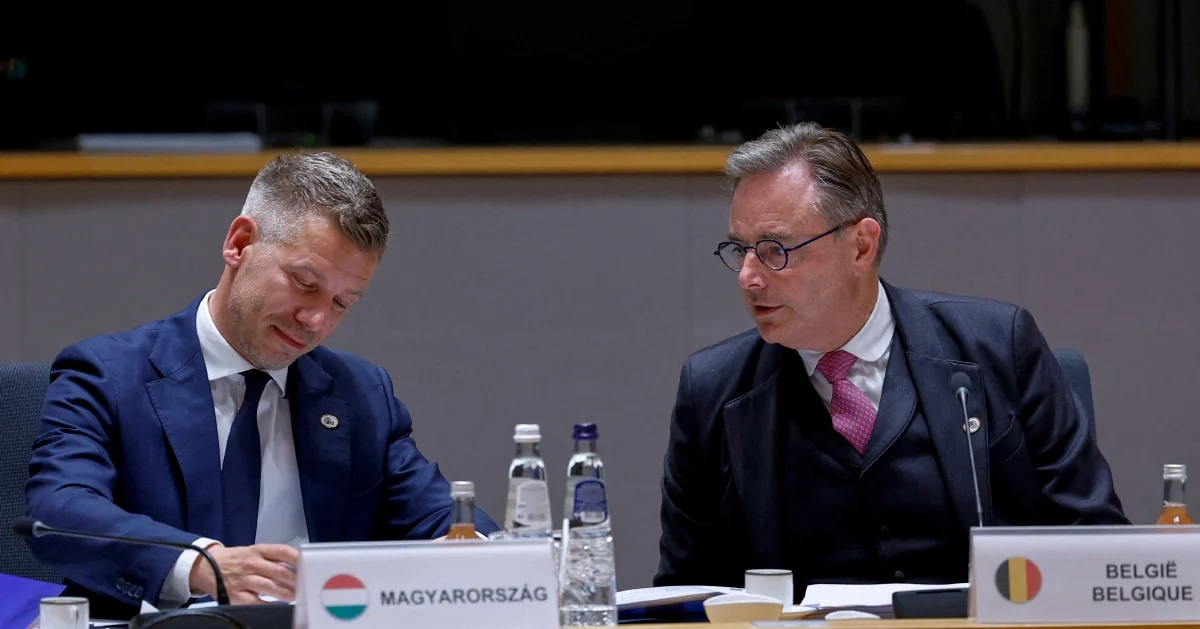
Hungary's newly appointed Prime Minister Peter Magyar is steering his government towards legislative approval of robust anti-corruption measures, with lawmakers scheduled to vote on the package this week. The legislative push represents a significant policy pivot for Budapest and signals the administration's determination to address long-standing governance concerns that have prompted the European Union to freeze substantial financial disbursements to the Central European nation.
The timing of these reforms is closely linked to Hungary's access to European funding. The European Union has withheld billions of euros in assistance, conditional on Budapest demonstrating meaningful improvements in judicial independence, transparency, and anti-corruption safeguards. Under Magyar's leadership, which marks a notable shift from the previous administration's approach to Brussels, the government appears committed to meeting these conditions.
Hungary's relationship with the EU has been fraught with tensions over rule-of-law concerns. The previous government under Viktor Orbán faced persistent criticism from EU institutions regarding judicial independence, media freedom, and budget transparency. These frictions resulted in the bloc leveraging its financial tools—notably through the Recovery and Resilience Facility and cohesion funds—to encourage compliance with democratic standards. The suspended funds represent a substantial portion of Hungary's economic development budget, making their recovery essential for infrastructure projects, healthcare, and education spending.
Magyar's ascent to the premiership in September signalled a broader realignment within Hungarian politics. His reform agenda appears designed to reset Hungary's relationship with Brussels and unlock frozen resources that are increasingly critical as Europe navigates economic headwinds. The anti-corruption package under consideration addresses several key areas: institutional checks on executive power, transparent procurement processes, and enhanced oversight mechanisms within the judiciary and public administration.
The proposed measures reflect EU institutional priorities that have shaped the broader governance framework across the bloc. Similar anti-corruption initiatives have been implemented or strengthened in Poland, Romania, and other member states seeking to rebuild confidence with Brussels following periods of democratic backsliding. The Hungarian approach demonstrates how financial incentives—or their withdrawal—can catalyse domestic political change, though critics argue such mechanisms highlight deeper institutional vulnerabilities within certain EU member states.
For regional observers, the Hungarian situation carries broader implications. Southeast Asian governments and multilateral institutions increasingly grapple with comparable tensions between financial aid, governance standards, and national sovereignty. Hungary's experience illustrates how international financial institutions employ conditionality to influence domestic reform, a dynamic replicated across development finance in Asia, Africa, and Latin America.
The economic stakes for Hungary are substantial. Withheld EU funds have constrained Budapest's capacity to address infrastructure gaps, support industrial modernisation, and fund social programmes. Recovery of these resources would accelerate spending on transport networks, renewable energy transitions, and healthcare modernisation. Regional development, particularly in eastern Hungary where economic disparities persist, depends heavily on EU co-financing. The frozen funds have already delayed multiple projects and constrained municipalities' ability to deliver services.
Parliamentary approval appears likely, given Magyar's coalition arrangements. However, implementation will determine whether these measures produce genuine institutional reform or represent largely symbolic compliance. EU institutions have historically scrutinised whether anti-corruption initiatives result in meaningful enforcement or remain legislative window-dressing. The credibility of Hungary's efforts will influence decisions about releasing suspended funds and shape the trajectory of the country's relationship with Brussels through the remainder of this budget cycle.
Magyar's government faces pressure from multiple directions. Domestically, some constituencies view EU-mandated reforms as constraints on national autonomy. Simultaneously, business communities, investors, and those dependent on EU funding favour rapid institutional improvements that unlock development resources. Balancing these pressures while demonstrating genuine commitment to transparency and accountability represents the central challenge for the new administration.
The broader European context cannot be overlooked. As the EU navigates strategic competition with Russia and China, maintaining cohesion among member states becomes increasingly important. Hungary's reintegration into the mainstream Brussels consensus, particularly on democratic governance, reduces friction within the bloc and strengthens unified positions on external policy challenges. From this perspective, the anti-corruption measures serve interests beyond Hungary's borders, contributing to broader European institutional stability.
International investors and credit rating agencies will monitor the implementation of these reforms carefully. Hungary's debt levels and fiscal position make investor confidence crucial for maintaining favourable borrowing costs. Demonstrable progress on governance and transparency typically reassures financial markets and supports economic stability, potentially offsetting near-term costs of institutional change. The measures may therefore represent not merely a response to EU pressure but a strategic economic investment by the Magyar government.
As parliamentary votes proceed, attention will focus on whether reform momentum extends beyond headline measures to sustained institutional change. The EU's release of withheld funds will likely occur in tranches, conditional on verified implementation. This sequencing approach maintains pressure on Budapest to move from legislative approval to operational reality, ensuring that anti-corruption frameworks translate into genuine improvements in transparency, accountability, and rule of law.

