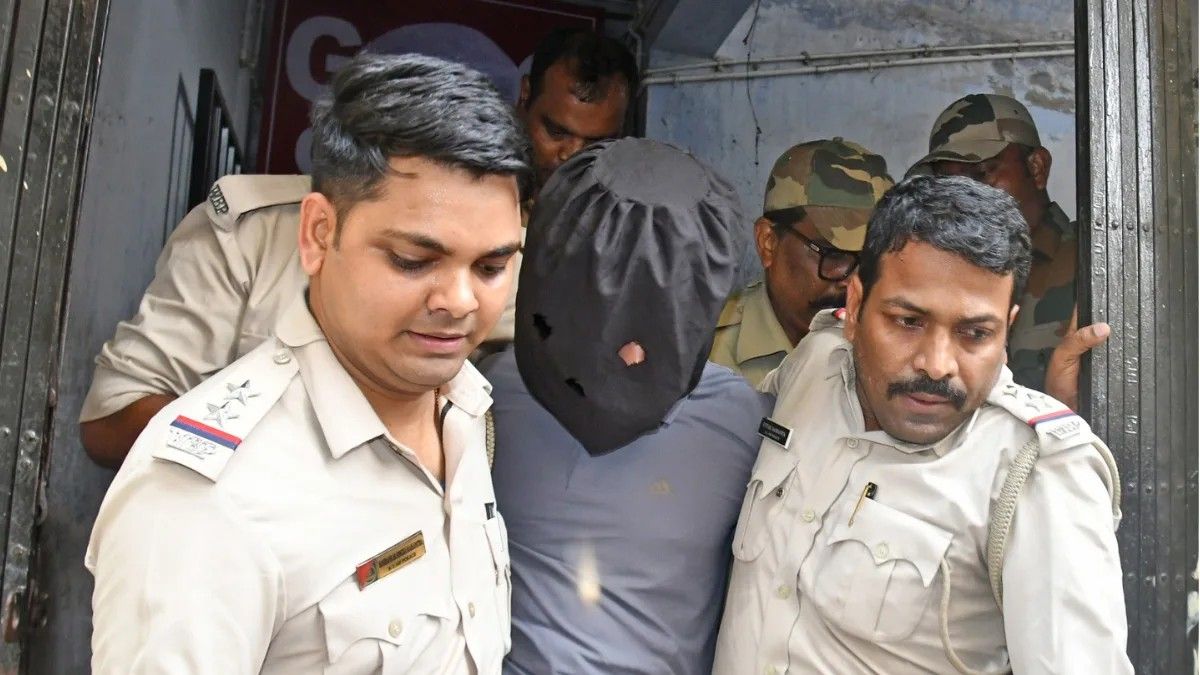
A quarter-century-old resident of East Bardhaman district in India's West Bengal state has been taken into custody on suspicion of maintaining links with the Pakistan-based militant outfit Jaish-e-Mohammed and coordinating with foreign intelligence services. The arrest on Friday marks a significant security development in a region that has experienced previous militant activity, reviving concerns about cross-border recruitment networks and sleeper cells operating within major Indian cities.
Hamim Mondal, identified as the suspect, allegedly cultivated contact with terrorist organisations across the international border and became integrated into a JeM operational module headed by Sajjad Bhat. According to investigators from the Special Task Force, Mondal's activities extended beyond mere communication, encompassing procurement actions that suggested preparation for a specific operational objective. The acquisition of uniforms matching those issued to the Central Reserve Police Force—India's primary paramilitary force—triggered alarm bells among security agencies, prompting them to intensify their investigation.
The nature of these uniform orders signalled to authorities that Mondal may have been preparing to assume a false identity within government security apparatus. Intelligence officials hypothesise that his ultimate goal involved gaining proximity to Chief Minister Suvendu Adhikari during official movements or public engagements. Such an infiltration strategy would represent a high-risk operational approach designed to exploit security vulnerabilities at the state leadership level, underscoring the sophistication of cross-border militant planning.
Forensic examination of digital devices recovered during the arrest proved instrumental in establishing the broader conspiracy. Mobile phones and computers yielded encrypted communications that investigators assert demonstrate active correspondence with individuals linked to Pakistan's Inter-Services Intelligence agency. The presence of encrypted messaging platforms suggested deliberate efforts to maintain operational security and avoid detection by Indian counterintelligence services. These findings provided law enforcement with documentary evidence supporting the gravity of the charges.
The operation that resulted in Mondal's apprehension occurred at a gymnasium located within the upscale Renaissance Township development on Bardhaman's outskirts, where he maintained regular fitness routines. Special Task Force personnel and local police officers coordinated the early-morning detention, simultaneously executing a search warrant at a rented residential unit Mondal occupied within the same township. This concurrent approach prevented potential alert to co-conspirators and secured evidence before destruction.
Mondal's background presented an unremarkable profile to casual observers, rendering his alleged militant connections all the more concerning from a counterterrorism perspective. The 24-year-old had completed his education and subsequently established a modest commercial enterprise involving label printing in Howrah. His father maintained employment with a private Kolkata-based company, suggesting a family of ordinary means without apparent ideological affiliations to extremism. His immediate neighbourhood—consisting of schoolteachers and small business proprietors—knew him as a quiet, reserved individual whose demeanour revealed nothing of the alleged clandestine activities.
The residential arrangement through which Mondal secured his Renaissance Township accommodation introduces further operational sophistication to the case. Rather than renting directly, he enlisted assistance from a local grocer, Mohammad Ali, who completed the transaction using his father's identity credentials. When providing cover explanation to landlord Ekta Mehera, Mondal fabricated a story attributing the accommodation requirement to his younger siblings' housing needs. This misdirection, combined with the use of false identity documentation, demonstrates awareness of operational security and tradecraft consistent with militant training or guidance from external handlers.
Investigators also allege that Mondal's activities extended beyond preparation into active interference with state administration. Police claim he placed a threatening telephone call to Umesh Rai, a Minister of State, several days preceding his arrest. Tracing this communication proved instrumental in the investigation's progression. Authorities traced the number to a young woman resident in neighbouring Birbhum district, whose connection to the suspect eventually unravelled the broader conspiracy and exposed the operational network.
The location of Mondal's detention carries additional historical resonance for counterterrorism specialists monitoring South Asian security patterns. West Bengal's Bardhaman district had previously served as an operational base for the Jamaat-ul-Mujahidin organisation, whose presence became evident following an explosion in the Khagragarh locality twelve years prior. That 2013 incident exposed an existing sleeper cell, demonstrating the region's recurring vulnerability to cross-border militant infiltration and suggesting persistent organisational capacity by various terrorist groups to establish dormant networks awaiting activation.
Mondal's family members have categorically refuted the allegations against the young man, with his grandfather Nasiruddin Mondal—a farmer from Dignagar village in the Manteswar block—declaring the charges impossibly grave for someone of such youth. This familial denial, while predictable in cases involving relatives, underscores the investigative challenge facing law enforcement when militant operatives integrate within ordinary civilian populations and family structures. Nasiruddin suggested that police may have acted upon faulty intelligence, though such assertions carry little weight against forensic digital evidence.
The formal charges lodged against Mondal invoke multiple legislative frameworks reflecting the case's multifaceted nature. Prosecutors cite Sections 61 and 152 of the Bharatiya Nyaya Sanhita 2023—provisions addressing criminal conspiracy and collective criminal liability—alongside Information Technology Act violations and Immigration Act offenses. A Chief Judicial Magistrate in Bardhaman ordered Mondal remanded into police custody for fourteen days, permitting continued interrogation. Special Task Force personnel subsequently transported him to Kolkata for intensive questioning regarding operational structure, handler identities, recruitment activities, and potential additional conspirators.
For security analysts monitoring South Asian militant networks, this arrest illuminates persistent challenges confronting Indian domestic counterterrorism operations. The apparent ease with which individuals can establish clandestine contact with Pakistan-based handlers, acquire operational equipment, and progress toward active conspiracy suggests structural vulnerabilities in monitoring mechanisms, particularly across digital communication platforms. The case underscores how cross-border militant organisations exploit demographic factors—youth populations, economic aspiration, family relocations—to identify and cultivate potential operatives across Indian states. Whether Mondal represents an isolated operational cell or comprises part of a larger network expansion remains a critical investigative question that West Bengal's security apparatus continues pursuing.

