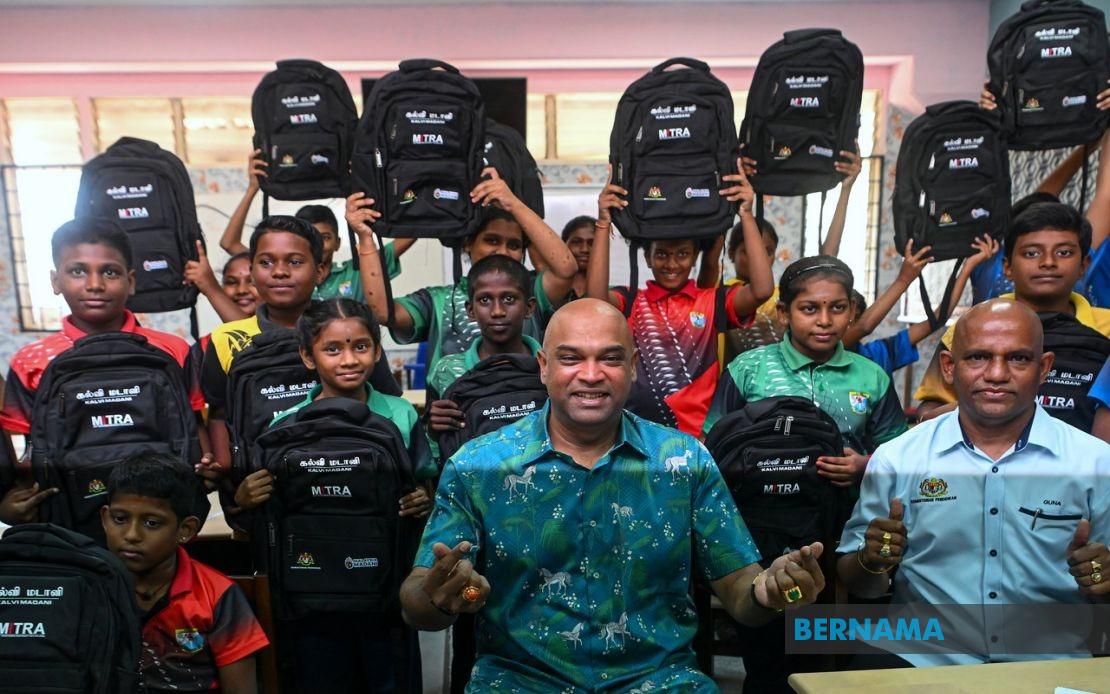
The Pakatan Harapan coalition is banking on robust community participation as a barometer of support from Indian voters in the race to control Negeri Sembilan's state government on Saturday. Speaking in Seremban on July 28, PKR vice-president Datuk Seri R. Ramanan dismissed claims by the Barisan Nasional's Malaysian Indian Congress that Indian voters prefer the opposition coalition, arguing instead that grassroots attendance at PH-organised community events tells the real story of electoral sentiment.
Ramanan, who also serves as Human Resources Minister and represents Sungai Buloh, underscored the difference between political rhetoric and demonstrable public engagement. Barisan Nasional component parties frequently make proclamations about their support among minority communities, yet such statements require scrutiny when measured against actual turnout figures and audience enthusiasm. The PKR leader emphasised that quantifiable metrics—how many people show up, their level of participation, their questions and concerns—offer more reliable indicators of voter inclination than statements issued by political parties from their headquarters.
This assertion carries particular weight given the diverse and historically volatile nature of Indian voter behaviour across Malaysia's states. The community, numbering approximately 1.8 million citizens nationally, has shifted between major coalitions multiple times in recent elections, reflecting both changing economic circumstances and varying levels of responsiveness from political leaders. In Negeri Sembilan specifically, where 867,151 voters are registered to participate in this Saturday's election, the Indian community represents a meaningful minority whose preferences could influence outcomes in several state assembly constituencies.
Ramanan's confidence reflects PH's strategy of emphasising direct engagement with communities rather than relying on media messaging or analyst predictions. The coalition has deliberately scheduled a meeting between Prime Minister Datuk Seri Anwar Ibrahim and Indian community representatives to take place on the eve of polling day, creating an opportunity for grassroots supporters and undecided voters to gauge the government's commitment directly from its highest elected official. Such personal interactions often matter more to voters than television advertisements or social media campaigns, particularly among communities that value demonstrative engagement from leadership.
The PKR leader's remarks also signal growing confidence within the Pakatan Harapan machinery regarding Negeri Sembilan, a state where political control has shifted several times in recent decades. Unlike the federal government's overwhelming national mandate, state-level contests often hinge on local issues, constituency-level factors, and the strength of individual candidates rather than national trends. Ramanan's point that Johor's political dynamics differ markedly from Negeri Sembilan's reflects this political reality—his reference to an analysis by Taylor's University Adjunct Professor Dr Ong Kian Ming, who has predicted a Barisan Nasional and Perikatan Nasional advantage in the state race, suggests some polling and expert opinion favour the opposition blocs.
Nevertheless, Ramanan's scepticism towards such predictions is not unreasonable. Electoral analysts, despite sophisticated methodologies, frequently misread voter sentiment, particularly among communities that are less visible in conventional polling samples. The Indian community in Malaysia has demonstrated an ability to surprise political analysts with sudden shifts in voting preferences, driven by targeted outreach, specific policy promises, or perceived responsiveness by particular parties or leaders. Anwar Ibrahim, as Prime Minister and a historically strong campaigner in Indian-majority areas, represents a potentially significant asset for Pakatan Harapan in community engagement.
The coalition's emphasis on programme participation as evidence of support also reflects a broader shift in how Malaysian political parties now measure and demonstrate electoral viability. Traditional assumptions about fixed ethnic voting blocs have eroded considerably since the 2018 general election fundamentally reshaped Malaysia's political landscape. Parties increasingly compete for every demographic segment, and those perceived as dismissive of community concerns or insufficiently engaged face genuine electoral risk regardless of historical voting patterns.
For Malaysian observers monitoring state-level politics, Negeri Sembilan's result will provide valuable data on current Indian community preferences, Perikatan Nasional's strength in heartland Malay constituencies following its rise since 2020, and Pakatan Harapan's capacity to defend state governments beyond its peninsular strongholds. A strong showing among Indian voters for PH would suggest that the community perceives the current federal government as responsive to its concerns—whether on economic opportunities, educational access, religious freedom, or representation in policy-making. Conversely, significant Indian voter defection to either Barisan Nasional or Perikatan Nasional would indicate either improved outreach from those coalitions or perceived shortcomings in PH's engagement with the community.
Ramanan's framing of programme attendance as the ultimate test of electoral support essentially challenges media organisations, political analysts, and voters themselves to look beyond polling predictions and focus on ground realities. In a political environment where Malaysian voters have repeatedly confounded expert expectations—from the 2018 electoral earthquake to numerous state-level surprises—this emphasis on observable community participation holds genuine analytical weight. The coming Saturday will determine whether the confident assessments offered by PH leadership align with actual voter behaviour across Negeri Sembilan's 36 state assembly constituencies.

