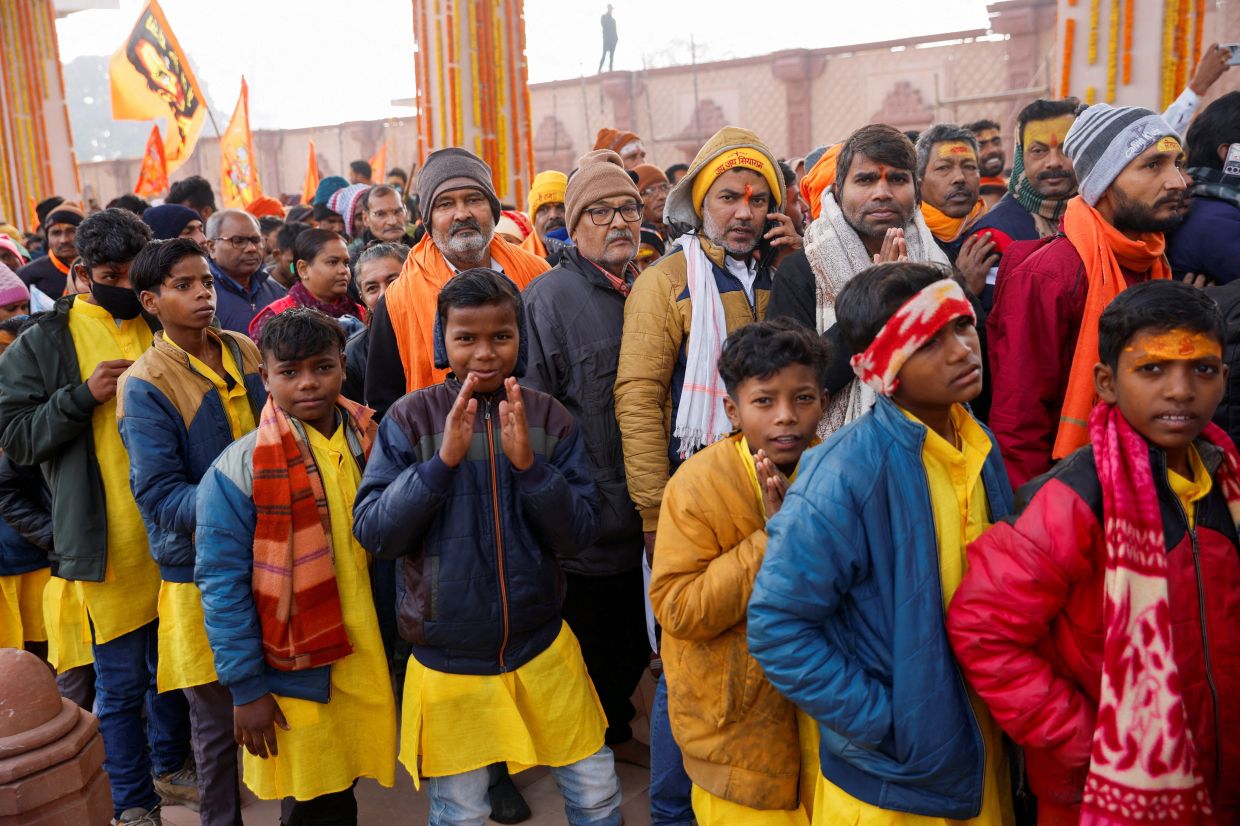
The arrest of eight employees involved in handling donations at India's prominent Ram temple in Ayodhya marks the latest flashpoint in a broader crisis of financial governance affecting Hindu pilgrimage sites across the subcontinent. Police launched the investigation in June after discovering that donations allegedly totalling around 30 million rupees—approximately US$314,000—had been diverted from the shrine. The revelation has triggered widespread unease among devotees and policy experts alike, forcing uncomfortable questions about how the nation's most sacred religious institutions safeguard the contributions entrusted to them by millions of worshippers seeking spiritual merit through financial sacrifice.
For ordinary devotees, the breach represents a violation of fundamental trust. Ashok Prasad Kushwaha, an auto-rickshaw driver from Delhi who has visited the temple three times over two years, expressed the emotional weight of such betrayals. When worshippers donate at temples—often from savings accumulated through modest daily earnings—they do so with the conviction that their contributions advance divine work and community welfare. The discovery that such hard-earned offerings could be stolen from within the temple premises itself inflicts what Kushwaha described as a deeply personal sense of loss, undermining the spiritual transaction that justifies the sacrifice.
The Ram temple case does not stand in isolation. A pattern of similar scandals at major pilgrimage destinations has steadily eroded public confidence in religious institution management. The Badrinath shrine in the Himalayas and the Tirumala Tirupati Devasthanams in southern India—which operates as one of the world's wealthiest temple trusts with estimated assets exceeding US$31 billion—have both faced scrutiny over donation handling. These recurring incidents suggest that vulnerability to embezzlement and misappropriation reflects structural rather than isolated problems, pointing to institutional-level weaknesses in how religious organisations control their finances.
The Ram temple's particular prominence amplifies the sensitivity of these allegations. Inaugurated in 2024 by Prime Minister Narendra Modi, the shrine has rapidly become one of India's most visited religious destinations, drawing approximately 90,000 visitors daily. The constant flow of pilgrims generates substantial streams of offerings in multiple forms—cash donations, gold, silver ornaments, and jewellery—creating complex logistics that demand sophisticated management systems. The temple's significance extends beyond its religious dimensions; it stands on land that was the epicentre of one of India's most protracted communal disputes, making any institutional failure carry symbolic weight far beyond routine financial scandal.
That historical context illuminates why theft at the Ram temple resonates so powerfully. Devout Hindus regard the site as the birthplace of the god Ram some 7,000 years ago, yet a mosque constructed during the 16th century occupied the location for centuries. The 1992 demolition of the Babri mosque by Hindu mobs triggered nationwide violence claiming over 2,000 lives, representing one of independent India's darkest communal episodes. The Supreme Court's 2019 judgment awarding the site for temple construction resolved this bitter dispute and enabled a unprecedented fundraising campaign that ultimately mobilised approximately US$341 million. Against this backdrop of reconciliation and national significance, any taint of mismanagement strikes many Hindus as a betrayal of collective sacrifice and goodwill.
India's religious marketplace operates at an extraordinary scale that many observers compare to large commercial enterprises. The nation's spiritual and religious sector was valued at US$70.14 billion in 2025 and is projected to expand to US$135.41 billion by 2034, according to analysis by consultancy firm IMARC. These figures illustrate that major temples function not merely as houses of worship but as significant economic entities managing billions in assets, collecting vast sums in donations, and employing substantial workforces. Yet despite this corporate-scale operation, most religious institutions retain governance and financial control systems designed for much smaller, traditional structures.
Hindu activist and grandson of a former Sabarimala temple chief priest Rahul Easwar has emerged as a leading voice diagnosing the systemic deficiencies underlying these scandals. Easwar identifies the core problem as a fundamental absence of transparency and accountability mechanisms. At the Ram temple specifically, investigators discovered that the accused exploited weak donation counting procedures and significant gaps in surveillance coverage. Easwar advocates for comprehensive reforms including mandatory receipt issuance for all donations, transition to digital accounting systems accessible to auditors, installation of surveillance equipment monitoring donation handling areas, and implementation of independent external oversight bodies reviewing financial management.
The absence of uniform national standards compounds these challenges. Legal expert Sonam Chandwani of KS Legal & Associates notes that religious institutions across India operate under multiple overlapping legal frameworks and tax regimes, with no consistent national architecture establishing transparent financial standards. This regulatory fragmentation means that oversight quality and accountability mechanisms vary dramatically between temples, creating opportunities for misconduct in institutions with weaker controls. Some states have implemented stricter requirements, while others permit religious trusts considerable discretion in managing donations, generating an inconsistent landscape that invites exploitation.
Mass pilgrimage events present particularly acute management challenges. Rahul Easwar highlights the Kumbh Mela, where millions of devotees congregate across several weeks, generating unprecedented volumes of cash and valuables from countless donors. Processing, securing, and documenting such enormous quantities of offerings through manual or rudimentary systems creates inevitable security vulnerabilities. The sheer scale exceeds what conventional temple infrastructure was designed to handle, yet many institutions attempt to manage these flows using procedures developed for far smaller regular congregations.
Political analyst Anurag Naidu contends that modern religious institutions have fundamentally transformed beyond their traditional identities as places of worship. They now operate substantial hospitality infrastructure, maintain extensive real estate portfolios, employ thousands of workers, and manage financial portfolios rivalling those of major corporations. Yet most have failed to adopt institutional-grade financial controls standard in comparable large organisations. Naidu argues that temples handling massive daily cash volumes require systems equivalent to those operating in major public institutions—comprehensive internal audit divisions, segregation of financial responsibilities, real-time digital transaction recording, and external independent verification.
The implications for Southeast Asian religious institutions merit consideration as well. While the Ram temple case involves an Indian shrine, the underlying vulnerabilities—inadequate financial controls, manual donation processing, insufficient oversight of personnel handling offerings—characterise many major temples across Malaysia, Singapore, Thailand, and other regional countries where temple trusts manage substantial assets. The Ram temple investigation may prompt religious authorities throughout Southeast Asia to audit their own governance frameworks and donation management procedures, recognising that trust between devotees and institutions depends on demonstrable financial probity rather than reputation alone.
Reforming religious institution finance will require coordinated action from multiple actors. Temple trustees and administrators must recognise that adopting corporate-standard financial controls enhances rather than diminishes the spiritual integrity of their institutions, demonstrating respect for the sacrifices devotees make when contributing to religious work. Regulatory authorities need to develop consistent national frameworks establishing baseline transparency standards applicable across all religious organisations regardless of denomination or size. Civil society organisations and activists like Easwar can maintain pressure for accountability, while devotee communities themselves may increasingly demand evidence of proper stewardship before contributing to temple fundraising campaigns.
Ultimately, the Ram temple case illustrates how institutional failure erodes faith not merely in specific organisations but in the legitimacy of religious institutions themselves. When worshippers discover that donations intended for spiritual purposes have instead enriched corrupt officials, they experience disillusionment extending far beyond financial loss. Restoring public confidence requires tangible demonstration that religious institutions can manage their finances with the transparency and accountability that their sacred trusts demand.

