A significant new investigative angle has emerged in the Ram Temple donation scandal unfolding in Ayodhya, with India's Special Investigation Team now examining the possibility that stolen gold and silver ornaments were deliberately melted into bullion form to obscure their identity and prevent recovery. The theory gained credence after extensive searches failed to locate missing jewellery items, prompting officials to suspect that accused parties converted the ornaments into anonymous metal biscuits that would be virtually indistinguishable from legitimately donated materials.
The shift in investigative focus reflects growing frustration among authorities over the difficulty of tracing precious metals once they have been physically transformed. By converting identifiable pieces of jewellery—many bearing religious significance and specific craftsmanship—into homogeneous gold and silver bullion, perpetrators could theoretically render it impossible to match recovered metal with the original donations made by temple devotees. This methodological approach to concealing stolen goods has prompted the Special Investigation Team to expand its inquiry beyond the initial focus on missing cash reserves.
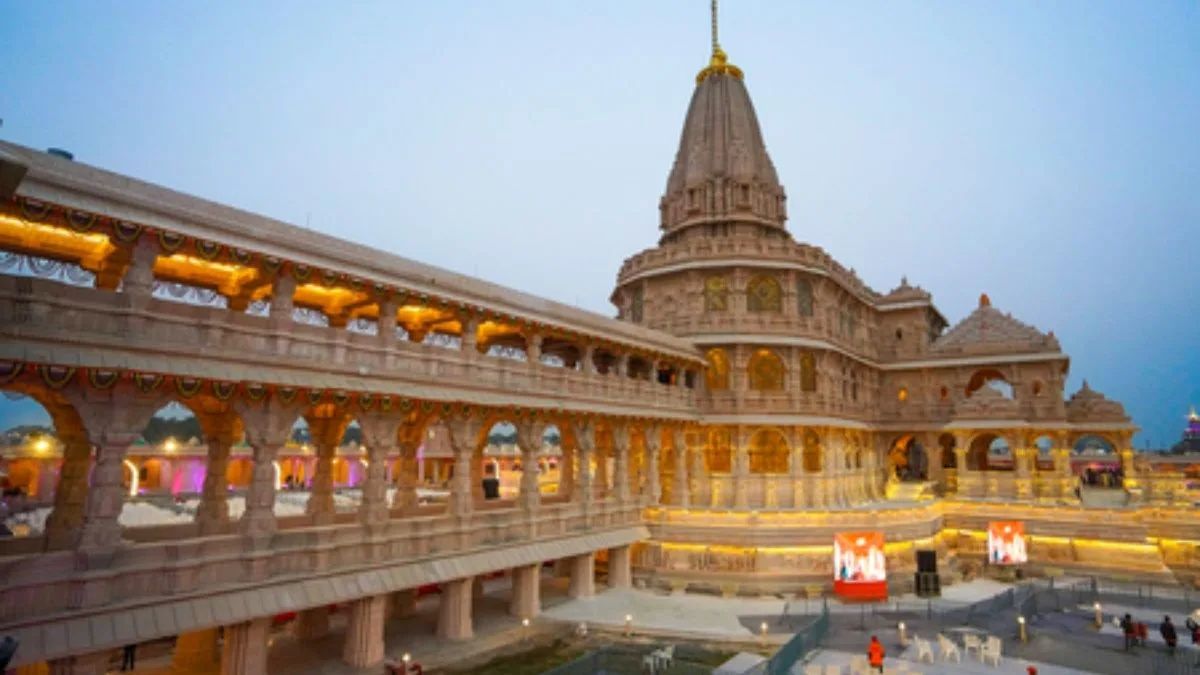
During a recent visit to the Ram Temple complex in Ayodhya, members of the Special Investigation Team engaged in prayers at the Ram Lalla shrine before conducting focused questioning of the temple's in-charge, KD Babu, regarding the systematic procedures governing the reception, storage, and documentation of jewellery and valuable offerings. This line of questioning underscores the investigators' determination to establish whether institutional oversight mechanisms were deliberately circumvented or negligently applied by temple officials and trust employees.
The probe has simultaneously expanded to encompass official documentation and government agency records. The Special Investigation Team has formally requested access to all documents pertaining to precious ornament donations, financial transactions, and interactions conducted with the Printing and Minting Corporation of India, which functions as India's primary government-operated metal refining facility. Investigators are now meticulously tracing the movement of gold and silver sent to both commercial banks and the national Mint to reconstruct the processing chain and account for how precious metals were handled and recorded throughout the system.
A critical vulnerability has surfaced within the trust's governance framework. According to sources briefing investigators, the Shri Ram Janmabhoomi Teerth Kshetra Trust, while maintaining regular quarterly review meetings to assess cash collections and income streams, had conspicuously failed to conduct detailed oversight discussions regarding the inventory levels, valuations, and complete accounting of gold, silver, and other valuable items received as religious offerings. This apparent gap in institutional supervision has become central to the investigation's assessment of how the donation system could have been compromised.
Documentary evidence now being examined reveals significant discrepancies in metal quantities. During the temple's early operational phase, the trust forwarded approximately 9.44 quintals—equivalent to 944 kilograms—of silver to the government-run Mint facility for quality testing and melting procedures. However, Champat Rai, who previously served as the trust's general secretary, had publicly stated that devotees had collectively donated nearly 13 quintals of silver alongside approximately 20 kilograms of gold. These numerical inconsistencies have heightened suspicions surrounding the handling and accounting of donated materials.
The investigation is expected to extend into comprehensive financial examination. According to earlier reports, the Special Investigation Team intends to conduct a complete re-audit of the trust's financial accounts spanning the preceding five years, with particular emphasis on construction expenditure related to the temple project and documentary records concerning all gold, silver, jewellery, and alternative precious offerings received. This retrospective examination aims to identify patterns of irregularity or anomalies that might have gone undetected during normal operational oversight.
Eight individuals currently face criminal charges in connection with the case, and all have been taken into police custody. The formal First Information Report was registered at Ayodhya Kotwali police station on June 25, initiated through a complaint submitted by Krishna Mohan, himself a member of the Shri Ram Janmabhoomi Teerth Kshetra Trust. The accused roster includes Ramshankar Yadav, several trust employees identified as Anukalp Mishra, Lavkush Mishra, Manish Yadav, Karunesh Pandey, Ramashankar Mishra, and Avinash Shukla, along with Subhash Srivastava, a retired bank employee whose professional background may have facilitated his involvement in the scheme.
The criminal case emerged directly from preliminary findings issued by a three-member Special Investigation Team, which identified alleged irregularities occurring at multiple organisational levels within the temple trust structure. These findings suggested that the donation misappropriation problem was not an isolated incident but rather reflected systemic governance failures affecting how the institution handled precious resources entrusted by religious donors.
Throughout the investigation's progression, the Special Investigation Team has conducted detailed questioning of several high-ranking officials and former trust representatives. Champat Rai, the former general secretary, has been questioned alongside Anil Mishra, who previously served as a trustee member, and Gopal Rao, an operational temple official. The investigative pressure has prompted resignations from at least two individuals, with Rai and Mishra both submitting resignation letters expected to face consideration during the trust's scheduled meeting on July 6, potentially accelerating institutional accountability and reform.
The scandal carries broader implications for India's management of major religious institutions and their substantial asset bases. The Ram Temple, as one of the nation's most significant pilgrimage destinations following its reconstruction completion, receives immense donations from devotees who contribute ornaments, cash, and valuables with religious conviction. The discovery of systematic misappropriation within the trust's operational framework raises urgent questions about donor protection mechanisms, institutional transparency requirements, and the adequacy of financial oversight systems governing religiously significant organisations that manage considerable public contributions.

