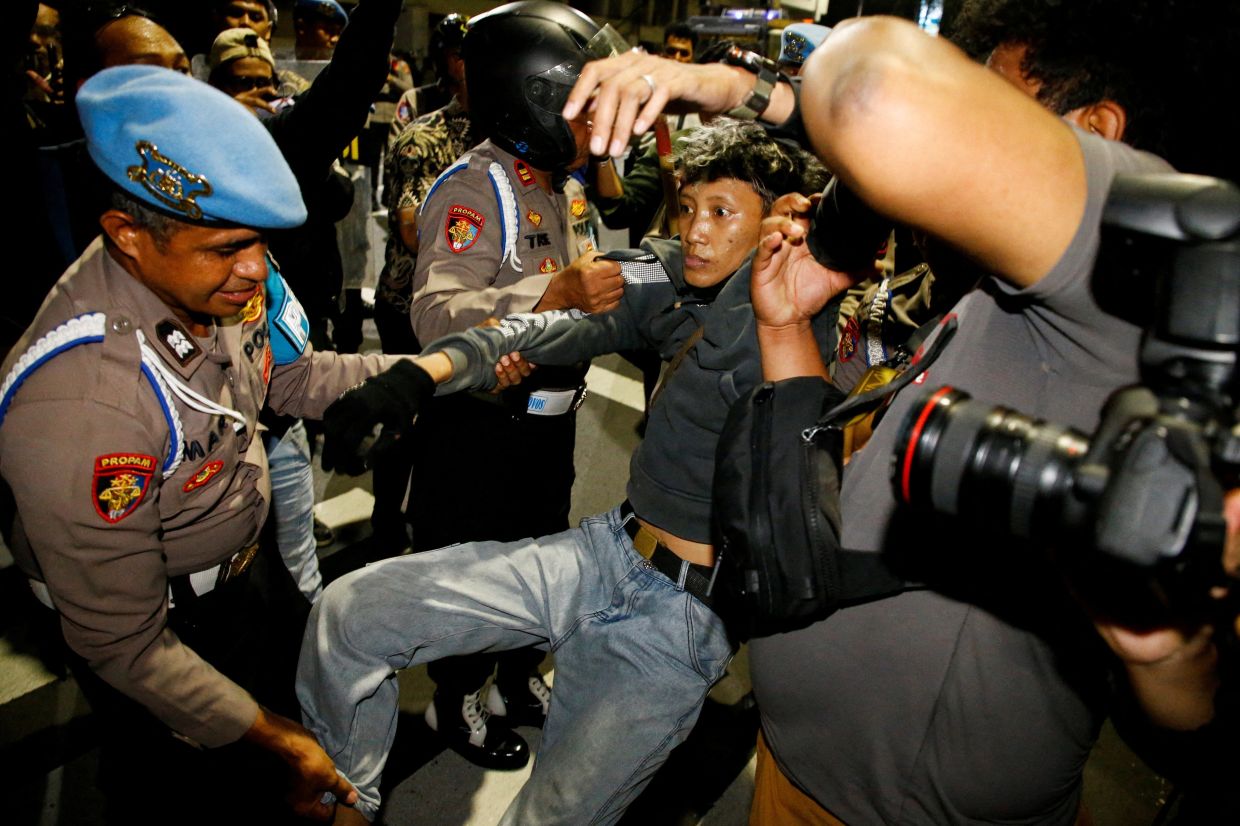
Police in Indonesia's second-largest city have filed charges against four people in connection with an anti-government demonstration held on Friday, marking the latest enforcement action as public anger simmers over economic policies and a scandal-plagued welfare programme. The announcement came from Surabaya police chief Luthfie Sulistiawan, who disclosed the move on Sunday to reporters investigating the incident that drew approximately 100 demonstrators to a government compound in the East Java metropolis.
The rally centred on grievances over two major government initiatives: a sharp fuel price hike implemented earlier in June and a free school meals scheme that has descended into controversy and public health concerns. The protesters' focus on these issues reflects deepening discontent across Indonesian society regarding cost-of-living pressures and the stewardship of flagship welfare programmes. According to law enforcement accounts, some demonstrators engaged in destructive behaviour, lobbing firecrackers and rocks toward the building and at police officers attempting to manage the gathering, leading authorities to employ what officials characterised as proportionate dispersal methods.
The fuel price decision represents a significant economic juncture for the nation. The government authorised increases of roughly 30 per cent for non-subsidised petrol supplies in mid-June, a move framed by policymakers as essential to stabilising public finances strained by global economic headwinds and elevated energy costs. The Middle Eastern geopolitical situation has compounded international oil market volatility, creating budgetary pressures on governments reliant on fuel subsidies. For Indonesia—Southeast Asia's largest economy and a substantial oil producing nation—the decision proved particularly contentious given the nation's paradoxical position as both an energy producer and a net importer unable to meet domestic demand from domestic reserves.
The free meal initiative, formally positioned as a child nutrition intervention, has become a flashpoint for criticism despite its ostensibly benevolent purpose. The government launched the programme to address child malnutrition across the archipelago, a legitimate public health objective. However, the scheme has been engulfed by multiple damaging allegations. Tens of thousands of individuals nationwide have reported serious illnesses linked to meals distributed under the programme since its inception, triggering widespread alarm among families and communities. Separate investigations have uncovered evidence of corrupt practices, with officials and contractors apparently siphoning resources intended for the meal provision, further eroding public confidence in state institutions.
The detention and release procedures employed by Surabaya police illustrate the nuanced approach authorities have adopted toward protest management. Officers apprehended 24 individuals during and immediately after Friday's gathering, yet released the vast majority without pursuing formal charges, suggesting a differentiated enforcement strategy targeting those deemed most culpable. The four individuals now facing charges stand accused of wilfully destroying property and physically assaulting police personnel, offences that carried sufficient evidence to warrant prosecution. An additional six detainees remain under investigation after authorities identified controlled substances in their systems, potentially complicating their legal positions, though the precise charges remain unclear pending further inquiry.
The unrest in Surabaya forms part of a broader pattern of youth-led activism that has intensified in Jakarta and other urban centres throughout June. Student movements have coalesced around both the fuel price issue and demands that the government terminate the free meal programme entirely. The convergence of these grievances suggests that multiple governance failures have compounded public alienation, with young Indonesians viewing both policies as emblematic of institutional dysfunction—whether through economic mismanagement or endemic corruption. The scale of student participation, drawing thousands to demonstrations in the capital, underscores the potential for sustained organised opposition if dissatisfaction continues accumulating.
For Malaysia and the broader Southeast Asian region, Indonesia's political turbulence carries implications beyond national boundaries. Indonesia's economic stability influences regional trade patterns, investment flows, and geopolitical dynamics. Extended periods of domestic unrest or heavy-handed security responses risk damaging investor confidence and complicating Jakarta's foreign policy engagement. Additionally, Indonesia's handling of public grievances regarding subsidy policy and welfare administration may offer instructive lessons—both positive and cautionary—for other governments in the region contemplating similar economic adjustments or implementing large-scale social programmes.
The charges against the four individuals represent state efforts to establish boundaries around acceptable protest conduct whilst maintaining space for legitimate dissent. However, the distinction between property destruction and political expression remains legally contentious and potentially subject to interpretation. The sustainability of social stability in Indonesia may ultimately hinge not merely on the prosecution of individual protesters but on whether the government addresses the underlying concerns that motivated demonstrations in the first place. If the fuel price increases persist without compensatory measures for lower-income households, and if the free meal programme's governance failures remain unresolved, additional protests appear probable.
Authorities' handling of the Surabaya situation reflects a calculated approach: proportionate response to disruptive conduct combined with cautious enforcement against a broader participant base. Yet the underlying drivers of discontent—inflation pressures from global energy markets, bureaucratic capacity limitations in administering social programmes, and systemic corruption—remain structurally embedded challenges that police actions alone cannot resolve. As Indonesia navigates these interconnected crises, the trajectory of youth activism and public trust in institutions will likely shape the nation's political economy for years ahead.

