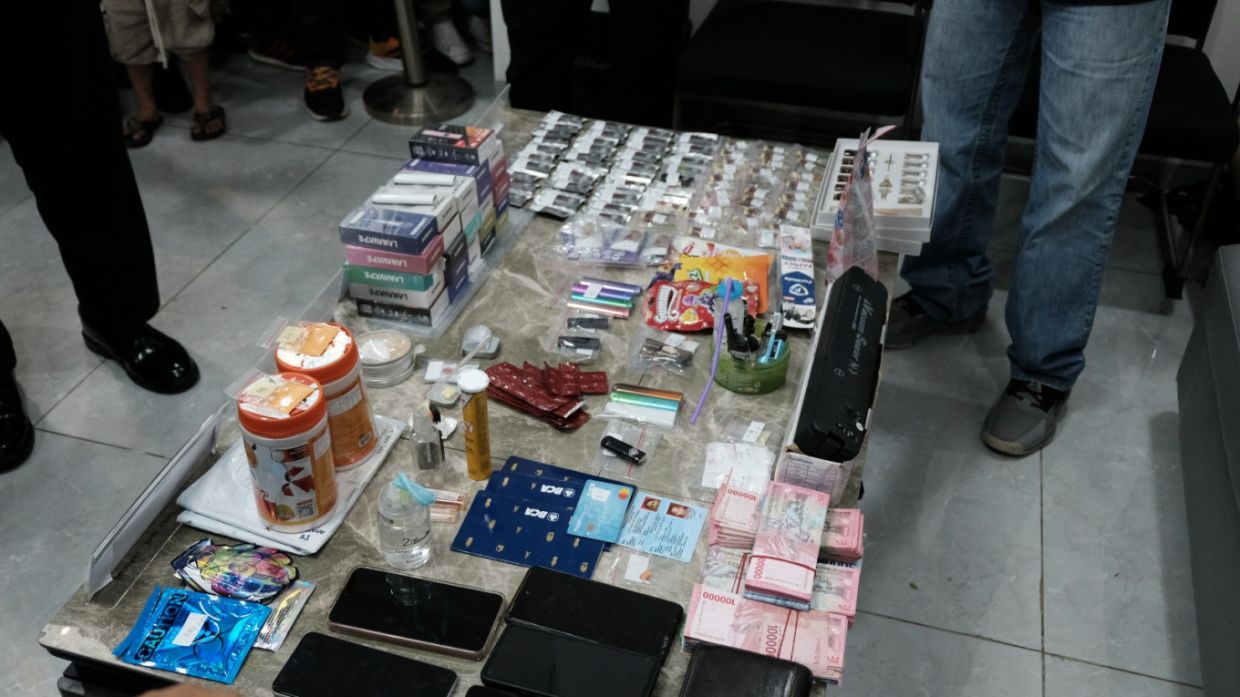
Indonesian law enforcement has dismantled a sophisticated drug distribution network operating across the Malaysia-Indonesia border, with authorities arresting six local suspects in connection with the operation centred in Batam, Riau Islands. The National Narcotics Agency (BNN) and the Customs and Excise Directorate General announced the breakthrough on Friday, revealing details of how the syndicate methodically smuggled narcotics through informal maritime routes before repackaging and selling them throughout the Riau Islands region.
The investigation began when customs officers at Soekarno-Hatta International Airport intercepted a shipment arriving from Malaysia that had been deliberately mislabelled as a food supplement containing Orange Fiber Xtra. Laboratory analysis at Jakarta's Customs and Excise Laboratory (BLBC) identified the contents as a dangerous cocktail of controlled substances, including MDMA, ketamine, and other prohibited drugs. This discovery triggered a coordinated enforcement operation between the two agencies that would ultimately expose the network's structure and operational methods.
BNN's enforcement deputy, Insp. Gen. Aswin Sipayung, outlined how the organisation functioned with considerable sophistication, utilising clandestine seaports for initial smuggling operations before moving into secondary distribution phases. The criminal infrastructure involved multiple stages: importing contraband from Malaysian suppliers, repackaging the drugs to disguise their nature, and systematically distributing them throughout the island region. This compartmentalised approach enabled the syndicate to maintain operational security while scaling its activities across interconnected distribution channels.
The enforcement action saw coordinated raids across four separate locations in Batam on Wednesday. Officers first apprehended a suspect identified as BAP who was collecting the intercepted package at the airport terminal. His subsequent interrogation yielded critical leads that allowed authorities to quickly move against additional members of the network. Within hours, three further suspects—ED, NC, and TFS—were detained at a hotel in Baloi, with ED identified as the individual who had originally placed the order for the Malaysian shipment.
Following these initial arrests, the joint team expanded operations to residential locations associated with the network. Officers raided an apartment owned by TFS in Teluk Tering as well as a boarding house in the Sakura Garden shophouse area in Batu Ampar, where two additional suspects, AJ and DA, were staying. The searches yielded substantial quantities of drugs and paraphernalia, including dozens of electronic cigarette cartridges containing etomidate, crystal methamphetamine, ecstasy pills, and what authorities identified as Happy Five tablets and sachets of Happy Water drinks—all products apparently used as cover for illicit sales.
The syndicate employed deceptive packaging techniques to evade detection, concealing narcotics and etomidate cartridges within dried food packages and food supplement sachets before resealing them with specialised plastic devices. This approach exploited the appearance of legitimacy that food products carry, allowing couriers and distributors to move inventory with reduced scrutiny. The use of commercial-grade packaging equipment indicated a level of operational sophistication beyond casual drug dealing, suggesting the network had invested in infrastructure to sustain larger-scale distribution operations.
The overall haul from the raids was substantial, with confiscated items totalling more than 1,000 grams of MDMA, 50 grams of crystal methamphetamine, substantial quantities of ketamine powder, numerous tablets across multiple drug categories, and 170 cartridges containing etomidate. Officers also seized 12 vials of concentrated etomidate, 88 vaping devices used for drug delivery, drug-consumption paraphernalia, and multiple vehicles including a Toyota Alphard van, Toyota Agya hatchback, Chery SUV, and motorcycles used for distribution. This material wealth suggests the operation generated significant revenue before intervention.
While these arrests represent a major disruption, authorities acknowledge the network's international dimension remains active. Two Malaysian nationals identified as SL and WKC have been designated as wanted persons, with security agencies placing them on watch lists for their suspected roles as the syndicate's primary suppliers. Their status as the upstream source of the drug pipeline underscores how narcotics trafficking operates as a cross-border enterprise, with Malaysian-based operations feeding distribution networks throughout Indonesian border regions. The search for these individuals will likely require ongoing cooperation between Malaysian and Indonesian law enforcement agencies.
Batam's geography and role as a maritime hub have historically made it vulnerable to drug trafficking operations. The city's proximity to Malaysia, its position on major shipping lanes, and the existence of informal port facilities create conditions conducive to smuggling networks. The island's relative economic development compared to surrounding areas also creates markets for recreational drugs among younger, more affluent populations. This particular operation appears to have exploited these structural vulnerabilities systematically, positioning Batam as both a transhipment point and final distribution centre for Malaysian-sourced narcotics.
Authorities estimate that the enforcement action prevented approximately 6,770 potential drug users from acquiring these substances, thereby averting an estimated Rp10.8 billion (approximately US$599,000) in future healthcare costs associated with drug addiction and rehabilitation. Batam Customs and Excise Office head Agung Widodo characterised the operation as consistent with routine border monitoring activities that had identified suspicious shipment patterns. These figures demonstrate how drug interdiction efforts generate measurable public health benefits beyond the immediate arrest and prosecution of suspects.
The arrested Indonesian suspects face serious criminal charges under Indonesia's narcotics law, specifically Article 114(2) in conjunction with related provisions of Law No. 35/2009 on Narcotics. Conviction could result in sentences ranging from a minimum of five years imprisonment to capital punishment, along with substantial financial penalties reaching Rp10 billion. The severity of these penalties reflects Indonesia's commitment to treating large-scale drug trafficking as a crime warranting the harshest available punishments, a policy framework that has positioned the country among the world's strictest narcotics jurisdictions.
The case highlights persistent vulnerabilities in border security systems throughout Southeast Asia, where geography, maritime complexity, and demand-side factors continue to create opportunities for transnational criminal enterprises. The involvement of Malaysian nationals as upstream suppliers reflects how production and distribution networks operate across permeable international boundaries. Future enforcement effectiveness will likely depend on sustained bilateral coordination between Malaysian and Indonesian authorities to disrupt supply chains at their source and improve intelligence sharing regarding organised trafficking operations.

